

ADA Compliant Outdoor Shower Specs That Pass
Plan an ada compliant outdoor shower with the right clearances, controls, drains, and durability choices for beaches, pools, parks, and resorts.

The complaint usually shows up late - after the concrete is poured and the inspector is on site. Someone realizes the shower valve is too high, the controls are too stiff, or the “accessible” route ends in sand. Outdoor showers are simple fixtures, but an accessible outdoor shower is a small system: approach, turning space, operable parts, drainage, and finishes that stay safe when they are wet.
This guide is written for contractors, parks teams, resort operators, and facility managers who need an ada compliant outdoor shower that holds up in public spaces and passes inspection without rework.
What “ADA compliant” means for an outdoor shower
An outdoor shower is not always required to be accessible. The requirement depends on whether the shower is part of an accessible route and whether it is considered a “bathing facility” provided to the public as part of your project scope. Pools, beaches, parks, campgrounds, and sports facilities often trigger accessibility requirements because the site is open to the public and other site elements (parking, paths, restrooms) are already in the ADA lane.
The practical takeaway: treat accessibility as a design input, not a checkbox. Even when the code path is complicated, building at least one accessible outdoor shower location is usually the cheapest and most defensible answer.
Start with the site - the “accessible route” is the real make-or-break
Outdoor shower compliance fails more often at the approach than at the shower head.
If a user cannot reach the shower on an accessible route, a perfectly mounted valve will not save you. For beaches and pool decks, that means thinking about how wheelchairs and mobility devices actually move through the space. Concrete and pavers are straightforward; sand, loose gravel, and lumpy turf are not.
For beach access, many facilities use a firm, stable surface system (such as mats or constructed paths) that connects accessible parking or drop-off zones to rinse-off stations. At pools, the shower should connect to the same accessible deck routes used to reach lifts, entries, and restrooms. If you are installing multiple showers, placing the accessible one where the accessible route already exists reduces site work and change orders.
Clear floor space and turning considerations
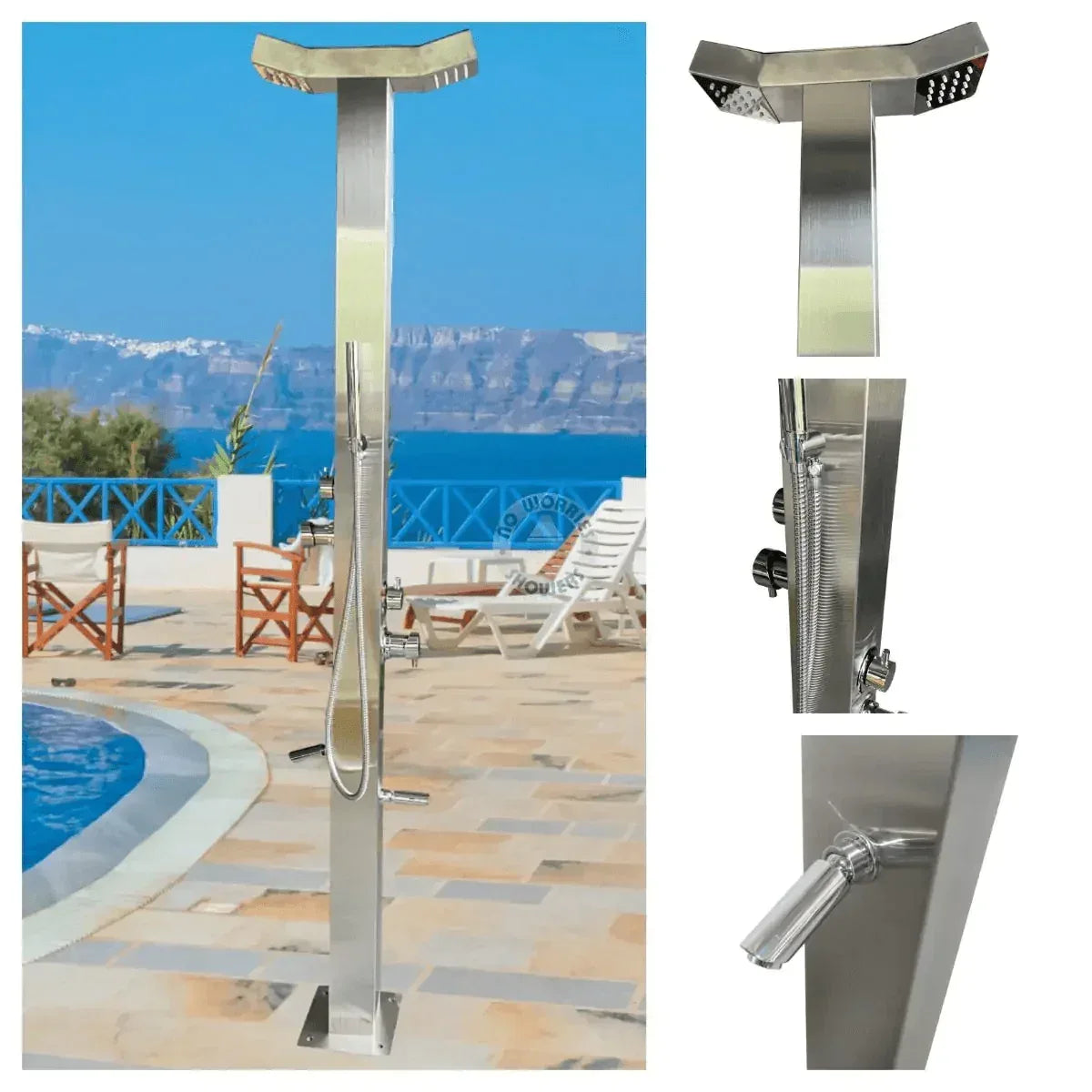
Outdoor shower stations are often installed where people cluster - next to gates, towel hooks, benches, and foot-rinse grids. That is convenient, but it is also where clearances get crowded.
Plan for clear floor space at the controls that is not blocked by posts, landscaping, or site furniture. Also consider how users will turn and reposition in a wet area. If you are working with a tight pool deck, a wall-mounted shower can be easier to fit cleanly. If you have the space, a freestanding shower with generous maneuvering room is often more user-friendly and easier to keep clear over time.
One more field lesson: keep the “no storage” message consistent. If maintenance crews constantly park trash cans, hose reels, or skimmer racks in front of the shower, you will lose your clearance in real life, even if the drawings were perfect.
Controls, operable parts, and why “easy to use” is not subjective
ADA is tough on operable parts because they are where accessibility becomes physical.
Your outdoor shower controls should be reachable and usable with one hand, without tight grasping, pinching, or twisting of the wrist. In public environments, that usually points you toward lever-style handles, push-button metering valves with accessible force, or large, simple actuators. Small round knobs can create problems, especially when wet, sandy, or cold.
It also “depends” on how you want the shower to function. Metering valves are popular for parks and beaches because they reduce water waste and discourage long, unattended run times. The trade-off is user experience: some metering valves require repeated activation, and if the actuation force is high, it can be a compliance and usability issue. If you choose metering, pick a control designed for public use that is known for a manageable activation force and reliable cycles.
Mounting height matters, but so does the full user interaction. If a person approaches from a wheelchair, can they reach the control without getting soaked first? Can they activate it without bracing against a slippery post? A control that is technically “within range” can still be a bad install if it is positioned where water constantly hits the user’s hands.
Hot water: allowed, but think about safety and maintenance
Many outdoor showers are cold-only, especially for beach rinse-off. Resorts and higher-end pool facilities sometimes want tempered water.
If you introduce hot water, you introduce scald risk and more maintenance. You will want appropriate mixing, temperature control strategy, and an approach to winterization where applicable. For public projects, your durability and risk posture often improve with cold-only or tempered-only (not full hot) systems. The right answer depends on your climate, your audience, and how the shower is used.
Shower head placement and spray control
Outdoor showers are usually not enclosed, so overspray is part of the job. But overspray becomes a problem when it pushes water onto walking routes, ramps, or areas where people queue.
Position the shower head so the primary spray pattern lands on the intended wet zone and drains as designed. If you are placing an accessible shower next to a standard one, be careful that one shower’s spray does not interfere with the other’s clear space.
For beaches, a higher shower head can serve standing users well, but you still need reachable controls. For pool decks, some facilities add a separate low rinse outlet or foot shower to reduce full-body shower traffic. That can be helpful, but do not let add-ons block accessibility clearances.
Drainage: accessibility includes what happens underfoot
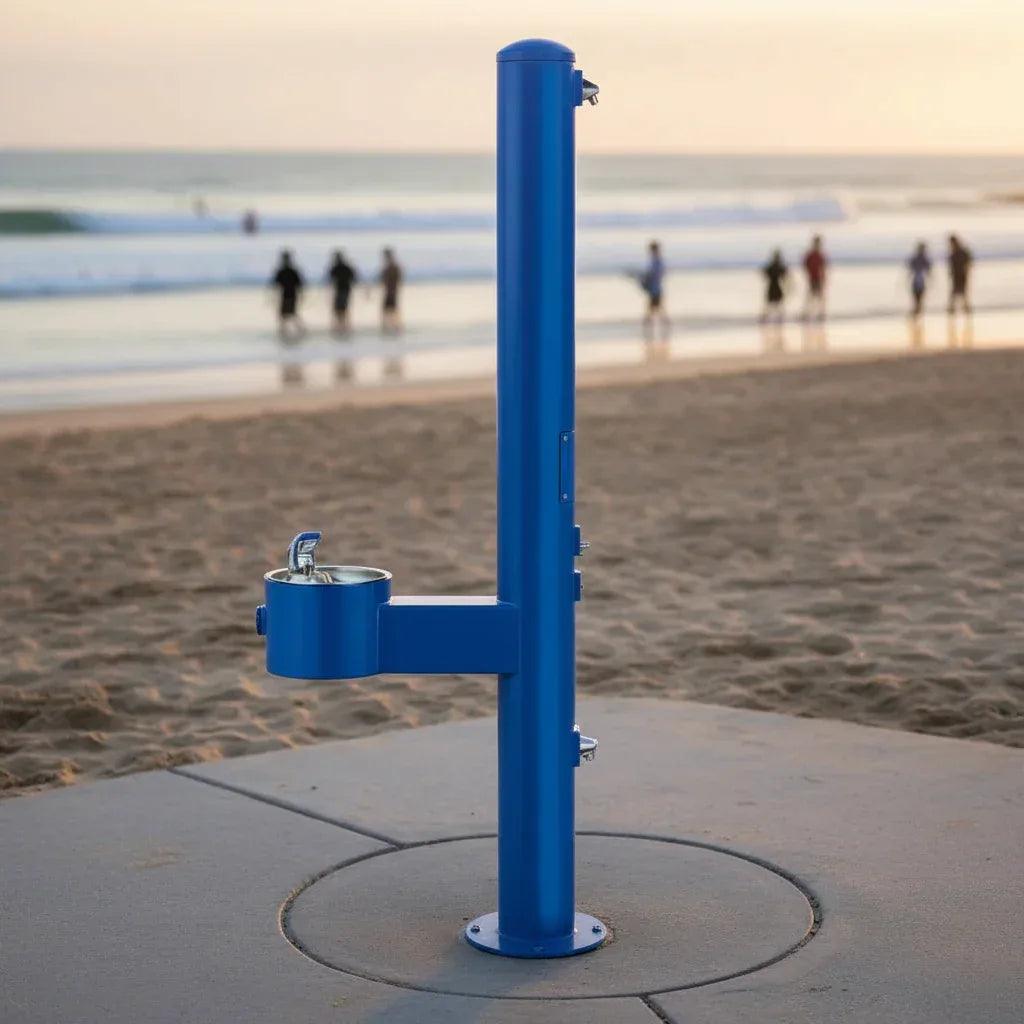
Standing water is not just a nuisance. It changes slip risk, pushes water into adjacent accessible routes, and can create algae buildup that turns a deck into a maintenance issue.
Outdoor shower drainage typically falls into three buckets: direct connection to storm/sanitary (where allowed), a drained pad to a collection point, or a designed infiltration approach. Each has regional and jurisdictional constraints.
A few procurement-minded realities:
- If you do not solve drainage on paper, you will solve it with a sawcut later.
- “Let it run off” often becomes “let it run onto the accessible route,” which is where you get callbacks.
- In sandy beach environments, drains can clog fast. A design that anticipates sand is worth paying for.
Plan surface slope carefully so water moves away without creating abrupt changes that interfere with mobility devices. Pair the slope plan with finish selection so the wet area stays slip-resistant.
Material and finish choices that hold up in public spaces
An ada compliant outdoor shower still has to survive daily use, salt air, sunscreen, sand, and vandalism. That is why commercial buyers typically lean toward heavy-duty construction and proven finishes.
In coastal environments, corrosion resistance is not optional. Stainless steel is common for a reason, but not all stainless performs the same near salt water, and surface finish affects how it looks after months of exposure. Powder-coated units can look great and reduce glare, but they can show wear if the site is rough on equipment.
Vandal resistance is also part of accessibility in practice. If the handle gets bent or the push button jams, the shower is not usable for anyone. Commercial-grade valves, protected piping, and sturdy mounting details reduce downtime and emergency repairs.
Don’t forget seasonal realities: freeze resistance and winterization
If you operate in freeze zones, outdoor shower performance is only as good as the freeze strategy. Some facilities shut down and drain systems; others use frost-resistant designs.
The trade-off is cost and complexity versus uptime. A frost-resistant outdoor shower can reduce seasonal labor and prevent freeze damage, but you still need correct installation and site-specific decisions (depth, insulation strategy, shutoffs, and drainage). If the facility is seasonal, a simpler winterization plan may be the most cost-effective approach.
The key is to decide early. A last-minute “make it frost-proof” request can change the product spec, rough-in, and lead times.
Choosing the right configuration for your site
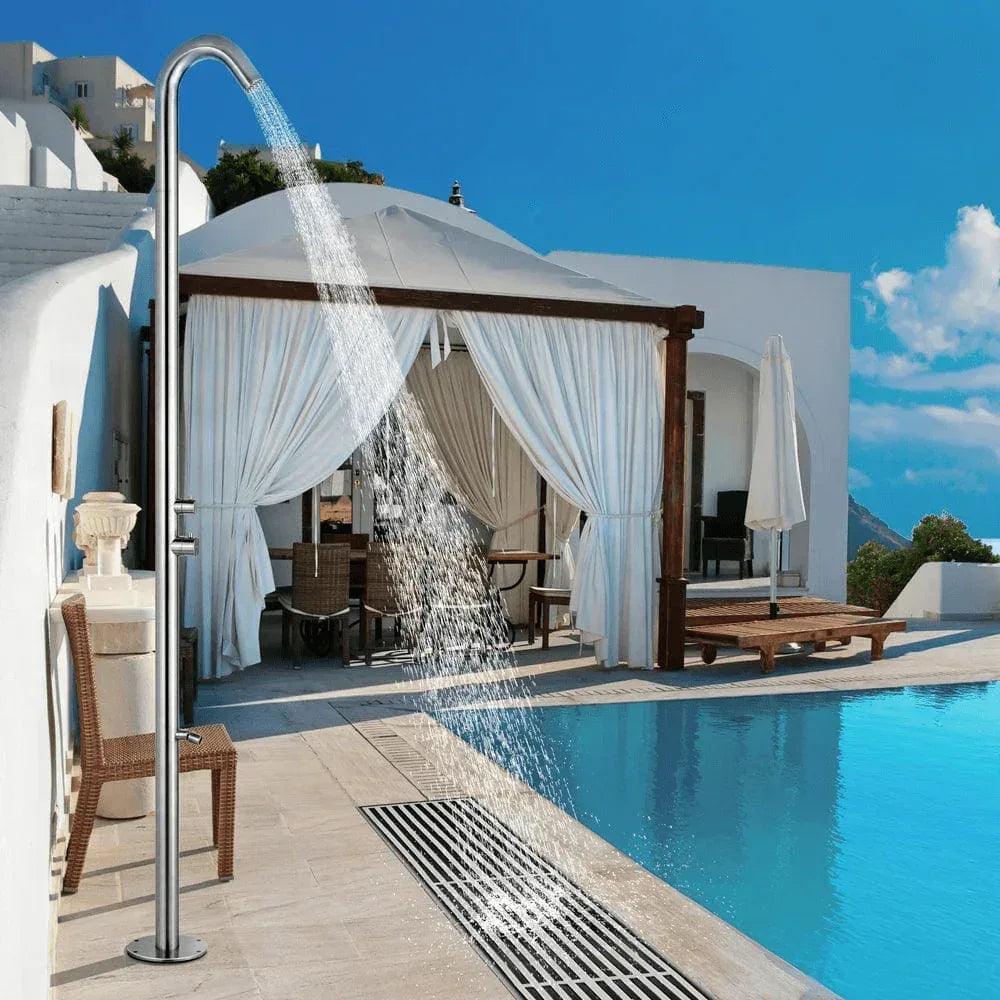
A single “best” outdoor shower does not exist. The right configuration depends on traffic, climate, and how the rinse station fits into the overall facility.
High-traffic beaches and municipal parks typically benefit from commercial, freestanding shower columns with durable valves and straightforward maintenance access. Resorts and aquatic centers may prioritize aesthetics and user experience, sometimes adding multiple heads, foot rinses, or tempered water. Schools and sports complexes often focus on durability and fast-turn use where the shower is part of a broader hydration and hygiene plan.
If you are trying to balance budget with compliance, one of the most practical approaches is to standardize most shower stations for your common use case, then intentionally design at least one accessible location with the right approach, controls, and clearances. That avoids forcing every station into a complicated footprint while still meeting the obligation.
If you need help narrowing down configurations, The Fountain Direct supports facility buyers and contractors with commercial outdoor shower options and procurement-friendly policies like price matching and freight shipping on most orders.
Common mistakes that trigger rework
Most outdoor shower rework is predictable.
Placing the shower in sand without a firm route is the big one. Next is installing controls that are technically durable but not truly accessible to operate, especially when wet. Another repeat issue is letting site furniture creep into the required clear space over time. Finally, ignoring drainage until the end leads to slippery decks and water migrating into routes that are supposed to stay navigable.
A good outdoor shower should disappear into operations. People rinse off, move on, and the staff is not constantly fixing, scrubbing, or explaining why the “accessible” station is blocked.
A closing thought for project teams
If you want fewer surprises, walk the path before you pour the pad: from accessible parking or entry to the shower controls, then back out again. That short walk will tell you more about whether your ada compliant outdoor shower will succeed than any line item in the spec book.