

Wall Mounted vs Freestanding Outdoor Shower
Compare wall mounted vs freestanding outdoor shower options for parks, pools, resorts, and public spaces based on install, durability, and upkeep.

A good outdoor shower can solve a messy, expensive problem before it reaches your building. Sand tracked into a resort lobby, chlorine carried into locker rooms, mud on pool decks, and long rinse lines at public beaches all point to the same decision: what style of shower belongs on site?
For most buyers, the real question is wall mounted vs freestanding outdoor shower. That choice affects installation cost, placement flexibility, user flow, winter performance, and long-term maintenance. If you are buying for a beach access point, hotel pool, multifamily property, municipal park, or a private amenity area with heavy daily use, the right answer depends less on looks and more on how the site actually operates.
Wall mounted vs freestanding outdoor shower: the practical difference
A wall-mounted outdoor shower attaches directly to an existing vertical surface, typically a masonry wall, structural column, equipment enclosure, or building exterior. It is often the more efficient option when water supply and drainage are already close to that wall. In the right setting, it creates a clean footprint and keeps the installation compact.
A freestanding outdoor shower is self-supporting and installed on its own post, pedestal, or shower column. It does not rely on a building wall for support, which gives designers and facility teams more freedom to place it where users actually need it. That can be a major advantage at pool entries, beachfront walkways, sports fields, and open deck areas where there is no suitable wall nearby.
Neither style is automatically better. The right fit comes down to location, usage level, structural conditions, and who will maintain it.
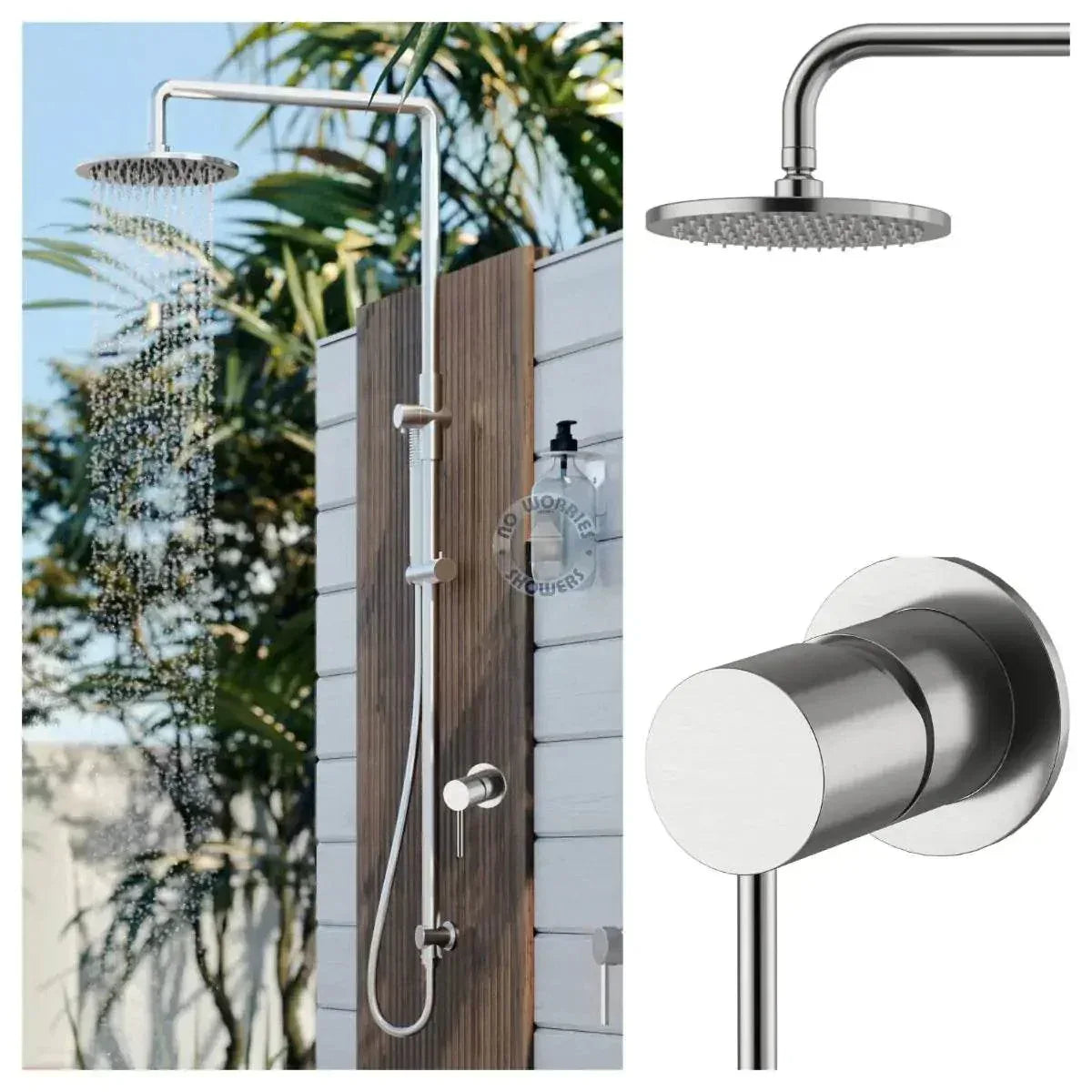
When a wall-mounted shower makes more sense
Wall-mounted units are usually the better procurement choice when you already have a stable structure in the right location. Resorts often use them along pool house exteriors or service walls near beach return paths. In those settings, wall-mounted models can lower installation complexity because the plumbing run is shorter and the unit takes up less physical space.
They also tend to work well where circulation space is limited. If you are trying to preserve deck area or keep a narrow pathway clear, mounting to a wall can help reduce obstructions. In commercial settings, that matters for both traffic flow and housekeeping access.
There is also a visual advantage. A wall-mounted unit can feel more integrated into the architecture, which is useful for higher-end hospitality projects or mixed-use properties where appearance matters as much as function. The cleaner profile may also make sense in controlled environments with moderate use rather than high-abuse public access.
That said, wall-mounted units depend heavily on the wall itself. If the structure is not strong enough, if waterproofing is a concern, or if the plumbing wall is far from where users actually enter the space, the apparent savings can disappear quickly. A wall-mounted shower in the wrong spot is still the wrong shower.
Best-fit examples for wall-mounted models
This style is often a strong match for hotel pools, private clubs, residential amenity decks, and some locker room exteriors. It is especially practical when users are already moving along the building edge and do not need the fixture placed out in the open.
For lighter-duty home pool projects, wall-mounted showers can also be a straightforward solution if the homeowner wants a compact rinse station without adding a freestanding column in the middle of the deck.
When a freestanding outdoor shower is the better choice
Freestanding units are usually the stronger option for open environments, high traffic, and public-facing installations. Beaches, parks, campgrounds, marina walkways, outdoor recreation areas, and large resort pool decks often benefit from a self-contained shower placed exactly where rinse-off demand occurs.
That placement flexibility matters more than many buyers expect. If people need to rinse off before entering a pool gate, returning from the shoreline, or stepping onto a pedestrian path, a freestanding shower can be positioned to intercept that traffic naturally. Better placement usually means better use. Better use usually means less dirt, less sand, and less cleanup downstream.
Freestanding commercial models also tend to be the better fit when durability is the top concern. Heavy-duty pedestal and column showers designed for public use are often built with tougher materials and stronger mounting strategies suited to repeated use, weather exposure, and occasional vandalism. In municipal and institutional settings, that is often the deciding factor.
There is a cost trade-off. Freestanding installations may require a more involved concrete base, longer plumbing runs, and more deliberate drainage planning. But if the result is a fixture that actually serves the public where needed, that investment can be easier to justify than forcing a wall-mounted model into a poor location.
Best-fit examples for freestanding models
Freestanding showers are commonly the right call for beachfront properties, public pools, school athletic facilities, water parks, campgrounds, and parks and recreation sites. They are also a strong option for resorts that need visible, intuitive rinse stations near beach access and outdoor amenity zones.
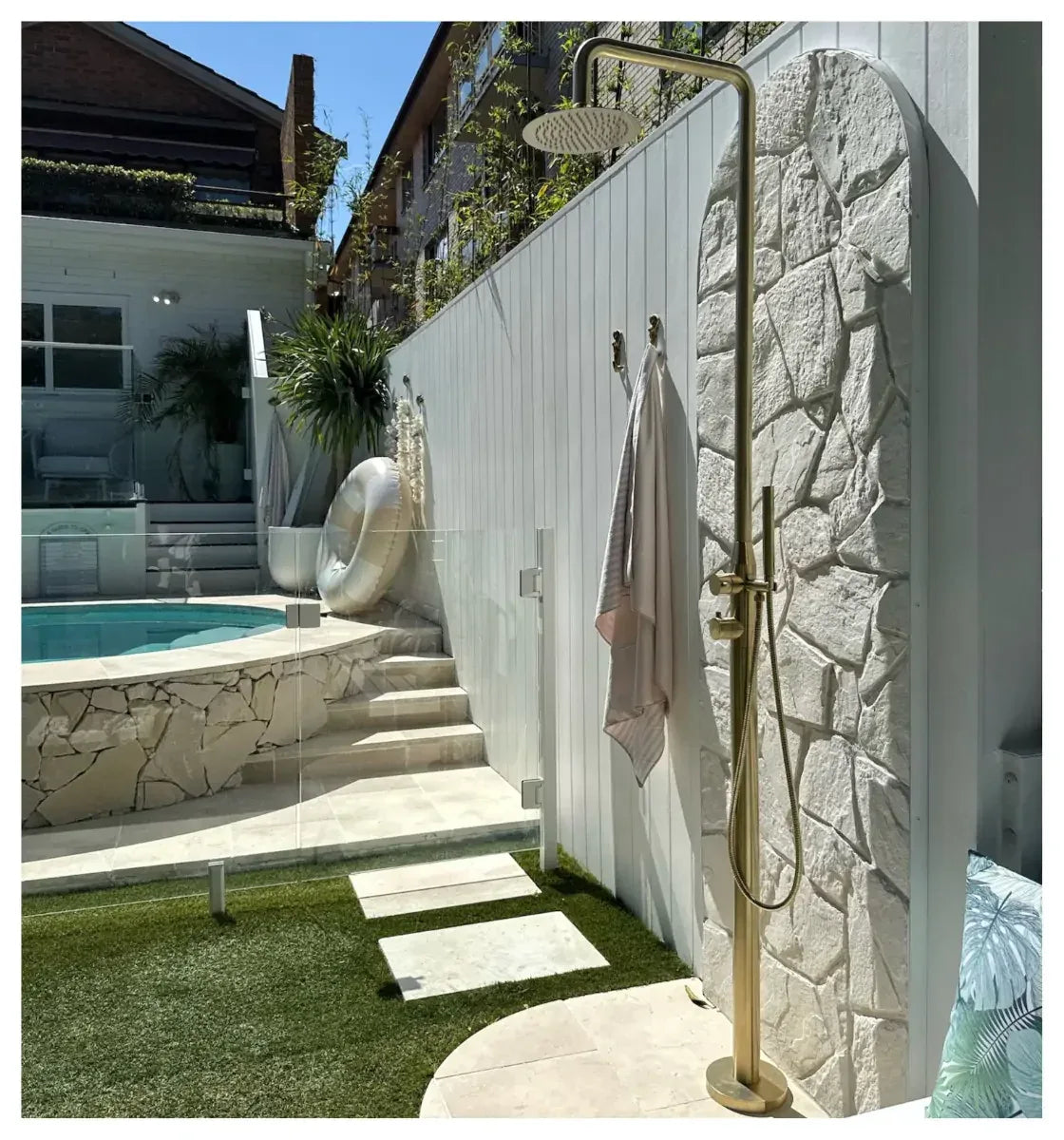
Installation and site conditions should drive the decision
For facility buyers, the wall mounted vs freestanding outdoor shower decision usually becomes clear during site review. Start with the basics: where is the water line, where will runoff go, what surface will support the unit, and where do people naturally approach from?
If you already have a structurally sound wall close to utilities and the shower location aligns with user flow, wall-mounted can be the efficient choice. If not, freestanding may be worth the added install scope because it solves the actual operational problem.
Drainage deserves special attention. Some properties can handle simple deck drainage or wash-down zones. Others need a more controlled drain strategy to avoid pooling, slippery surfaces, or erosion. Beach and pool environments can be unforgiving if drainage is treated as an afterthought.
Climate matters too. In freeze-prone regions, buyers should look carefully at seasonal shutdown procedures, frost-resistant construction, and how exposed supply lines are. Commercial outdoor fixtures need to match the environment, not just the architecture.
Durability, maintenance, and public use
In public and semi-public spaces, maintenance teams rarely care which style looks better if the unit is difficult to service or fails under constant use. Material quality, valve durability, corrosion resistance, and how the fixture stands up to abuse should carry real weight in the decision.
Wall-mounted models can be easier to protect if they are tucked into a supervised area or mounted along a managed facility perimeter. Freestanding models, especially in open-access environments, should be selected with vandal resistance and long-term serviceability in mind. Stainless steel construction, commercial-grade components, and straightforward access to replacement parts matter more than decorative styling.
For beaches and resorts, salt air exposure can accelerate wear. For public parks, unsupervised use raises the bar on toughness. For multifamily and hospitality properties, maintenance teams often prefer fixtures that are simple to rinse down, inspect, and winterize. Those are practical buying concerns, not minor details.
User experience and compliance considerations
The shower that gets used is the shower placed where people expect it. That is why freestanding models often perform well in open sites - they are visible and intuitive. Wall-mounted units can also work extremely well, but only when they are not hidden against a side wall that users bypass.
Accessibility and surrounding clearances should be reviewed early, especially in public or institutional projects. Depending on the overall site program, buyers may also need to think beyond the shower itself and consider route access, nearby hydration fixtures, and whether the broader outdoor amenity area supports barrier-free circulation.
In higher-traffic settings, dual-user or multi-sided configurations can help reduce wait times. At some sites, adding foot rinse functionality is just as important as overhead spray. That is particularly true at beaches and pool entries, where sand and deck debris are part of the daily maintenance burden.
Which option is usually more cost-effective?
If all conditions are equal, wall-mounted units can be less expensive to install because they may use existing structures and shorter utility connections. But all conditions are rarely equal.
A freestanding unit often delivers better value when it improves placement, captures more rinse traffic, and reduces the operational mess entering the facility. For parks, resorts, and public-use properties, that can translate into cleaner interiors, lower maintenance strain, and a better guest experience.
That is why the cheapest unit on paper is not always the lowest-cost solution over time. Buyers should look at total installed cost, expected use, exposure level, maintenance burden, and replacement cycle.
If you are sourcing for a commercial project, it helps to work with a supplier that understands public-use fixtures, lead times, and environment-specific requirements. The team at The Fountain Direct supports buyers who need heavy-duty outdoor showers for beaches, resorts, parks, and pool environments, with product guidance based on actual installation conditions, not guesswork.
The right outdoor shower should make the site easier to run a week after opening, not just easier to approve on bid day.