

How to Spec a School Drinking Fountain
Learn how to spec a drinking fountain for schools with the right ADA, bottle filler, vandal-resistant, and maintenance-ready choices.

A school drinking fountain usually becomes a problem long before it becomes a line item. It starts when students crowd one unit between classes, custodians keep dealing with splash and clog issues, or an older fountain no longer fits ADA expectations. By the time a district decides to replace or add units, the real question is not which model looks good on a cut sheet. It is how to spec a drinking fountain for schools so it holds up, stays compliant, and does not create a maintenance headache six months after install.
That spec decision matters more in schools than in many other facilities. K-12 buildings get heavy daily traffic, uneven use patterns, and a wide range of users from young children to staff and visitors. A fountain that works fine in a low-traffic office may fail quickly in a middle school corridor, a gym lobby, or an outdoor recess area. The right spec has to reflect use case, installation conditions, and the district's maintenance capacity.
How to spec a drinking fountain for schools
The fastest way to get the spec right is to stop thinking about "a fountain" as one product. In schools, the better approach is to define the application first. An elementary hallway, a high school athletic wing, a cafeteria, and an outdoor play area often need different configurations.
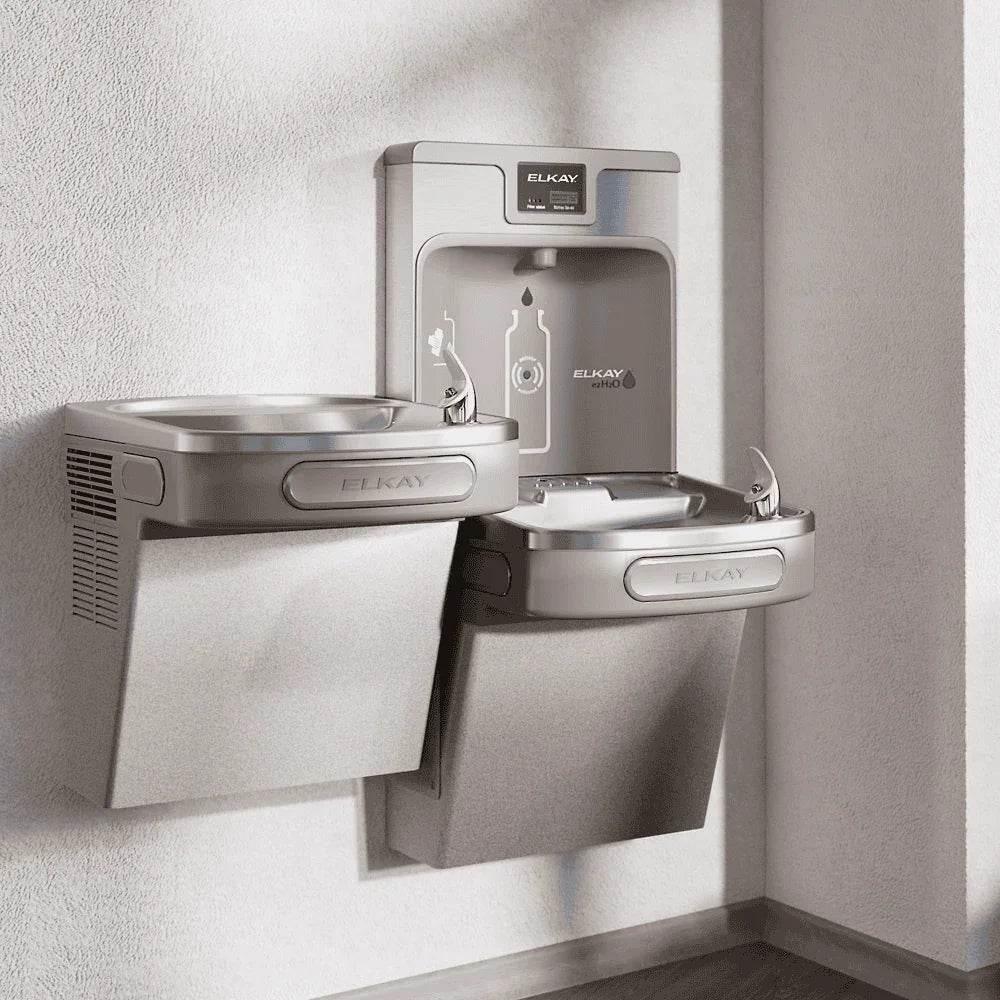
Start with location and traffic. Interior academic corridors often benefit from bi-level wall-mounted units because they serve different users without taking up floor space. A bottle filler paired with the fountain now makes sense in most districts because students increasingly carry reusable bottles, and bottle-filling demand can exceed direct drinking demand. In high-traffic schools, a single drinking bubbler without a filler can feel outdated almost immediately.
Then consider who will use it. If the fixture serves the general school population, ADA and barrier-free requirements are not optional details to sort out later. They should shape the spec from the beginning, including approach clearances, mounting height, knee clearance, and operable controls. If the fountain is intended for young children, mounting height and accessibility should be evaluated with that age group in mind rather than copied from a standard adult installation.
The third question is abuse tolerance. Schools are hard on fixtures. If the unit will sit in an unsupervised hallway, near a gym, or in an exterior location, vandal resistance is not a premium add-on. It is basic risk control.
The school fountain spec choices that matter most
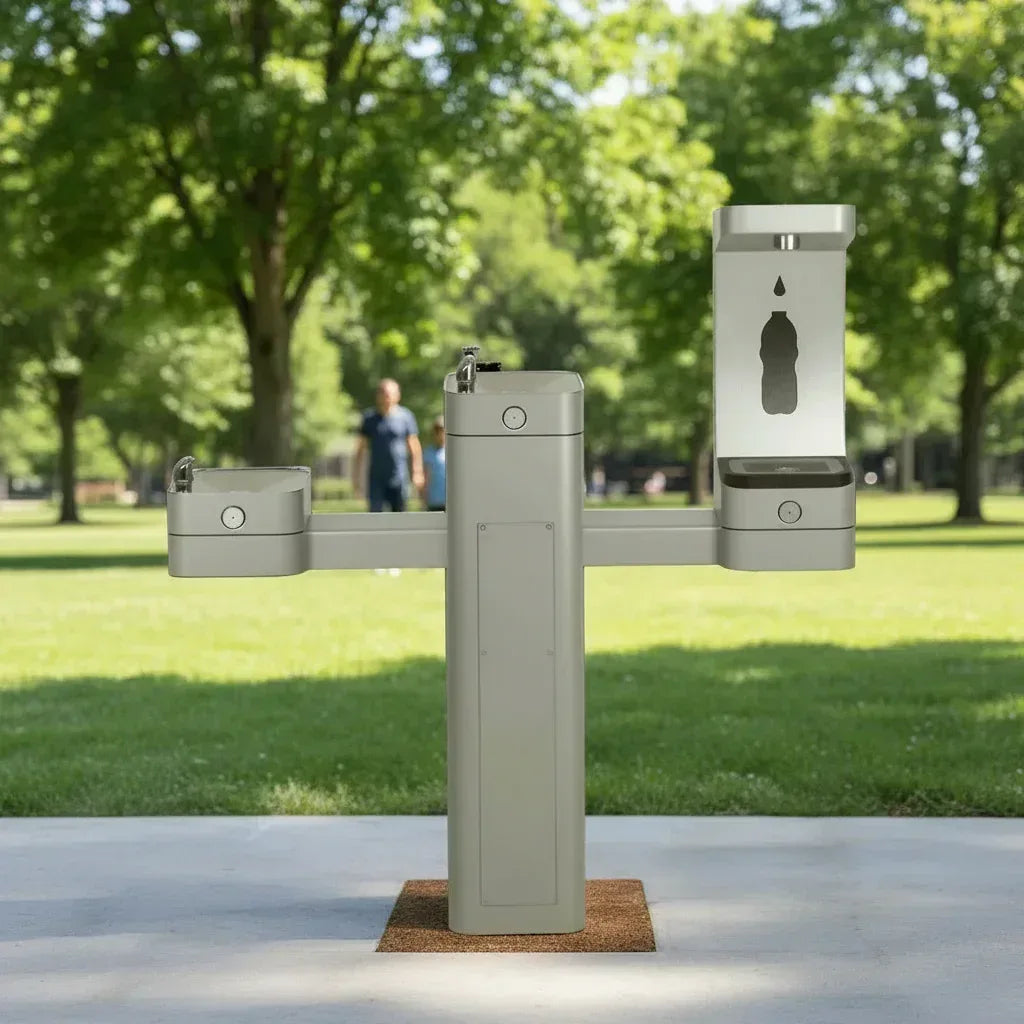
The fixture style affects both user experience and long-term service calls. Wall-mounted fountains are common indoors because they preserve floor area and support ADA layouts more easily in many renovations. Free-standing or pedestal styles can make more sense outdoors, where wall mounting may not be possible and durability becomes the bigger concern.
Bottle fillers deserve special attention. In many school projects, they are no longer a nice extra. They reduce mouth contact, support hygiene goals, and align with how students actually consume water during the day. That said, a bottle filler adds components, and more components can mean more maintenance if the product is underbuilt or improperly matched to the environment. The right answer depends on traffic, student habits, and whether the maintenance team wants filtration monitoring, filter replacement schedules, and sensor components in that location.
Filtered and chilled units also require a practical review. Filtered water can be a strong selling point for districts focused on water quality perception and student confidence. Chilled water is popular, especially in warmer regions, but it adds complexity, power requirements, and service considerations. In some schools, a non-refrigerated bottle filler and fountain combination is the smarter spec because it lowers cost and simplifies maintenance while still improving access.
Push-button activation remains a solid choice where reliability is the top priority. Hands-free sensor operation can improve hygiene and user preference, but schools should weigh that benefit against sensor maintenance, power dependency, and the realities of high-use public environments. There is no universal winner. A district with strong facilities support may be comfortable standardizing on sensor-equipped units. Another may prefer mechanical activation for easier field service.
ADA compliance is not a box to check later
When teams spec a drinking fountain for schools, ADA errors often happen at the installation planning stage rather than in the product selection itself. A compliant fountain can still become a noncompliant installation if rough-in height, clear floor space, or side approach conditions are missed.
That is why the spec should identify more than the model number. It should also define mounting conditions, accessibility intent, and whether the unit is part of a bi-level arrangement or a single accessible station. In renovation work, existing wall conditions, plumbing locations, and corridor widths may limit what can be installed without additional work. Those constraints should be surfaced early, not after the equipment arrives.
For schools, ADA planning also overlaps with student independence. A correctly specified unit supports younger students, wheelchair users, staff, and visitors without creating awkward access issues. That is not just a compliance matter. It affects whether the fixture actually gets used.
Vandal resistance and maintenance should drive the spec
A school fountain is only as good as the district's ability to keep it operating. That makes material quality, component protection, and serviceability central to the buying decision.
For indoor schools, heavy-gauge construction, tamper-resistant fasteners, protected bubblers, and durable activation controls are worth prioritizing. For outdoor installations, the spec should go further. Weather exposure, drainage, and seasonal freeze conditions can shorten the life of a standard unit fast. In colder climates, freeze-resistant or frost-proof outdoor models are often the right call, especially if the school expects year-round use or wants to avoid seasonal shutdown complexity.
Maintenance teams should also think about replacement parts availability and brand support. Authorized equipment from established manufacturers usually provides a better long-term path than off-brand alternatives that save a little upfront but create sourcing problems later. In a district environment, a lower first cost is not a savings if the unit fails early or parts become difficult to get.
Indoor versus outdoor school applications
Indoor school fountains usually prioritize ADA layout, bottle filling speed, and cleanability. Hallways, cafeterias, and media centers often benefit from quiet, compact units that can serve frequent use between bells. Here, splash control and drainage performance matter more than buyers sometimes expect. If the design creates standing water or frequent overspray, custodial complaints arrive quickly.
Outdoor school fountains are a different category. They often serve playgrounds, athletic fields, bus areas, and campus commons where durability takes priority. Materials should be selected for exposure, not just appearance. Powder-coated finishes may work in some settings, while stainless steel can be the safer long-term choice in others. If the unit is located near sports facilities or public access areas, vandal resistance becomes even more important.
Some schools also need pet-friendly or dual-use public hydration setups in shared community spaces, though that is more common in parks and recreation settings than on K-12 campuses. Still, if a school site doubles as a community field after hours, that broader use pattern should influence the spec.
Procurement details that save trouble later
A good school fountain spec should account for more than fixture performance. Lead times, shipping method, installation readiness, and seasonal purchase timing all affect project success.
For summer school renovations, districts should lock specifications early enough to account for freight and submittal review. This matters even more for larger bottle filling stations, outdoor pedestal units, or specialty vandal-resistant models that may not ship as quickly as standard stock items. If the project has a hard completion date before students return, procurement timing is part of the technical decision.
It also helps to standardize where possible. If a district can narrow its spec to a small number of trusted configurations for elementary, secondary, indoor, and outdoor use, maintenance and future replacement become much easier. That kind of standardization reduces training needs, simplifies parts stocking, and makes capital planning more predictable.
For buyers who want practical sourcing support, working with a specialist supplier such as The Fountain Direct can also streamline selection across ADA-compliant, vandal-resistant, indoor, and outdoor school applications without turning the process into a research project.
A better way to think about school fountain specs
The best school fountain specs are not built around a catalog page. They are built around student behavior, building conditions, and maintenance reality. If a unit will face constant traffic, limited supervision, and years of hard use, the spec should reflect that honestly from day one.
Get the application right, and the fountain becomes one of those rare school fixtures that nobody talks about because it simply works. That is usually the real win.