

Touchless Bottle Filler Trends Buyers Should Watch
See the latest touchless bottle filler trends shaping schools, offices, parks, and public spaces - and how buyers can choose the right unit fast.

If you are pricing bottle filling stations right now, you have probably noticed that touchless bottle filler trends are no longer just about adding a sensor and calling it done. Buyers are comparing filtration, durability, ADA fit, retrofit options, outdoor readiness, and lead times at the same time. The real question is not whether touchless matters. It is which features actually justify the spend for your project.
For schools, offices, gyms, parks, and municipal buildings, the market has become more segmented. That is good news if you know what to look for. It also means the cheapest unit on paper is often not the best value once you factor in installation conditions, expected traffic, and replacement cycles.
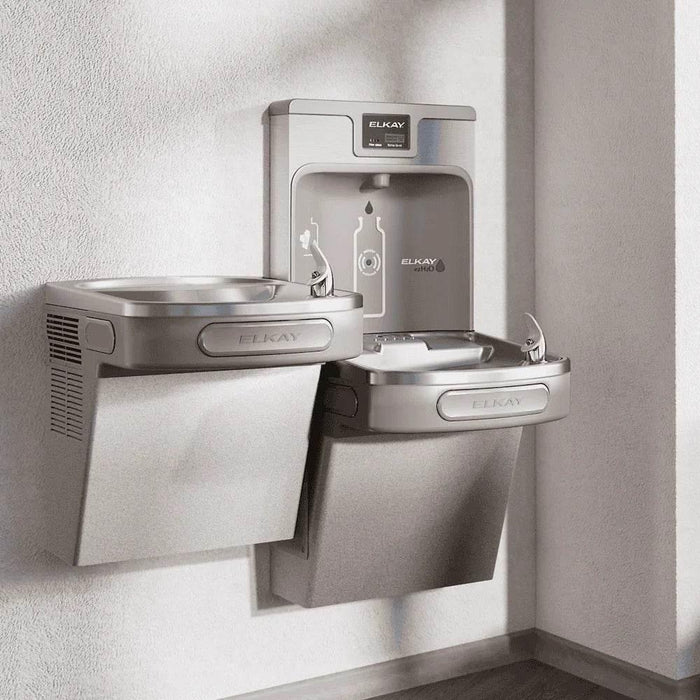
Touchless bottle filler trends are moving toward application-specific buying
A few years ago, many buyers treated bottle fillers as a standard commodity. Now the strongest touchless bottle filler trends are pushing in the opposite direction. Product selection is getting more use-case driven.
A K-12 hallway unit has different priorities than a parks department installation or a corporate office renovation. In schools, buyers usually care most about durability, easy activation, filtration options, and models that can handle heavy daily use without becoming a service headache. In offices and fitness spaces, appearance, chilled water, and filtered water tend to move higher on the list. For public parks and transit-adjacent locations, vandal resistance, outdoor-rated construction, and freeze-resistant design are often the deciding factors.
That shift matters because it changes how you should compare products. If you are still shopping bottle fillers by price alone, you are likely comparing the wrong group of units.
Sensor performance is under more scrutiny
Touchless activation is now expected, but sensor quality is where buyers separate dependable commercial models from lower-end options. One of the clearest touchless bottle filler trends is the focus on activation consistency.
Procurement teams and contractors do not want callbacks because a sensor is too sensitive, not sensitive enough, or unreliable in bright light or high-traffic areas. A bottle filler that misfires or frustrates users creates complaints fast, especially in schools and healthcare-adjacent settings.
This is why top commercial brands continue to win spec decisions. Buyers are leaning toward proven sensor systems from established U.S. manufacturers instead of taking chances on unfamiliar imports with thinner support. On a bid sheet, two units can look similar. In actual use, sensor reliability can be the difference between a good purchase and a recurring problem.
Filtration is becoming a stronger buying trigger
More projects now treat filtration as a core feature rather than an upgrade. That does not mean every location needs it. It means buyers are more likely to ask upfront whether a filtered touchless bottle filler makes more sense than a standard non-filtered unit.
In schools, offices, and wellness-focused commercial spaces, filtered models are often easier to justify because they align with user expectations and can support internal facility standards. In rough public-use settings, the math can be different. Some buyers prefer a simpler non-filtered station if cartridge replacement logistics are a concern or if the location is exposed to abuse.
The trade-off is straightforward. Filtration can improve user confidence and product appeal, but it adds ongoing replacement planning. If your facility team is disciplined about scheduled service, filtered units usually make sense. If you need the lowest-maintenance setup possible, a non-filtered touchless unit may be the better fit.
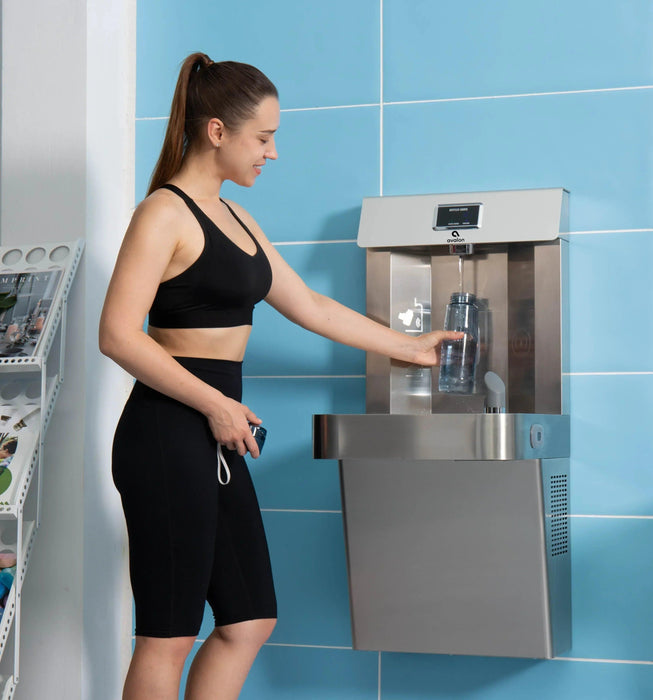
Retrofits are staying popular for budget-conscious projects
Not every job calls for a full tear-out. One of the most practical touchless bottle filler trends is the continued demand for retrofit solutions that convert existing drinking fountains into bottle filling stations.
This is especially relevant in schools, universities, and older commercial buildings where budgets are tight but the need is immediate. A retrofit can help modernize an existing fountain location without the cost and disruption of a full replacement. For many buyers, that is the fastest path to adding touchless capability.
That said, retrofit decisions depend on the existing fountain condition and compatibility. If the old unit is already near the end of its service life, a retrofit may save money today but create a replacement problem sooner than expected. If the base fountain is in solid shape and compatible with a bottle filler add-on, retrofitting can be a smart move.
Outdoor demand is getting more specific
Outdoor bottle filling is no longer a niche request. Parks, campuses, sports complexes, multifamily common areas, and hospitality properties are asking for it more often. But buyers are becoming more careful about what outdoor-ready really means.
An outdoor touchless bottle filler needs more than weather exposure tolerance. Depending on the climate, you may need freeze-resistant or frost-proof construction, tamper-resistant components, and materials that hold up against corrosion and hard public use. Stainless steel remains popular, but not all stainless builds are equal in high-abuse settings.
This is one area where application mistakes get expensive. An indoor-style unit placed in a semi-exposed area can become a warranty dispute waiting to happen. Buyers who know they need outdoor performance should shop within that category from the start rather than trying to stretch an indoor product into a tougher environment.
ADA and inclusive design are still central, not optional
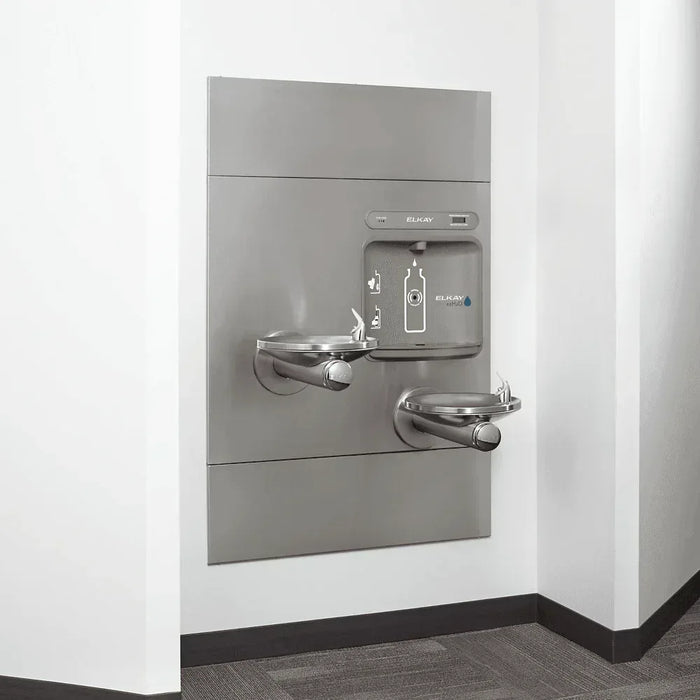
For institutional and public projects, ADA compliance is not a trend in the fashionable sense. It is a baseline requirement. What has changed is that buyers increasingly want compliance integrated into better-looking, more compact, more practical bottle filler designs.
That has led to stronger demand for wall-mounted combinations and layouts that serve both bottle filling and drinking fountain access without creating awkward traffic flow. In schools and municipal buildings, this matters because the station has to work for a broad user base while fitting within existing corridors or common areas.
The better manufacturers have responded with cleaner profiles and more thoughtful form factors. For the buyer, the takeaway is simple: do not treat ADA as a box to check after the fact. Make it part of the first comparison, especially if your project has public access or bid requirements.
Buyers are paying closer attention to vandal resistance
In unsupervised or high-abuse environments, the conversation has shifted from appearance to survivability. That is one of the most practical touchless bottle filler trends in municipal and public-use purchasing.
For parks, schools, transportation facilities, and some multifamily properties, recessed designs, heavier-gauge construction, protected activation areas, and tamper-resistant components can be worth the premium. A sleek station that looks great in a corporate office may not last in a public recreation area.
This is where brand selection matters. Some manufacturers are simply better positioned for rough-use environments. Others shine in interior commercial settings where style and user experience matter more than anti-vandal construction. Matching the brand to the site conditions is usually smarter than chasing a one-size-fits-all answer.
Lead times and availability are influencing specs
Buyers are also making more pragmatic decisions based on project schedules. The best spec in the world does not help if it misses the opening date, the school break window, or the grant spending deadline.
That is pushing more purchasers toward in-stock or more readily available models from established brands. In many cases, a readily available unit from Elkay, Haws, Halsey Taylor, Stern Williams, or another proven manufacturer is a better decision than a harder-to-source option with marginal feature differences.
This is also why working with a specialist retailer matters. When you are balancing submittals, budget approval, and shipping windows, you need clear answers on model fit, brand differences, and what is actually worth paying more for. A general catalog site rarely helps at that level.
What smart buyers are doing now
The buyers making the best decisions are narrowing their options by environment first, then by feature set. They are asking whether the station is for indoor or outdoor use, whether filtration is necessary, whether vandal resistance is a priority, whether ADA constraints affect the model choice, and whether a retrofit makes more financial sense than a full replacement.
After that, price becomes more meaningful because you are comparing the right products instead of mixing commercial-grade units with products built for lighter-duty use. That is also when total purchase value comes into focus - manufacturer warranty, freight cost, sales tax impact, and return flexibility can change the real bottom line more than a small difference in unit price.
Trusted by 800+ customers, The Fountain Direct helps buyers cut through that noise with specialist guidance, top U.S. brands, Lowest Price Guaranteed, free freight shipping, no sales tax, a 30-day return policy, and full manufacturer warranty coverage. If you are buying on a deadline or need to match the right touchless bottle filler to a school, office, park, or public facility, that combination saves time as much as money.
The market is not moving toward one perfect touchless station. It is moving toward better fit. If you buy based on where the unit will live, who will use it, and how much abuse it will take, you will end up with a bottle filler that performs the way it should from day one.