

How to Plumb an Outdoor Shower Right
Learn how to plumb outdoor shower with mixing valve for reliable hot and cold control, code-ready installation, and lower maintenance outdoors.

A cold-only rinse station is easy to install. It is also the fastest way to get complaints from guests, tenants, or pool users who expected a usable shower instead of a shock. If the goal is a dependable amenity for a beach access point, resort pool deck, clubhouse, or even a higher-end home pool project, the plumbing plan matters as much as the fixture.
When you plumb outdoor shower with a mixing valve, you are solving for comfort, safety, and serviceability at the same time. The valve is what turns two supply lines into a controlled user experience. Done well, it helps prevent temperature swings, protects users from scalding, and reduces the callbacks that come from makeshift outdoor installations.
Why a mixing valve changes the whole installation
An outdoor shower without a mixing valve is usually a compromise. You either run cold water only, or you try to manage hot and cold at separate controls and leave the user to sort it out. That can work in a private backyard where expectations are low and use is light. It is a poor fit for public or commercial settings.
A proper mixing valve blends hot and cold water before it reaches the shower head or body spray. In practical terms, that means more stable output temperature, better user comfort, and tighter control over risk. In heavy-use environments like resorts, beach clubs, multifamily pool areas, and municipal recreation sites, those are not minor upgrades. They are part of a fixture that feels intentionally specified rather than improvised.
There is also a maintenance angle. Outdoor plumbing deals with sun exposure, wind, minerals, corrosion, seasonal shutdowns, and a wider range of user behavior than indoor fixtures. A commercial-grade shower with a quality valve assembly is easier to defend from a lifecycle cost standpoint than a low-cost setup that needs repeated adjustment or replacement.
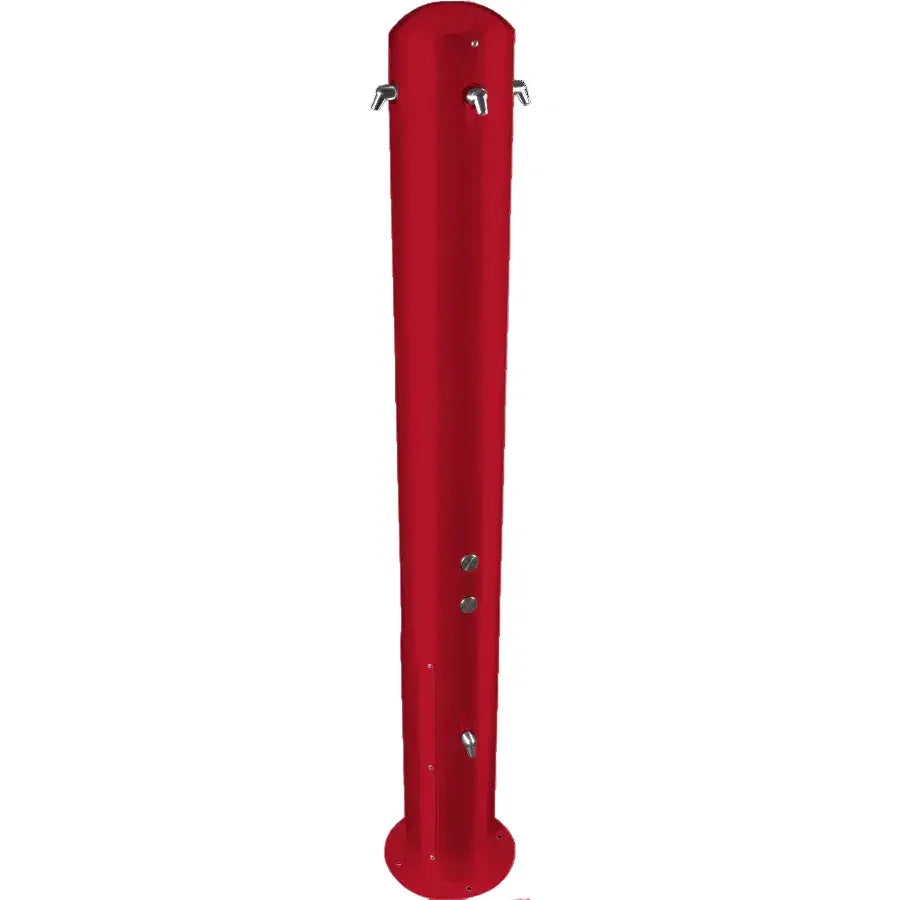
What you need before you plumb an outdoor shower with a mixing valve
The right layout starts with the use case. A resort shower station serving barefoot guests has different demands than a single shower near a private lap pool. Before rough-in, decide whether the shower is for rinsing sand, post-swim cleanup, ADA-oriented access needs, or a premium hospitality experience. That affects fixture height, valve style, flow expectations, drainage design, and freeze protection.
You will also need to confirm four basics early: available hot and cold supply lines, local code requirements, drainage method, and climate exposure. Many installation problems come from selecting the fixture first and asking infrastructure questions later.
If hot water is not reasonably available, a mixing valve may still be part of the long-term plan, but the economics change. Trenching, insulation, recirculation considerations, and heat loss can turn a simple project into a broader site upgrade. That does not mean it should not be done. It means buyers should price the plumbing scope honestly before procurement.
Supply lines, shutoffs, and valve placement
For most outdoor shower applications, you will run separate hot and cold supply lines to the valve body or fixture assembly. Commercial-grade units may include integrated controls, while others require the valve to be installed within a wall, chase, or adjacent service area. The best arrangement is the one that gives users easy operation and gives maintenance staff safe access.
Each supply should have its own shutoff upstream. That sounds basic, but it matters in public settings. If a cartridge fails or a line needs service, isolating the shower without shutting down nearby amenities saves time and avoids unnecessary disruption.
Valve placement should protect the assembly from damage and weather as much as possible. Exposed valves can work, especially on purpose-built stainless outdoor showers, but they should be selected for outdoor duty. If the installation is in a vandal-prone area, recessed or protected configurations are often a smarter choice than decorative residential trim.
Picking the right mixing valve for outdoor duty
Not every mixing valve belongs outside. This is where many spec decisions go wrong.
For commercial or public-facing installations, a pressure-balancing or thermostatic mixing valve is usually the safer route than a basic manual mixer. Pressure-balancing valves help reduce sudden temperature swings when supply pressure changes. Thermostatic valves provide more precise control and are often preferred where user comfort and safety are higher priorities.
The trade-off is cost and complexity. A simple manual mixer costs less and may be adequate for light-duty private use. A thermostatic system costs more upfront, but it may be the better value where liability, guest experience, or repeat daily traffic matter. In resorts and public recreation facilities, that difference is often easy to justify.
Material selection matters too. Stainless steel, brass rated for exterior conditions, and corrosion-resistant internal components tend to perform better in coastal or chemically treated environments. If the shower is near salt air or pool chemicals, low-grade components will show it quickly.
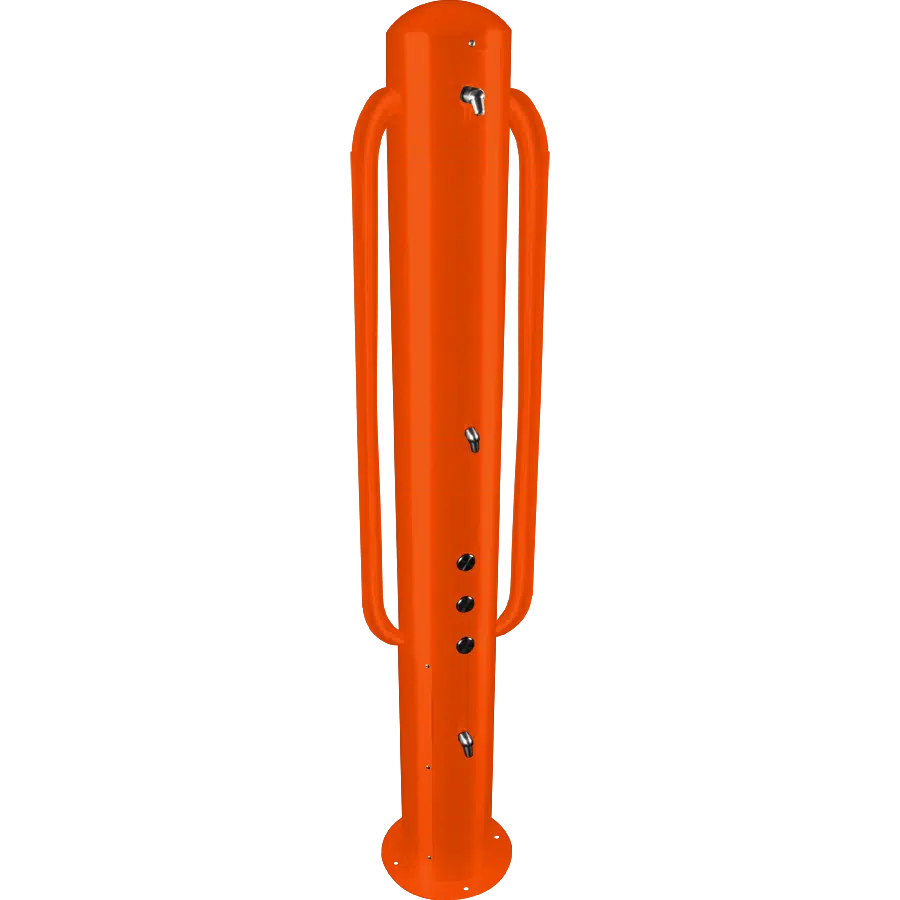
Drainage is not optional
A good shower can still become a bad installation if drainage is treated as an afterthought. Outdoor users track water, sand, grass, sunscreen residue, and debris. If runoff pools around the base, the area becomes slippery, unsanitary, and hard to maintain.
Some sites can discharge into a properly designed dry well or stone bed, depending on local requirements and water volume. Others need connection to sanitary drainage or a dedicated receptor. The right answer depends on jurisdiction, site conditions, and whether soaps or shampoos will be used. A simple rinse station has more flexibility than a true bathing shower.
For commercial projects, drainage should be discussed as early as the fixture itself. It affects slab work, trenching, slope, accessibility, and long-term housekeeping.
Freeze protection and seasonal planning
In warm climates, outdoor shower plumbing is straightforward. In freeze-prone regions, it is not. If temperatures drop below freezing, the installation needs a real winterization strategy, not just hope.
That may mean frost-resistant design, stop-and-waste valves, drain-down capability, insulated chases, or seasonal shutdown procedures. In some cases, the right answer is a seasonal shower that can be isolated and drained each fall. In others, especially for year-round hospitality or municipal use, a freeze-resistant assembly is worth the added investment.
This is one of those it-depends decisions. A Gulf Coast resort and a Midwest park district should not buy to the same standard. Climate, usage window, and maintenance staffing all matter.
Commercial vs residential expectations
A homeowner may be satisfied with an outdoor shower that looks good and works on weekends. A facility manager usually needs more. They need durability, code awareness, replacement part availability, and predictable performance under repeated use.
That is why heavy-duty outdoor showers often include sturdier posts, vandal-resistant hardware, better valve protection, and simpler service access. The fixture is only part of the purchase decision. The real question is whether the installed unit will still be functioning after a season of traffic, weather, and rough handling.
For buyers comparing options, this is where purpose-built products stand apart from adapted residential hardware. Commercial-grade outdoor showers are designed around public use realities, not just appearance.
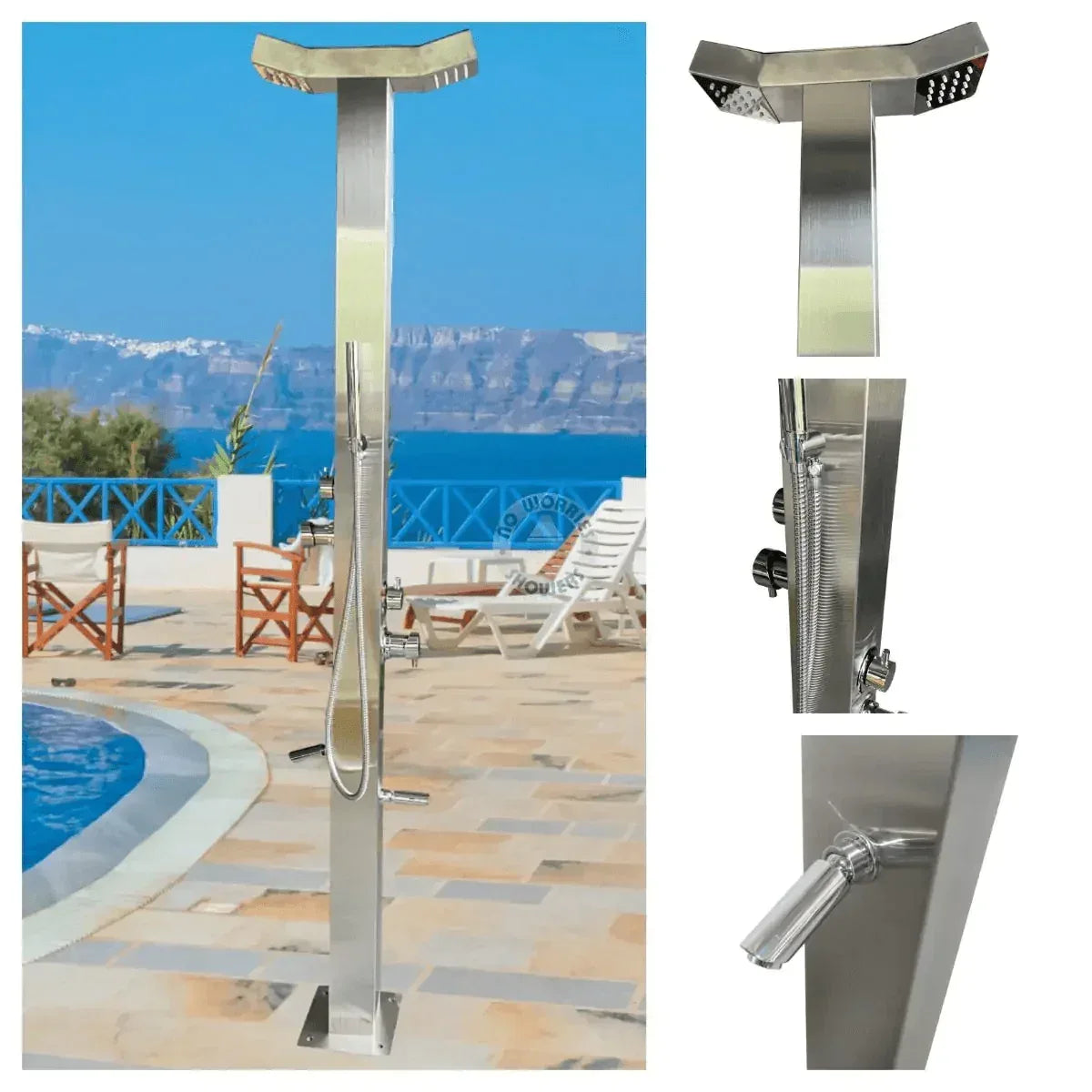
Common mistakes when installing an outdoor shower with a mixing valve
The most common issue is underestimating the hot water side. Installers sometimes focus on the cold supply and fixture placement, then realize too late that the hot line run is long, uninsulated, or inefficient. That creates delays, heat loss, and poor user experience.
Another mistake is pairing a quality shower body with an indoor-rated valve or trim set. Exterior exposure changes everything. UV, moisture, mineral buildup, and tampering all shorten the life of marginal components.
Drainage shortcuts are another problem, especially around pools and beach entries. Water has to go somewhere, and if that answer is "into the walking surface," maintenance teams inherit the problem.
Finally, some buyers overspecify for a light-duty project or underspecify for a high-traffic one. A private cabana shower does not need the same vandal resistance as a public beachfront installation. A municipal rinse station should not be built to backyard standards.
Buying for long-term value
If you are sourcing for a school, parks department, resort, HOA, or commercial property, the smartest purchase is rarely the cheapest fixture line on a spreadsheet. It is the one that fits the site, climate, user load, and maintenance reality.
When you plumb an outdoor shower with mixing valve, the fixture becomes part plumbing system and part public-use equipment. That is why buyers often do best with commercial-grade units from established manufacturers, clear warranty coverage, and supplier support that can answer practical questions before the order ships. At The Fountain Direct, that is exactly how many outdoor shower projects are scoped - around use case, durability, and installation readiness rather than generic hardware-store assumptions.
The best outdoor shower installs feel uneventful after opening day. Users get comfortable water. Staff get fewer service calls. The site stays cleaner and safer. That is usually the sign the plumbing was planned correctly from the start.