

Cost to Install a Yard Hydrant: Get a Quote (2026)

The cost to install a yard hydrant in 2026 requires a site-specific quote; the supplied information does not establish a reliable installed average or range. The fixture is only part of the job: the quote must also account for the water connection, excavation or mounting, freeze protection, drainage, and any required permits. Ask for an itemized installed quote before choosing a hydrant.
- The cost to install a yard hydrant in 2026 needs a site-specific quote; no reliable installed average is supplied.
- A buried, self-draining hydrant and a pedestal jug filler serve different needs and require different installation plans.
- The Fountain Direct is best for buyers seeking a pedestal yard hydrant or jug filler for a planned outdoor water station.
- Compare connection, trenching, drainage, freeze protection, and restoration in every contractor quote.
How much does it cost to install a yard hydrant?
There is no supportable single installed figure for 2026 without a fixture choice and site plan. Start by deciding whether you need a buried, self-draining yard hydrant or a pedestal water station, then give contractors the proposed location and existing water-line details. The yard hydrant guide for parks and campgrounds provides a useful starting point for defining how the outlet will be used; the installed quote still has to reflect your site.
| Installation choice | Best for | Work to include in the quote | Main limitation |
|---|---|---|---|
| Replace an existing buried yard hydrant | A site that already has a suitable connection and needs the same type of outlet | Removal, connection inspection, replacement, drainage, and surface repair | The existing supply or drain arrangement may need work |
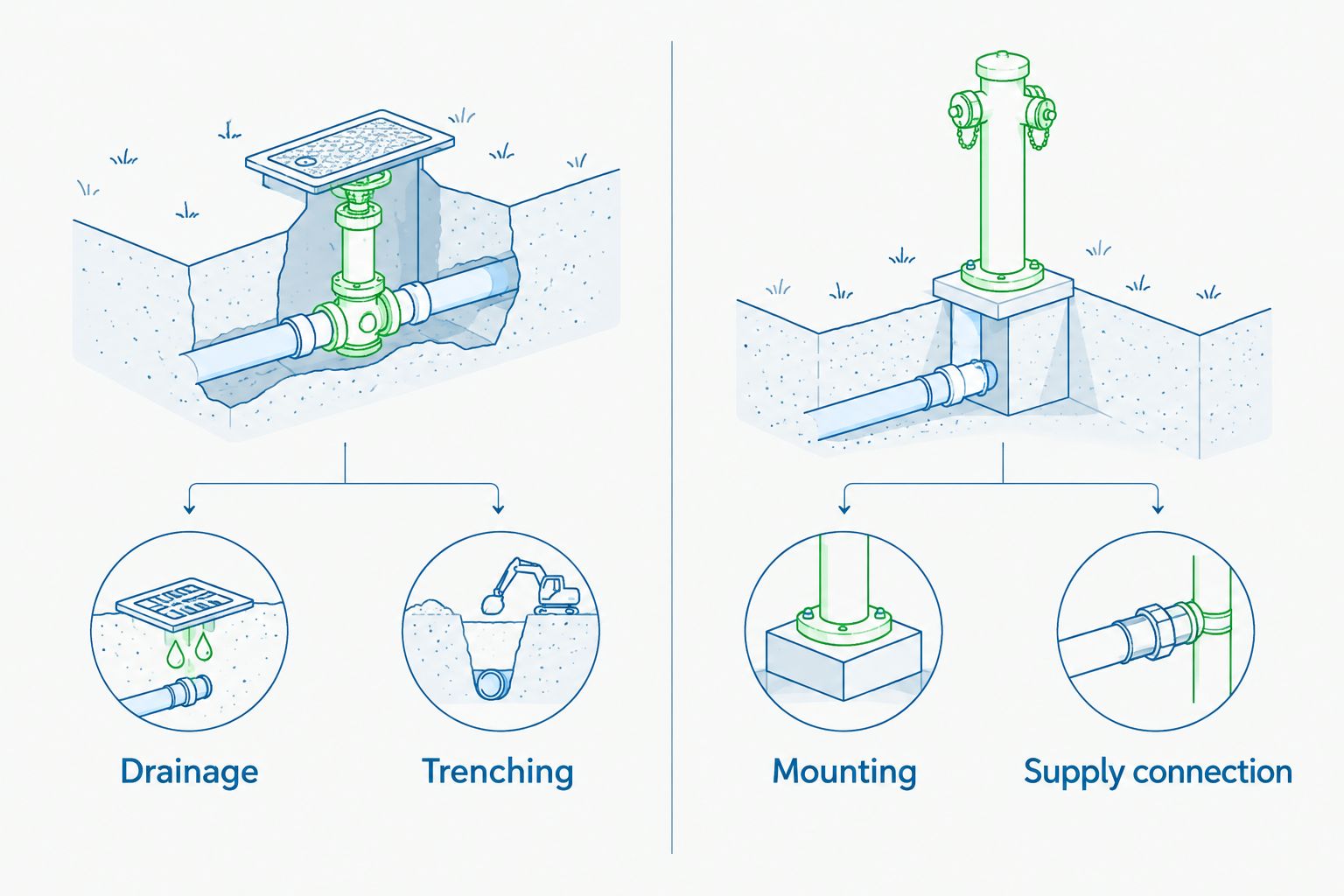
| Install a new buried, self-draining yard hydrant | A remote hose outlet where below-ground drain-back is part of the design | Water-line connection, trenching, drain arrangement, backfill, and surface restoration | Excavation and site conditions drive the scope |
| Install a pedestal hydrant or jug filler | A planned outdoor filling point with a suitable mounting location | Supply connection, mounting, any specified drain or backflow measures, and surface restoration | A pedestal fixture is not automatically a self-draining, freeze-protected buried hydrant |
Do not compare fixture listings as though they were installed quotes. A replacement at an existing connection and a new outlet across a paved site are different plumbing jobs, even if the visible fixtures look similar. In 2026, the useful comparison is the complete scope shown in each contractor's proposal.
Why this matters
A low fixture-only figure cannot tell you what it takes to make an outdoor outlet usable. The connection may be close to the proposed location, or the job may require a new route through soil, landscaping, or pavement. The contractor also needs to establish where water goes when the fixture shuts off and whether the selected equipment suits the site's freezing conditions.
For a park, campground, school, or other public facility, describe who will use the outlet before requesting quotes. A hose connection for maintenance, a jug-filling point for visitors, and a winter-use outlet are not interchangeable specifications. Define the use first; the installation method follows.
What should an installed yard hydrant quote include?
Ask each contractor to price the same written scope. If one proposal includes excavation and restoration while another lists only a plumbing connection, the totals do not answer the same question.
- The specified fixture. Record the exact model and its intended use. State whether the job calls for a buried, self-draining hydrant, a pedestal jug filler, or a fixture with a hose connection.
- The water source. Identify the proposed connection point and ask the contractor to confirm that the supply is suitable for the selected fixture. Do not assume that an irrigation line is suitable for a drinking-water outlet.
- The route to the outlet. Mark the proposed location and the surfaces between it and the water connection. Ask what excavation, access work, and utility-location steps the contractor includes.
- The mounting or burial method. A buried assembly and a pedestal fixture need different installation plans. Ask for the required base, supports, connections, and protection to be stated in the proposal.
- Drainage and freeze protection. Require the contractor to describe how the chosen model operates when shut off and what the site's winter conditions demand. A freeze-resistant label on another type of fixture does not establish that this installation will drain correctly.
- Backflow, approvals, and restoration. Ask which requirements apply locally and whether permits, inspection, landscaping, pavement repair, or cleanup are included.
Get exclusions in writing as well. An excluded trench, drain connection, or surface repair can change the final bill without changing the fixture itself. For a 2026 project, the clearest quote identifies both the work included and the work left to another contractor.
Buried yard hydrant or pedestal jug filler?
The distinction changes what you should buy and what a plumber must install. A buried, self-draining hydrant is selected for its below-ground operating arrangement. A pedestal jug filler puts the filling point above ground; its installation depends on that product's mounting and plumbing instructions. Do not buy a pedestal fixture on the assumption that it installs or winterizes like a buried hydrant.
Buried, self-draining yard hydrant
Best for: A hose outlet where the specified hydrant's below-ground drain-back design fits the site. Ask the installer to confirm the water source, burial and drainage requirements for the exact model, rather than relying on the word frost-free alone. The drawback is that a new location can require trenching and restoration beyond the hydrant itself.
For a replacement, have the installer inspect the existing connection and drainage arrangement before treating the work as a simple swap. Reusing an unsuitable setup is not the same as installing the new fixture to its requirements.
Pedestal yard hydrant or jug filler
Best for: A defined outdoor filling point where users need access to a jug filler or hose connection. The Fountain Direct lists the Elkay LK4461YHLHB Yard Hydrant, Jug Filler with Locking Hose Bib and the Stern-Williams 7000-32 Exterior Pedestal Backyard Hydrant and Jug Filler. Their supplied titles identify the functions to compare; neither title establishes an installed total or proves that the fixture has a buried, self-draining mechanism.
The Fountain Direct's Elkay LK4461YHLHB is best for a planned pedestal filling point that needs a locking hose bib. Its limitation for this question is decisive: a product listing does not establish the connection work, mounting work, or freeze-protection plan at your site. The Stern-Williams 7000-32 is another pedestal jug-filling option, but it also needs a separate installation quote.
Before ordering either fixture, give its exact product information to the plumber and ask for a compatible supply, mounting, drainage, and winter-use plan. The Fountain Direct sells the fixtures; the site's installed scope must be established separately.


Why does the cost to install a yard hydrant vary?
The fixture alone cannot explain the installed total. In 2026, these site and scope differences are the questions to settle before comparing bids:
- Existing connection versus new water route. An existing outlet gives the contractor a connection to inspect; a new location requires a route to be planned.
- Distance and surfaces. The proposed route determines where excavation is needed and which surfaces must be restored.
- Buried versus pedestal installation. The fixture's design determines whether the scope centers on burial and drain-back or on mounting and above-ground plumbing.
- Drainage and winter operation. The contractor must match the specified model's requirements to the site rather than assume all outdoor fixtures work alike in freezing weather.
- Water use and backflow requirements. A maintenance hose outlet and a potable-water filling point call for different questions about the supply and applicable local requirements.
- Work included in the proposal. Permits, inspection, cleanup, and surface repair need to appear as included items or explicit exclusions.
Request itemized bids against one specification. Otherwise, the cheapest-looking bid may simply leave more work unpriced. If a proposed outlet is on an irrigation line, confirm suitability before treating that line as the water source for a drinking-water fixture.
Is replacing a yard hydrant less involved than installing a new one?
Replacing a yard hydrant can involve less new routing than installing one at a new location, but it is not automatically a fixture-only job. The installer still needs to check the existing connection, drainage, and fit with the replacement model. In 2026, describe the existing setup in the quote request and ask what the contractor will do if it cannot be reused.
A photograph of the existing outlet and the surrounding surface helps bidders understand the visible work. It does not reveal every underground condition, so the written proposal should state how unforeseen connection or excavation work will be handled.
Does a frost-free yard hydrant eliminate winter-related installation work?
No. A frost-free yard hydrant still needs an installation that matches its specified drain-back design and the site conditions. The term on a product description does not replace the manufacturer's instructions or the contractor's assessment of the water line and drainage. For a 2026 installation, ask the contractor to identify the exact model and explain its shutoff and drainage arrangement in the quote.
Do not apply a buried hydrant's winter-use assumptions to a pedestal jug filler. If the outdoor outlet must operate during freezing conditions, make that requirement explicit before buying the fixture.
Can I connect a yard hydrant to an irrigation line?
An irrigation-line connection requires a suitability check before you specify the installation. Tell the plumber whether the proposed outlet is for a hose, jug filling, or drinking water, and ask them to assess the existing line and applicable backflow requirements. The guide to connecting a yard hydrant to an existing irrigation line covers the connection question; it does not replace approval of your site's design.
FAQ
How much does it cost to install a yard hydrant in 2026?
The cost to install a yard hydrant in 2026 needs a site-specific quote; the supplied information does not support a reliable installed average. Ask for the fixture, connection, excavation, drainage, and restoration to be itemized.
Is a yard hydrant's listed price the installed cost?
No. A fixture listing does not include a site-specific plumbing and installation quote. Confirm what the contractor includes before comparing totals.
Is replacing a yard hydrant simpler than adding a new location?
A replacement can avoid planning a new water route, but the existing connection and drainage still need inspection. Ask the contractor to state whether the current setup can be reused.
Do all yard hydrants drain below ground?
No. A buried, self-draining hydrant and a pedestal jug filler are different fixture types. Check the exact model's installation and shutoff requirements before selecting one for winter use.
Can a pedestal jug filler be used as a frost-free yard hydrant?
Do not assume a pedestal jug filler has a buried hydrant's drain-back design. Have the installer confirm the selected fixture's winter-use requirements for your site.
What should I send a plumber for a yard hydrant quote?
Send the exact fixture model, intended use, proposed location, known water connection, and surfaces the route crosses. Ask for itemized installation work and written exclusions.
Can I use an existing irrigation line for a jug filler?
Have a qualified installer assess whether the line is suitable for the intended use. State whether the outlet will supply drinking water and ask about applicable backflow requirements.
One last thing
Ask the contractor to mark the proposed water route before you approve the fixture. That exposes the practical difference between an existing-connection replacement and a new installation across finished ground. If you are buying through The Fountain Direct, choose the exact pedestal fixture only after its installation plan matches the outlet you need.