

Fountain Direct vs KaTom: which is better in 2026

Choose The Fountain Direct if your 2026 project centers on commercial drinking fountains, bottle fillers, water coolers, or outdoor showers; choose KaTom if you are equipping a restaurant and need to compare hydration equipment alongside broader foodservice purchases.
- Fountain Direct vs KaTom comes down to hydration-focused purchasing versus broader restaurant-equipment sourcing.
- The Fountain Direct is best for buyers specifying commercial drinking fountains and bottle fillers for facilities.
- KaTom is best for restaurant buyers comparing hydration equipment within a wider foodservice equipment order.
- For identical manufacturer models, compare the complete order and installation requirements rather than the retailer name.
Why this matters
A drinking fountain is a plumbing purchase, not just a catalog selection. Before you order, you need to match the equipment to the water supply, drainage, mounting location, electrical service, and people using it.
For a school replacement or park improvement in 2026, a hydration-focused seller is the more direct starting point. For a restaurant opening with several equipment categories on the purchasing list, a restaurant supplier has a different advantage: the wider sourcing context.
The retailer helps you source the equipment; the manufacturer model determines its features. Keep those decisions separate. A familiar seller cannot make an incompatible fountain fit your existing wall or turn a non-refrigerated unit into a refrigerated one.
At a glance
| Dimension | The Fountain Direct | KaTom |
|---|---|---|
| Best for | Schools, parks, businesses, contractors, and public facilities buying hydration equipment | Restaurant buyers sourcing across foodservice equipment categories |
| Standout feature | Focus on drinking fountains, bottle fillers, water coolers, and outdoor showers | Broad restaurant-equipment sourcing context |
| Hydration-focused projects | Better starting point when the fountain or bottle filler is the main purchase | Consider within a wider restaurant project |
| Wider restaurant purchases | Not the reason to choose this hydration-focused seller | Better starting point for broader foodservice purchasing |
| Existing procurement workflow | Choose when the equipment fit supports your purchasing requirements | Choose when an established KaTom workflow already fits the order |
| Identical manufacturer models | Compare the exact model and included components | Compare the same exact model and included components |
| Installation and accessibility | Verify the selected model against the site and installation documents | Apply the same site and documentation checks |
| Pricing model and budget | Compare the equipment order with installation and maintenance separately | Use the same complete-project comparison |
The specialist wins when hydration is the main project
The Fountain Direct is best for commercial drinking fountain and bottle filler buyers whose project centers on facility hydration. Its stated customers include schools, parks, businesses, contractors, plumbing contractors, and public facilities.
That focus matches a specific buying problem: selecting equipment for a building or outdoor site rather than choosing general restaurant supplies. Start by defining whether you need drinking access, bottle filling, chilled water, an outdoor installation, or a combination.
For an indoor project needing a wall-mounted fountain and bottle filler with a chiller, the Avalon A51 water fountain and bottle filler is one relevant option. Best for: buyers whose specification calls for that combined equipment type. Confirm the installation requirements before selecting it.
For a specification calling for a vandal-resistant, dual drinking fountain and bottle filler configuration, consider the Haws 1011MSP dual fountain and bottle filler bundle. Best for: projects requiring the listed ADA, hi-lo, stainless steel configuration. Do not treat the product label as approval of the completed installation.
The limitation is straightforward: hydration focus does not establish an advantage for unrelated restaurant purchases. Choose this route because the equipment categories fit your project, not because specialization automatically proves better service or a better transaction.


KaTom wins when the restaurant equipment list is broader
KaTom is the better starting point when your main task is sourcing restaurant equipment across categories. A drinking fountain or water cooler then becomes one part of the restaurant purchasing plan rather than the entire project.
That is a genuine reason to choose a broad restaurant supplier. You can evaluate the hydration purchase in the same sourcing context as the rest of the foodservice equipment list, while keeping the fountain's technical requirements separate.
The limitation is that catalog breadth does not establish that a particular fountain fits your building. A restaurant buyer still needs the exact manufacturer model, installation documents, and a clear list of included components.
For a 2026 restaurant opening, start with the complete purchasing list. If hydration is a small part of that list, KaTom deserves consideration; if replacing a school fountain is the whole assignment, broader restaurant sourcing adds less to that decision.
KaTom wins when your approved purchasing process already fits
Choose KaTom when you already have a working, approved purchasing process there and the exact equipment meets your specification. This is a workflow advantage for that buyer, not a claim about universal account terms or services.
An existing supplier process matters when your organization has already settled its internal approval, invoicing, and receiving procedures. Switching sellers only makes sense when the new order improves something material about the purchase.
Ask your purchasing team what actually needs to remain consistent. An approved supplier name is useful, but the order still needs the correct model suffix, finish, accessories, and installation configuration.
The drawback is treating familiarity as a substitute for comparison. Keep the existing workflow only when the complete equipment order fits. Do not accept a different model merely because it appears under a similar product name.
The specialist wins for hydration-centered public facility projects
A school, park, or municipal building asks different selection questions from a restaurant purchasing department. Outdoor exposure, drinking access, bottle filling, pet access, and maintenance requirements belong in the equipment brief before you select a seller.
The specialist's stated scope includes commercial and institutional hydration equipment plus outdoor showers. That makes it a relevant starting point when the facility project combines these product types, rather than unrelated foodservice categories.
Write the use case plainly:
- School corridor: identify the required drinking fountain and bottle filling configuration.
- Park improvement: identify outdoor exposure, drainage, seasonal operation, and intended users.
- Office replacement: establish refrigeration, filtration, and existing utility connections.
- Pool facility: distinguish drinking-water equipment from outdoor shower requirements.
The limitation remains important: a seller's category focus is not evidence that every listed product suits every public facility. For your 2026 project, approve the manufacturer documentation against the actual site rather than buying from the category label alone.
Identical manufacturer models are a tie on equipment features
Neither retailer wins on manufacturer features when the exact equipment and included components match. Refrigeration, filtration, mounting style, and operating requirements belong to the model specification.
Compare complete identifiers. A shared brand name or similar photograph is not enough to establish equivalence, particularly when one listing describes a retrofit kit and another describes a complete assembly.
Use capacity figures carefully, too. An 8-gallon-per-hour refrigeration rating describes a different characteristic from a filter's gallon rating. Neither figure, by itself, tells you whether the fountain fits the wall or serves your intended users.
Filter selection also requires exact compatibility. A 6,000-gallon cartridge and a 10,000-gallon cartridge are not interchangeable merely because both are described as replacement filters; match the equipment and manufacturer instructions before ordering.
Those numbers are specification checks, not retailer scores. If both orders contain the same compatible equipment, move the comparison to the complete transaction and your purchasing requirements.
Installation and accessibility are a tie: verify the site
Neither retailer name establishes an accessible or installation-ready result. Accessibility depends on the selected equipment, its installed position, the approach, and the surrounding space.
Before you place a 2026 replacement order, follow this sequence:
- Record the model. Photograph the existing identification label and record the full manufacturer identifier.
- Check the site. Document mounting conditions, utilities, drainage, and the space around the equipment.
- Match the configuration. Confirm refrigeration, filtration, drinking access, and bottle filling requirements.
- Confirm the scope. Establish which components belong in the equipment order and which belong in the installation work.
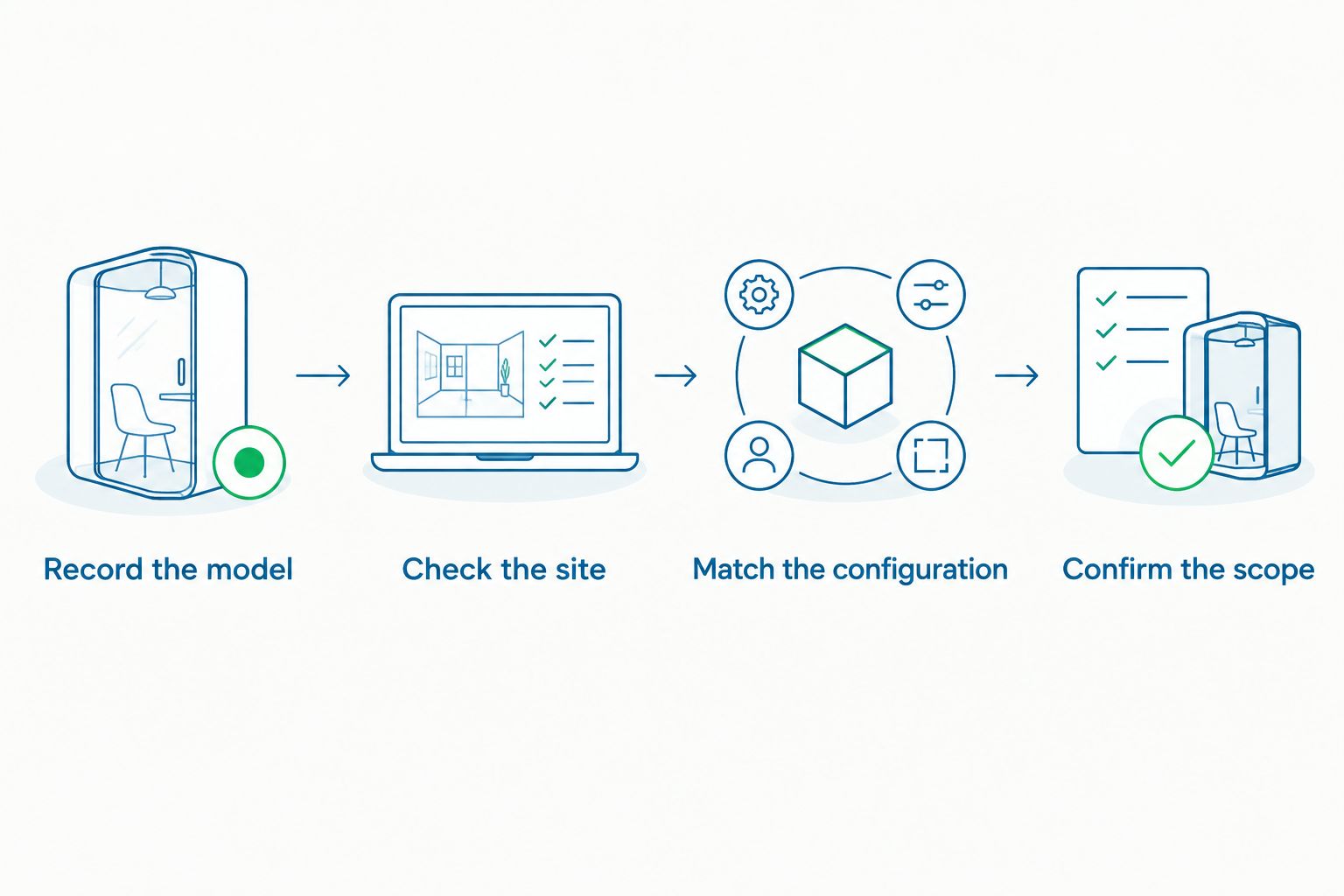
Give the installer the selected product documents before approval, not after delivery. This separates a retailer decision from a construction decision and gives both sellers the same specification to satisfy.
Pricing: compare the complete purchase, not a headline figure
Choose between the complete orders, not isolated equipment figures. For either seller, separate the equipment purchase from installation work and recurring maintenance in your project budget.
Keep the comparison consistent. A fountain-only order and an order containing a fountain, bottle filler, filter, and required accessories are different purchases, even when their listing names sound similar.
Use these budget categories:
- Equipment: the exact model, finish, and selected configuration.
- Required components: the accessories or assemblies identified in the installation documents.
- Installation: plumbing, electrical, mounting, and surrounding building work as applicable.
- Maintenance: compatible filters, cleaning, and service requirements.
A fully specified order supports a more predictable project budget. Leaving component choices open preserves flexibility but leaves more decisions for later; settle those choices before approving the purchase.
For a 2026 comparison, check the current transaction details directly with each seller. Do not transfer one retailer's shipping, return, warranty, or payment terms to the other, and do not assume that a manufacturer's warranty describes every part of the seller's transaction.
Final verdict: choose for the purchasing job
Choose The Fountain Direct if you manage a hydration project
Best for: the school facilities manager, parks buyer, or plumbing contractor specifying commercial hydration equipment. Start here when drinking fountains, bottle fillers, water coolers, or outdoor showers define the assignment.
The next move is to select the equipment type, confirm the complete model against your site, and approve the installation scope. Specialization gives you a relevant starting point; the documents determine the final selection.
Choose KaTom if you manage a broader restaurant order
Best for: the restaurant owner or foodservice purchasing lead sourcing several equipment categories. Start here when the hydration purchase belongs within a broader restaurant equipment plan or an established purchasing workflow.
The next move is the same technical check: compare the exact model and included components. Broad sourcing is useful only after the hydration equipment meets the specification.
| Dimension | Winner |
|---|---|
| Best fit for hydration-focused facility buyers | Hydration specialist |
| Standout sourcing focus | Specialist for hydration; KaTom for restaurant breadth |
| Hydration as the main project | Hydration specialist |
| Wider restaurant equipment purchasing | KaTom |
| Existing approved KaTom purchasing workflow | KaTom |
| Identical manufacturer equipment features | Tie |
| Installation and accessibility verification | Tie |
| Complete-project budget | Decide from matching order scopes |
FAQ
Is Fountain Direct better than KaTom for drinking fountains?
The Fountain Direct is the better starting point when commercial drinking fountains and bottle fillers are the main project. KaTom is the better starting point when hydration equipment is part of a wider restaurant equipment purchase.
Should a restaurant buy its water fountain from KaTom?
KaTom is a relevant choice for a restaurant sourcing across foodservice equipment categories. Confirm the exact fountain model and installation requirements before including it in the wider order.
Does the retailer change the features of an Elkay or Haws fountain?
The exact manufacturer model and included components determine the equipment features. Compare complete model identifiers rather than assuming two products match because their brand names or photographs match.
Which seller should a school facilities manager consider first?
A hydration-focused seller is the more direct starting point for a school fountain or bottle filler project. The selected equipment still needs to match the building, intended users, and installation requirements.
How do I compare the total project budget between sellers?
Compare the same complete equipment configuration, then account separately for installation and maintenance. Include required components so that a fountain-only order is not compared with a complete fountain and bottle filler assembly.
Does an ADA product label guarantee an accessible installation?
No, a product label does not establish compliance of the completed installation. Verify the equipment, installed position, approach, and surrounding space against the applicable requirements.
What should I confirm before ordering a replacement fountain in 2026?
Confirm the full manufacturer model, site conditions, required configuration, and installation scope. Give the installer the selected product documents before approving the order.
One last thing
Photograph the existing model label before you start comparing sellers. A replacement search based only on the front appearance leaves important configuration details unresolved.
Send the full identifier and site information with your purchasing request. That turns a broad retailer comparison into a specific equipment decision you can approve.