

Municipal Park Fountain Procurement Tips
Municipal park fountain procurement is easier when you match fountain type, freeze protection, durability, and lead times to your project and budget.

A park fountain order can stall for weeks over one bad assumption - the wrong mounting style, no freeze protection, or a spec that looks fine on paper but fails in public use. That is why municipal park fountain procurement needs to start with the actual site, the users, and the purchasing timeline, not just a line item budget.
For parks departments, school districts, and public works teams, the buying decision is usually less about finding any drinking fountain and more about avoiding the expensive mistake. A fountain that works at a trailhead may be a bad fit for a splash-adjacent recreation area. A wall-mounted unit may save space, but only if the structure supports it. A standard outdoor model may look cost-effective until winter hits and your region needs freeze-resistant protection. The right buy is the one that holds up in public use, meets code expectations, and arrives in time for the project schedule.

What municipal park fountain procurement really depends on
Most buyers narrow the field too late. They compare brands before they settle the basic job requirements. In practice, your best option usually comes down to five variables: installation type, climate exposure, vandal resistance, user mix, and timeline.
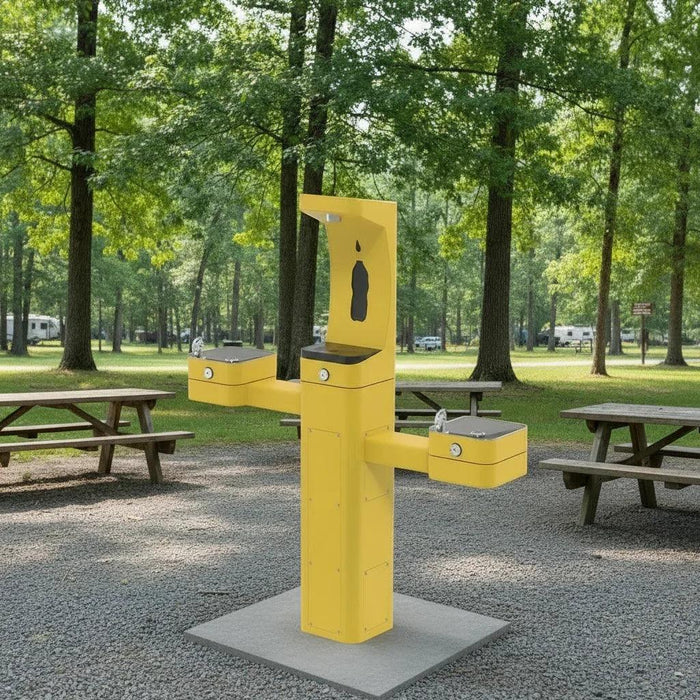
Installation type matters first because it limits the product pool immediately. If you are replacing an existing pedestal unit with the same rough-in, the fastest path is often a like-for-like freestanding replacement. If you are adding hydration access to a park building exterior, a wall-mounted outdoor fountain may make more sense. Freestanding units typically give you more placement flexibility in open areas, while wall-mounted models can be cleaner and easier to protect in supervised locations.
Climate exposure is the next major filter. In warm regions, a standard outdoor fountain may be enough. In colder climates, freeze-resistant or frost-proof design is not optional if you want the fountain available through shoulder seasons or year-round. Buyers trying to save upfront often remove freeze protection first, then end up paying more later in downtime, replacement parts, or seasonal shutdown headaches. Sometimes a non-freeze unit is still the right call, but only if the site is truly seasonal and the budget case is clear.
Public use changes the spec as well. Parks get harder use than many commercial sites. That pushes most municipal buyers toward heavy-duty construction, tamper-resistant components, and proven commercial brands. A sleek fountain intended for light private use can become a service problem fast in an unsupervised public setting.
Choosing the right fountain type for a park

The biggest mistake in municipal park fountain procurement is buying by category name alone. "Outdoor drinking fountain" is too broad to be useful. You need to match the product to how the park actually functions.
Neighborhood parks often need a straightforward public drinking fountain that can handle kids, parents, and casual foot traffic. Sports complexes usually need more throughput and may benefit from bottle filling capability where appropriate, especially near courts, fields, or rec buildings. Dog parks may call for a unit with integrated pet access. Trailheads and remote areas often need a rugged, low-maintenance choice with fewer exposed features.
If your park serves mixed users, dual-height access can be a smart move. It improves usability without forcing you into multiple separate fixtures. If the site is heavily used by athletes or families carrying reusable bottles, bottle filler integration may support the usage pattern better than a basic bubbler alone. That said, bottle fillers in open public environments are not always the best answer if vandal exposure is high. This is one of those it-depends decisions where the park type should drive the spec.
Wall-mounted versus freestanding is another real fork in the road. Wall-mounted units can reduce site clutter and simplify placement where a structure already exists. Freestanding units are usually the better fit for open park layouts, playground edges, and independent gathering areas. The right answer is not about preference. It is about infrastructure, traffic flow, and service access.
Brands and build quality matter more in public settings
When buyers compare pricing, they sometimes flatten the differences between brands that are not built for the same level of use. In municipal work, that usually backfires. Public fountains need durable construction, dependable valves, and replacement part availability from established U.S. manufacturers.
That is why serious buyers tend to stay with proven commercial names such as Elkay, Haws, Halsey Taylor, Stern Williams, and Willoughby. These brands are known in institutional purchasing for a reason. They offer the kind of product depth municipal buyers need - from standard outdoor fountains to vandal-resistant and freeze-resistant configurations - and they back products with manufacturer warranties.
The practical advantage is not just durability. It is spec confidence. If you are buying for a bid package, capital improvement plan, or scheduled replacement cycle, you want a product line with clear options and dependable documentation. Unknown or lightly supported brands may look cheaper at first, but they often create more procurement friction and more risk after delivery.
Budgeting without buying the cheapest mistake
Price matters in every municipal purchase, but low initial price and low total cost are not the same thing. A cheaper fountain can become the expensive option if it ships slowly, fails early, or does not match the site conditions.
The better budgeting approach is to price the full use case. Does the park need freeze resistance? Is vandal resistance worth the premium at this location? Would a pet station reduce the need for a separate amenity later? Are you replacing like-for-like to avoid bigger site work, or is this part of a broader upgrade? Those questions affect value more than the base unit price alone.
Lead times should also be part of budget planning. Municipal buyers often get squeezed by grant deadlines, seasonal construction windows, or end-of-fiscal-year spending. If you wait too long to specify the product, your choices narrow. In outdoor projects, ordering ahead of peak season usually gives you more flexibility and a better chance of hitting install targets.
How to keep the procurement process moving
A good municipal park fountain procurement process is simple: define the site conditions, confirm the required features, and buy from a specialist that knows the product line well enough to flag issues before the order is placed.
That last part matters more than many teams expect. General supply houses and broadline catalogs may carry fountains, but they are not focused on fountain selection. If your buyer has to sort through incomplete specs, unclear availability, or mismatched accessories, you lose time. A specialist retailer can help narrow choices quickly based on mounting style, user type, compliance needs, and climate exposure.
For procurement teams, that usually means fewer back-and-forth emails and fewer avoidable substitutions. For contractors, it means less guessing before rough-in and fewer surprises when the unit arrives. For park directors and facilities teams, it means the product is more likely to fit the first time and perform as expected.
Trusted buyers also look at freight, tax treatment, and return terms because those costs affect the real purchase price. If you can buy direct with free freight shipping, no sales tax, a manufacturer warranty, and a 30-day return policy, that is not a side benefit. It is part of the procurement value. The same goes for a price match guarantee. On public projects, small percentage savings matter, especially across multiple sites.
When to order and what to decide early
Outdoor fountain buying is seasonal even when your park is open year-round. Spring and early summer can tighten availability as municipalities, schools, and contractors all push projects at the same time. If your project has a firm opening date, the safest move is to finalize the spec early.
The decisions to make first are straightforward. Confirm whether the site needs freestanding or wall-mounted installation. Decide if freeze-resistant construction is required. Determine whether bottle filling or pet access actually serves the location. Then choose the build level based on expected public use, not wishful thinking.
Once those decisions are made, the product selection gets much easier. At that point, buyers should compare known brands, check current availability, and move on pricing. That sequence prevents a lot of last-minute scrambling.
The Fountain Direct is built for this exact kind of purchase - direct-to-buyer pricing, top commercial brands, free freight shipping, no sales tax, manufacturer warranty coverage, and Lowest Price Guaranteed. Trusted by 800+ customers, we help buyers get the right fountain without the delays and guesswork that come with general suppliers.
If you are buying for a park, do not start with the broadest category and hope the details work themselves out. Start with the site, the season, and the use case. The right fountain is the one that fits the project on day one and still makes sense long after the ribbon cutting.