

Connect an Outdoor Shower to a Pool Pump System in 2026

Running a hose across the pool deck every time someone needs to rinse off gets old fast. Tap into the water line already feeding the pool equipment pad, run it to a fixed outdoor shower, and rinse-off water is on demand with no hose, no cord, and no trip back to the house.
- Connect an outdoor shower to a pool pump system by tapping the potable cold line at the equipment pad, never the pump's discharge or suction line.
- A dedicated shutoff valve and a backflow preventer at the tie-in point are required for 2026 installs, no exceptions.
- Add a mixing valve only if the shower needs hot water; cold-only rinse setups skip that fitting entirely.
- The Fountain Direct sells marine-grade pool showers and mixer hardware built for this exact tie-in, from wall-mounted units to freestanding towers.
Why this matters
A pool pump moves pool water through the filter and back to the pool. It never touches a potable line, and it should never touch a shower head. The water inside a pump housing carries chlorine, cyanuric acid, and whatever the skimmer basket missed. Connecting an outdoor shower to a pool pump system, despite the phrase, means finding the potable cold water line that already runs to the equipment pad, not tapping the pump itself.
Most pool decks already have that line in the ground; it's how the pool gets filled and how the deck hose bib runs. Most local codes also require a backflow preventer at that new tie-in point, even if the pad already has one on the pool fill line. In 2026, piggybacking off that existing supply is faster than trenching a brand-new run from the house, and it keeps the shower on the same shutoff as the rest of the pool equipment.
“If the pump is running, that water is pool water — it never reaches a shower head, no matter how good the pump is.”
Before you start
- Access to the pool equipment pad and the main shutoff valve for the property's potable water line, not the pump's suction or return valves.
- Local code requirements for backflow prevention on outdoor hose connections. Most jurisdictions require one at the new tie-in even when the pad already has one for the pool fill line.
- The gotcha that stops installs cold: a pool pump only circulates pool water. There's no valid tie-in point on the pump housing, the filter, or the return line. The connection has to come from the cold water supply line feeding the pad, usually the same line running to the autofill valve or an existing hose bib.
Set up the water line
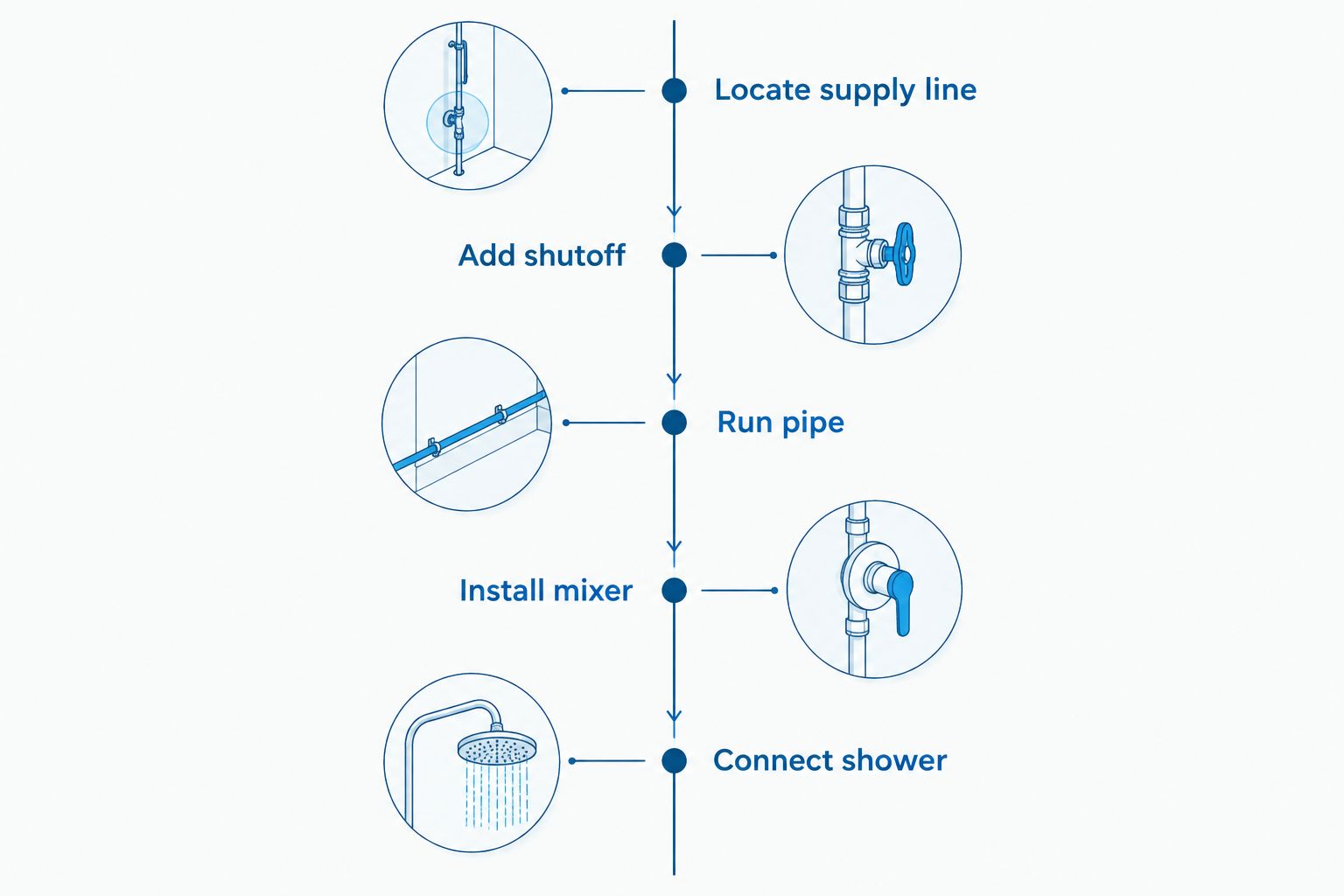
Locate the supply line at the equipment pad
- Find the cold water line entering the pad. It's copper, PVC, or PEX, and it runs separate from the pump's suction and return plumbing.
- Trace it forward to where it already feeds the autofill valve or a hose bib near the pad.
- Expected result: you've confirmed a line carrying potable water, not pool water, and a physical point to tie into.
Add a shutoff and backflow preventer
- Shut off the main water supply at the meter or house valve before cutting into the line.
- Install a dedicated shutoff at the new tie-in point so the shower can be isolated later without cutting water to the pool equipment.
- Add a backflow preventer rated for outdoor connections. An atmospheric vacuum breaker covers most cold-only setups.
- Expected result: the new valve holds pressure when closed, and the tie-in shows no backflow when tested.
Run supply pipe to the shower location
- Trench from the tie-in to the shower's mounting spot, keeping the pipe below the local frost line in any climate that freezes.
- Use pipe rated for burial and outdoor exposure. Half-inch line handles a single shower head; go to three-quarter-inch if a foot wash or second fixture will share the run.
- Expected result: pipe reaches the shower base with a slight slope so the line drains for winterizing.
Install the mixing valve and connect the shower
- If the shower runs hot and cold, install an ASSE 1016-rated mixing valve at the base before the riser.
- Connect the riser to the shower fixture and secure the mounting post to the deck or a concrete footing.
- Turn the main water back on, open the new shutoff, and check every joint under pressure.
- Expected result: full flow at the shower head with no drips at any fitting.
Choosing the tap and mixer hardware
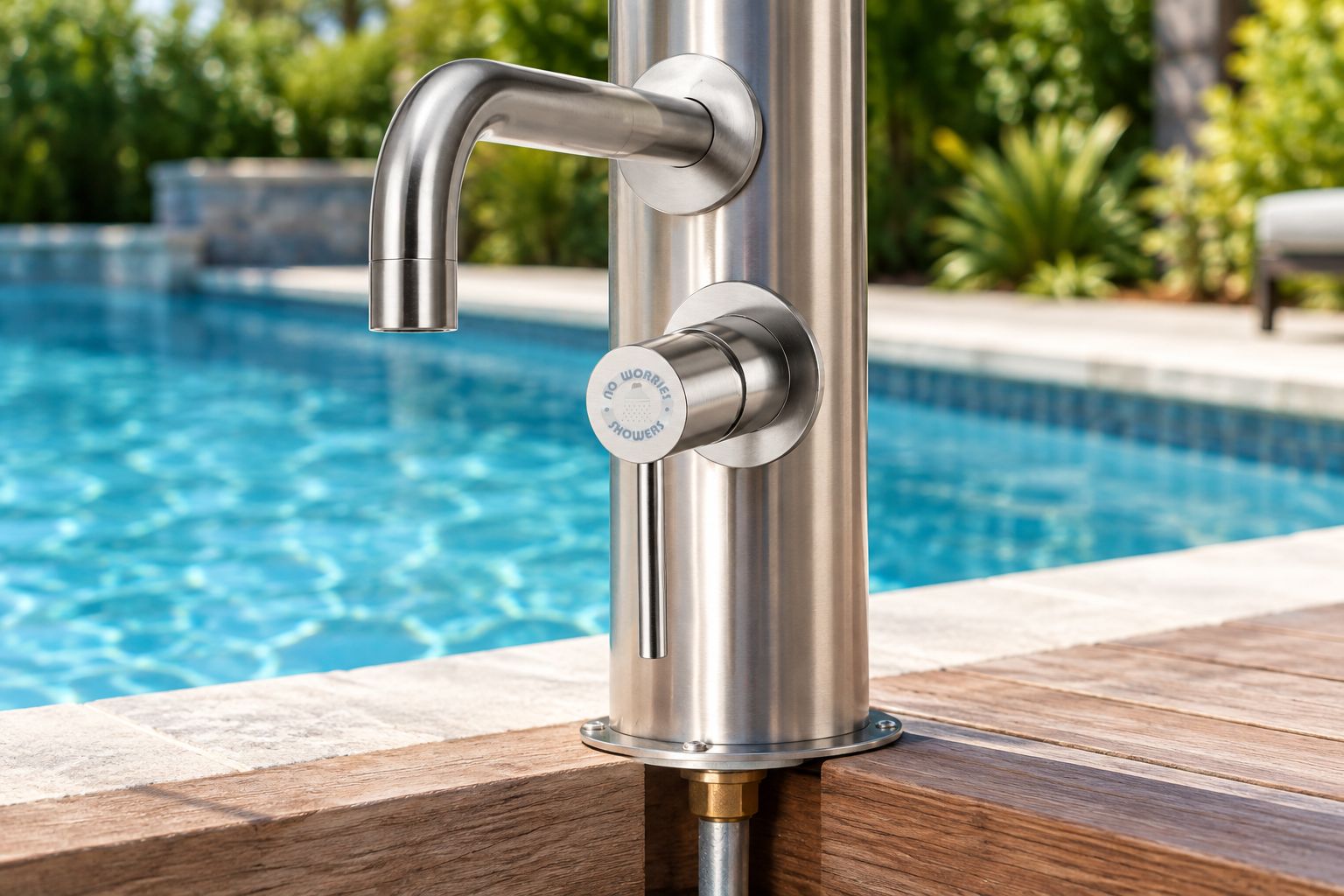
The fittings at the tie-in and the shower base matter as much as the pipe run. A cross-handle tap gives a simple cold-only shutoff at the shower post. A hot-and-cold mixer set gives a warm rinse without a separate valve box. As of 2026, The Fountain Direct stocks both styles in 316 marine-grade stainless built to sit outside year-round without corroding.
| Fixture | Best for | Pros | Cons |
|---|---|---|---|
| NW Showers Miami All-Purpose Outdoor Faucet & Spout Set with Hot & Cold Mixer | Showers that need a warm rinse | Single mixer handles hot and cold in one fitting; marine-grade stainless | Needs both hot and cold lines run to the post |
| Rainware Cross Handle Outdoor Wall Tap | Cold-only rinse stations | Simple single-handle shutoff; fewer parts to install | No hot water option without a second tap |
Buy the Miami set for a shower that needs warm water. Buy the Rainware tap for a cold-only footwash or rinse point that skips the mixing valve entirely.


Add a foot wash station on the same line
Once the tie-in at the pad is open and a shutoff is in place, running a second branch to a foot wash station is one more trench, not a new project. Tap off the same supply line after the shower's shutoff, keep it cold-only if the foot wash doesn't need warm water, and mount the wash head low enough for a foot rinse instead of a full shower. The same backflow preventer covers both fixtures as long as it sits before the branch, not after it.
Troubleshooting
- Low flow at the shower head — usually an undersized pipe run or a partially closed valve; check the new shutoff first.
- No hot water reaches the shower — the mixing valve is installed backward, or the hot line was never connected to a heat source at the house.
- Water hammer when the shower shuts off — a missing air chamber near the valve; add one instead of just tightening fittings.
- Backflow preventer fails a test — usually freeze damage from a winter the line wasn't drained; replace the unit rather than bypass it.
- Leak at the pad tie-in after backfilling — a fitting wasn't fully seated before the trench was closed; expect to dig it back up once to reseat it.
Customize your workflow
A single cold-only shower off the pad covers most backyard pools in 2026. Add a hot-and-cold mixer if the deck gets used into cooler months, or extend the branch to a foot wash station for a pool that sees a lot of bare feet and deck debris. For the full plumbing rundown, including which mixing valve rating to ask for at the counter, run through how to plumb an outdoor shower with a mixing valve before ordering pipe.
FAQ
Can I connect an outdoor shower directly to my pool pump?
No. The pump only circulates pool water through the filter, so connect the shower to the potable cold line at the equipment pad instead.
Do I need a backflow preventer for a pool deck shower?
Yes, in most jurisdictions. Add one at the new tie-in even if the pad already has one for the pool fill line.
What size pipe does an outdoor shower need?
Half-inch line handles a single shower head. Move up to three-quarter-inch if a foot wash or second fixture shares the run.
Does an outdoor pool shower need hot water?
No, cold-only setups are common on pool decks. Add an ASSE 1016 mixing valve only if a warm rinse matters to your users.
How deep does the supply line need to be buried?
Below the local frost line in any climate that freezes. A local plumber or code office confirms the exact depth for that area.
Can a foot wash station share the same water line as the shower?
Yes, as long as the backflow preventer sits before the branch point that feeds both fixtures.
What's the best outdoor shower for a pool deck in 2026?
A freestanding tower works well for decks without a wall to mount to, while a wall-mounted unit suits a pool house or fence line. The Fountain Direct carries both styles built for pool-deck use.
How much water pressure does an outdoor shower need?
Standard residential pressure, typically in the 40 to 80 psi range most municipal systems deliver, is enough for a single shower head.
One last thing
The step most installs skip is the dedicated shutoff at the tie-in. Without it, winterizing the outdoor shower means shutting off water to the whole house or the whole pad, not just the shower. Add the valve during the initial run; retrofitting it later means reopening the trench you just backfilled.