

Filtered Bottle Filler Comparison That Sells
Filtered bottle filler comparison for schools, offices, parks, and public spaces. Compare brands, specs, and buying factors before you order.

If you are doing a filtered bottle filler comparison, you are probably not deciding between good and bad. You are deciding between models that all look acceptable on paper, but differ in the details that affect cost, lead time, maintenance, durability, and long-term satisfaction. That is where buyers lose time - and where the right match saves money.
For schools, commercial buildings, parks, gyms, municipal projects, and hospitality properties, the best filtered bottle filler is not simply the one with the most features. It is the one that fits your installation, your traffic level, your compliance requirements, and your service expectations. A unit that is perfect for a K-12 hallway may be the wrong choice for a vandal-prone public site or a premium office renovation.
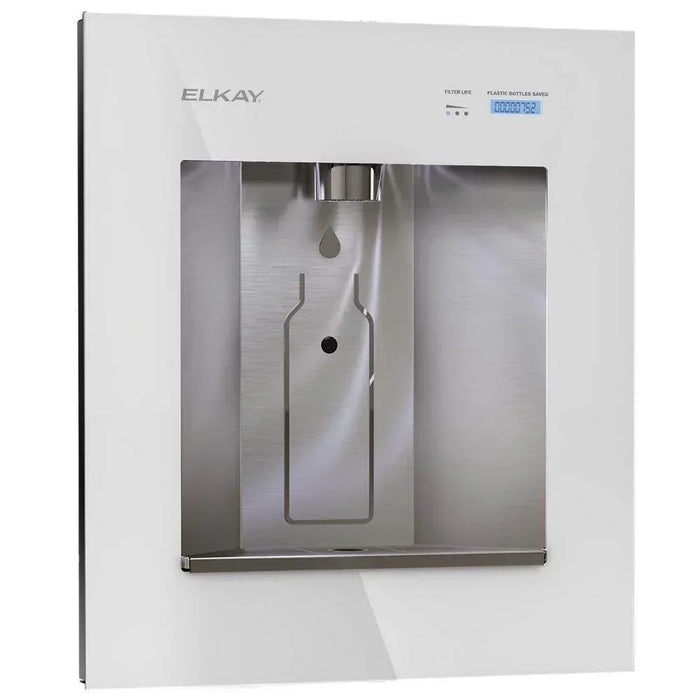
Filtered bottle filler comparison by buying priority
Most serious buyers narrow the field in this order: indoor or outdoor use, bottle filler only or fountain plus filler, filtration performance, mounting style, and brand preference. That is the practical path because each of those decisions eliminates the wrong products quickly.
Indoor filtered bottle fillers tend to dominate school, office, healthcare, and institutional projects. In these applications, Elkay and Halsey Taylor are often the first brands considered because they offer broad model ranges, established replacement filter programs, and familiar specs for contractors and facility teams. If you need a wall-mounted bi-level unit with a bottle filler and integrated filtration, those brands usually give you the shortest path to an approved submittal.
Outdoor filtered bottle fillers are a narrower category, and buyers need to be more careful here. Not every filtered unit is designed for freeze exposure, vandal resistance, or heavy public abuse. Haws and Willoughby often enter the conversation when durability, public-use reliability, and specialty applications matter more than appearance. If your project is going into a park, recreation area, transportation setting, or correctional environment, brand choice becomes less about style and more about survival.
Bottle filler only units make sense when you already have nearby drinking access or when modern code and user preference push bottle use over direct drinking. Fountain plus bottle filler combinations remain the safer choice for schools, municipal facilities, and public buildings where broad accessibility and user flexibility matter. In a filtered bottle filler comparison, this is one of the biggest cost drivers because combo units add more function but also more complexity.
Comparing the major brands
Elkay is usually the volume leader for a reason. Buyers know the brand, architects specify it often, and replacement parts and filters are widely recognized. If your priority is a mainstream commercial solution with broad acceptance in schools, offices, and light public use, Elkay is a safe and efficient choice. The trade-off is that a standard commercial model may not be the best fit for extreme abuse or highly specialized institutional settings.
Halsey Taylor competes in much the same lane and is often evaluated side by side with Elkay. For many buyers, the decision comes down to preferred model configuration, aesthetics, and spec familiarity. If a facility team already has one brand in service, sticking with that ecosystem can simplify replacement filters and maintenance planning. That is not glamorous, but procurement teams care about it for good reason.
Haws tends to get attention when the project requires a more engineered approach, especially in demanding public or outdoor environments. Their lineup can be a strong fit when durability, freeze resistance, or application-specific construction matters more than keeping initial cost as low as possible. Buyers comparing Haws against more common indoor bottle filler brands should expect a more purpose-built solution, not always the cheapest one.
Willoughby belongs in the conversation when vandal resistance and institutional-grade construction are high priorities. It is not the default choice for every office or school corridor, but for correctional, behavioral health, or high-abuse public applications, a heavier-duty product can be the smarter buy. This is a good example of why filtered bottle filler comparison should never be reduced to price alone.
What really separates one filtered unit from another
Filtration claims deserve a close look. Buyers should confirm what the filter is designed to reduce, how often replacement is expected, and whether the ongoing filter cost fits the facility budget. Two units may both be sold as filtered bottle fillers, but the ownership experience can be very different if one requires more frequent replacements or uses a harder-to-source cartridge.
Capacity matters too. In a small office break area, a lower-volume filtered unit may be completely adequate. In a school commons, athletic facility, or high-traffic corridor, a unit that cycles through bottles quickly and handles repeated daily use is worth paying for. Underbuying here creates complaints fast.
Sensor performance is another practical divider. Touchless activation is now expected in many commercial and institutional projects, but the quality of the sensor and shutoff logic still varies by model. The better units respond consistently and hold up over time. The cheaper-looking option on a spec sheet can become the expensive option after service calls and user frustration.
Material and finish should also match the setting. Standard stainless works well in most interiors. Powder-coated or specialty finishes may fit design-driven projects, but public-facing facilities often benefit from simpler, proven materials that hide wear and are easier to keep presentable. If vandal resistance is a concern, standard architectural assumptions do not always hold up.
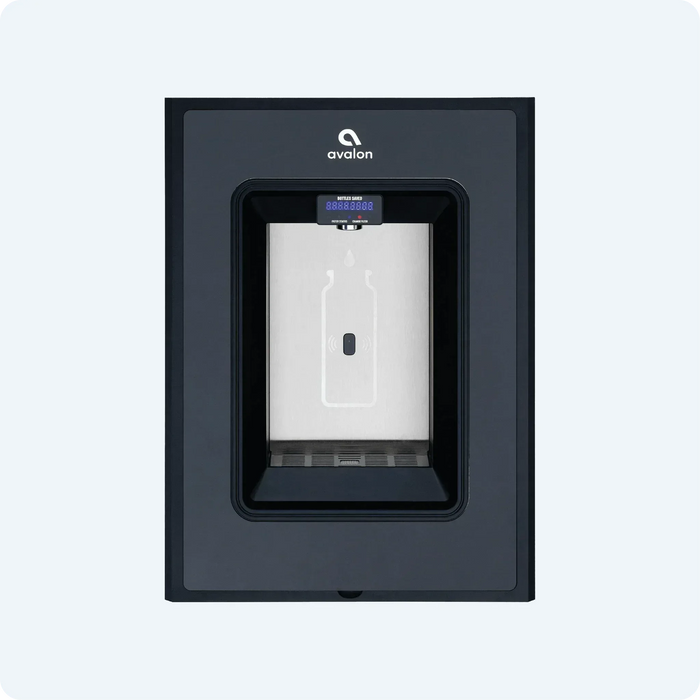
Indoor vs outdoor filtered bottle filler comparison
For indoor projects, the buying decision usually centers on appearance, ADA configuration, filtration type, chilled versus non-chilled, and whether you want a bottle counter or enhanced monitoring features. Offices, schools, and healthcare facilities often prefer familiar wall-mounted units with integrated fountains because they satisfy more users with one fixture.
For outdoor projects, the conversation changes immediately. You need to ask whether the unit is freeze resistant, whether it can withstand direct public access, and whether the filtration system is appropriate for the environment. In some cases, buyers assume they want filtration outdoors, then realize exposure, service access, and replacement schedules make a non-filtered or more specialized unit the better operational decision. It depends on the site, not just the spec preference.
This is where procurement-friendly guidance matters. A filtered outdoor bottle filler can be the right move for controlled campuses, private recreation spaces, and select municipal settings. In harsher or less supervised environments, durability and uptime may outweigh the value of filtration.
How to choose the right model for your facility
If you are buying for a school, start with a fountain plus bottle filler combo from a recognized commercial brand unless the district has a specific standard. Schools need accessibility, easy parts support, and products custodial teams already understand. That usually points buyers toward Elkay or Halsey Taylor.
If you are buying for an office, fitness facility, or hospitality property, the decision often leans more on appearance and user experience. Bottle filler speed, clean design, and a polished finish may matter as much as raw durability. Still, it pays to choose a model with dependable filter availability and straightforward warranty support.
If you are buying for a park, transit area, or high-exposure public site, do not shop as if it were an office hallway. This is where Haws or Willoughby can make more sense because service interruptions, abuse resistance, and specialty construction matter more than a lower upfront number.
If you are buying for a bid-driven or timeline-sensitive project, lead time and stock position should influence your choice early. The best model on paper is not the best model if it misses your opening date or forces a costly substitution. Buyers working on fixed schedules should compare availability at the same time they compare specs.
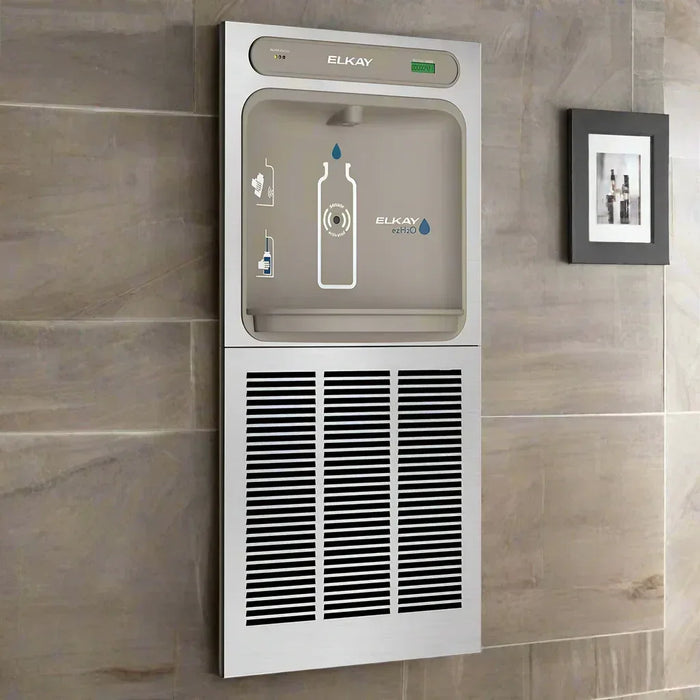
Price matters, but buying cost matters more
A filtered bottle filler comparison should include purchase price, replacement filter cost, expected service life, and the risk of choosing a unit that is wrong for the traffic level. The lowest initial price is attractive, but it can lose quickly if the unit is undersized, difficult to support, or not built for the environment.
That is why experienced buyers work with a specialist instead of treating these products like commodity fixtures. When you are comparing bottle fillers across brands like Elkay, Haws, Halsey Taylor, and Willoughby, the right recommendation depends on the use case, not just the line-item budget. A direct-to-buyer specialist can help you avoid overbuying, underbuying, and getting stuck between similar-looking models with very different long-term results.
Trusted by 800+ customers, The Fountain Direct helps buyers cut through that noise with Lowest Price Guaranteed, free freight shipping, no sales tax, manufacturer warranty coverage, a 30-day return policy, and a price match guarantee. If you are ready to move, that combination matters just as much as the spec sheet.
The smartest filtered bottle filler purchase is the one that fits the site, satisfies the owner, and arrives without drama - so buy from a specialist who knows the difference before your project pays for the wrong choice.