

Choosing a Commercial Pool Foot Rinse Station
Choose the right commercial pool foot rinse station with expert buying tips on durability, drainage, traffic, pricing, and top-use scenarios.

A commercial pool foot rinse station usually gets noticed only when it is missing - right after debris, grass, and grit start tracking into the deck area and pool water. If you are buying for a hotel, HOA, park, aquatic center, school, or private club, this is not a decorative add-on. It is a high-use fixture that needs to handle wet traffic, rough treatment, and constant exposure without becoming a maintenance problem.
Buyers who are shopping seriously tend to ask the same question first: what type of station will hold up best for our site? That is the right place to start, because the best choice depends less on appearance and more on traffic volume, drainage conditions, water supply layout, and how controlled or uncontrolled the public setting is.

What a commercial pool foot rinse station needs to do well
At a glance, a foot rinse station seems simple. In practice, poor product selection shows up fast. Weak materials discolor, corrode, loosen, or crack. Bad spray patterns leave users skipping the rinse altogether. Undersized designs create splash outside the intended area, and poorly matched units become a headache for facility staff within the first season.
For most commercial properties, the goal is straightforward: give swimmers a fast, intuitive way to rinse sand, dirt, mulch, or deck residue before entering the pool zone. That helps keep the pool area cleaner and reduces the amount of debris getting carried to surrounding surfaces. In high-traffic settings, a foot rinse station also helps move people through entry points without requiring a full shower stop.
The buying decision comes down to durability, user flow, and fit for the environment. If the unit checks those three boxes, it is doing its job.
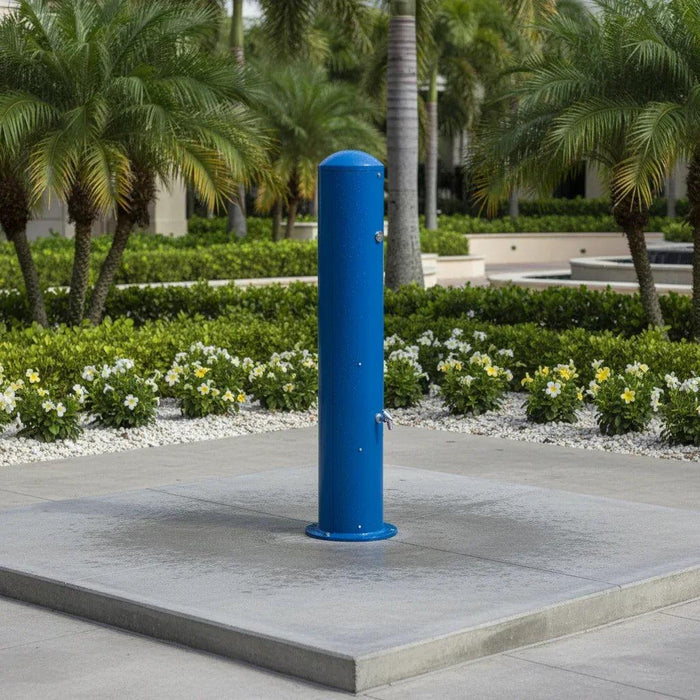
Commercial pool foot rinse station options by use case
Not every property needs the same setup. A resort pool with landscaped walkways has different needs than a municipal aquatic center or a small condo association.
Resort, hotel, and private club settings
In hospitality settings, appearance matters, but not at the expense of reliability. Buyers here typically want a cleaner, more polished look that still stands up to daily guest use. Stainless steel or quality powder-coated outdoor units are often the best fit because they present well and resist corrosion better than lighter-grade materials.
If guests are moving from beach access or lawn areas into the pool zone, a dedicated foot rinse station near the transition point makes more sense than expecting pool users to use a full shower every time. It keeps traffic moving and reduces wear on larger shower fixtures.
Parks, municipalities, and public aquatic centers
Public use changes the equation. Vandal resistance, heavy-duty valves, and simple operation move to the top of the list. These buyers should be careful with decorative or residential-style units that look acceptable online but are not built for uncontrolled use.
For city parks and public pools, straightforward commercial hardware usually wins. Fewer exposed components, sturdier construction, and proven commercial brands matter more than cosmetic styling. If a unit is going into a high-abuse environment, the cheapest option is rarely the lowest-cost option over time.
Schools, camps, and community facilities
These projects often sit in the middle. Traffic can be heavy, but the environment is somewhat supervised. Budget matters, though replacement cycles matter too. A dependable commercial-grade rinse station with a simple activation method is usually the right call.
If the facility serves children heavily, usability matters. The rinse area should be obvious, accessible, and quick to use. If people have to guess where to stand or how to activate the fixture, compliance drops and the fixture becomes wasted spend.
Materials matter more than most buyers expect
Outdoor poolside equipment lives a hard life. Chlorinated environments, sun exposure, moisture, and frequent use all work against the finish and internal components. That is why material choice should be treated as a purchasing priority, not a secondary spec.
Stainless steel is a strong option for many commercial applications because it offers a clean appearance and good corrosion resistance. That said, not all stainless units are built equally. Gauge, finish quality, and valve components still matter. A thin, lightly built station may still disappoint even if the material sounds premium.
Powder-coated units can also perform well, especially when sourced from established commercial brands. They may offer more design flexibility, but buyers should look closely at whether the finish and overall construction are intended for outdoor institutional use.
If your property is in a coastal setting, the salt exposure changes the conversation. In those environments, corrosion resistance should be a front-end requirement, not an afterthought. It is worth paying more for the right material package rather than dealing with premature failure.
Placement and drainage can make or break the purchase
A well-chosen commercial pool foot rinse station can still disappoint if it is positioned poorly. For buyers evaluating options, this is one of the most overlooked parts of the decision.
The station should sit where users naturally pass, not where staff hopes they will stop. If swimmers have to step out of their path to use it, usage drops. The best locations are often between landscaping and deck access, or at clear transition points from beach, turf, or playground-adjacent zones.
Drainage also deserves serious attention during product selection. Some rinse stations produce a narrow, controlled wash. Others create a broader splash area. That may be fine in one setting and a problem in another. If the surrounding surface does not drain well, standing water becomes a slip and maintenance issue quickly.
This is also why fixture style matters. A compact foot rinse solution may be ideal for tighter deck areas, while larger integrated outdoor shower and foot rinse combinations make more sense when users need both functions in one stop.
When to choose a foot rinse station instead of a full pool shower
Some buyers automatically assume a full outdoor shower is the better upgrade. Sometimes it is. Sometimes it adds cost and complexity without solving the actual problem.
If your primary issue is sand, grass, mulch, or debris getting tracked into the pool area, a dedicated foot rinse station often gives you a cleaner, faster, lower-footprint solution. It encourages quick use. It takes up less space. It generally asks less of the user.
A full shower makes more sense when the facility expects pre-swim body rinsing, serves beachside traffic, or wants a broader amenity upgrade. In those cases, a combination shower with lower-leg or foot rinse functionality may be the better investment. But if the goal is controlling foot-borne debris at a specific entry point, a foot rinse-focused fixture is often the smarter buy.
What serious buyers should compare before ordering
The right product is rarely the one with the longest feature list. It is the one that fits the site, holds up, and arrives ready for the project schedule.
Look closely at the brand, construction quality, valve durability, and intended use environment. A proven commercial manufacturer is worth more than a generic listing with limited product support. Lead times also matter, especially for seasonal projects. Pool-area upgrades are often planned around opening dates, inspections, or capital improvement schedules, so product availability should be part of the buying decision from day one.
Warranty coverage matters too, but so does where you buy. Buying from a specialist retailer gives you a better shot at getting the right fixture the first time, especially when your project involves matching usage conditions to the product line. This is not the place to guess your way through a general catalog.
That is where The Fountain Direct stands apart. We specialize in commercial and institutional-grade water fixtures, carry trusted U.S. brands, and help buyers choose equipment that fits the project instead of forcing a one-size-fits-all answer. You get free freight shipping, no sales tax, a 30-day return policy, manufacturer warranty coverage, and a Lowest Price Guaranteed promise with price match protection.
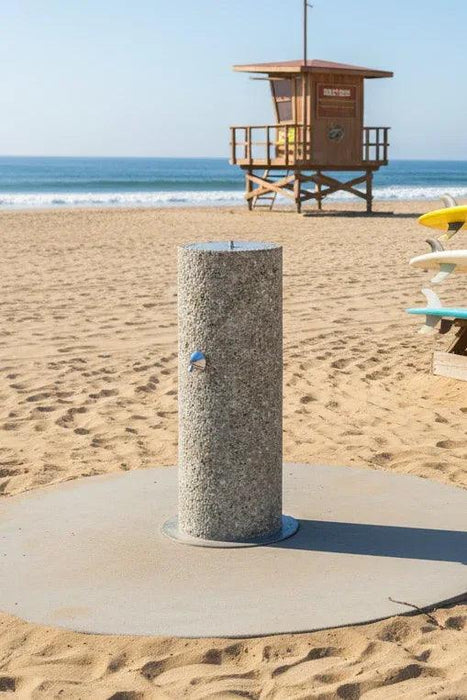
Buying at the right time saves more than money
Poolside purchasing tends to get compressed into the weeks right before opening season. That is when lead times feel longest, inventory feels tightest, and substitute decisions start creeping in. If your project is on a fixed timeline, earlier purchasing usually gives you better product availability and more flexibility to choose the correct model instead of settling for what is left.
For contractors and facility managers, that matters. A delayed foot rinse station can hold up punch-list completion, final site readiness, or owner expectations around opening-day appearance. Buying ahead of the seasonal rush is not just a pricing strategy. It is a project-control strategy.
The right commercial pool foot rinse station should feel obvious once it is in place. It should fit the traffic pattern, stand up to the environment, and do its job without constant attention. If you are already at the buying stage, this is the moment to choose a commercial-grade fixture from a specialist that understands poolside use, procurement pressure, and the cost of getting it wrong.