

Outdoor Shower for Marina Docks Buyer's Guide
Choose the right outdoor shower for marina docks with guidance on materials, drainage, ADA access, freeze protection, and long-term upkeep.

Salt air, wet feet, fish scales, sunscreen, and constant public use can ruin the wrong fixture in a single season. An outdoor shower for marina docks has to do more than rinse people off - it has to hold up under corrosion, stay easy to maintain, and fit the realities of a working waterfront.
For marina operators, contractors, and municipal buyers, the mistake is usually not buying too much shower. It is buying a residential-looking unit that cannot handle traffic, weather, or abuse. Dock environments are unforgiving, and replacement labor gets expensive fast when plumbing access is limited and the fixture sits in a high-visibility public area.
What makes an outdoor shower for marina docks different
A marina shower lives in a harder environment than a typical pool deck shower. It deals with brackish or salt-heavy air, wind-driven moisture, sand and grit tracked from shore, and users who may be rinsing off after boating, fishing, paddle sports, or fuel dock work. That mix changes the buying criteria.
Material selection matters first. Commercial stainless steel is often the right starting point because it offers a cleaner appearance, strong corrosion resistance, and straightforward maintenance. Even then, not all stainless performs the same in coastal use, and hardware quality matters almost as much as the column or body material. Fasteners, valves, and exposed fittings need to be selected as carefully as the visible structure.
Public-use durability matters just as much. Marina traffic is unpredictable. Some days the fixture sees light use, and on weekends or tournament days it can become a line of sandy, impatient users. That is why commercial-grade valves, tamper-resistant construction, and stable mounting are not premium add-ons. They are practical risk control.
Start with the actual use case, not the look
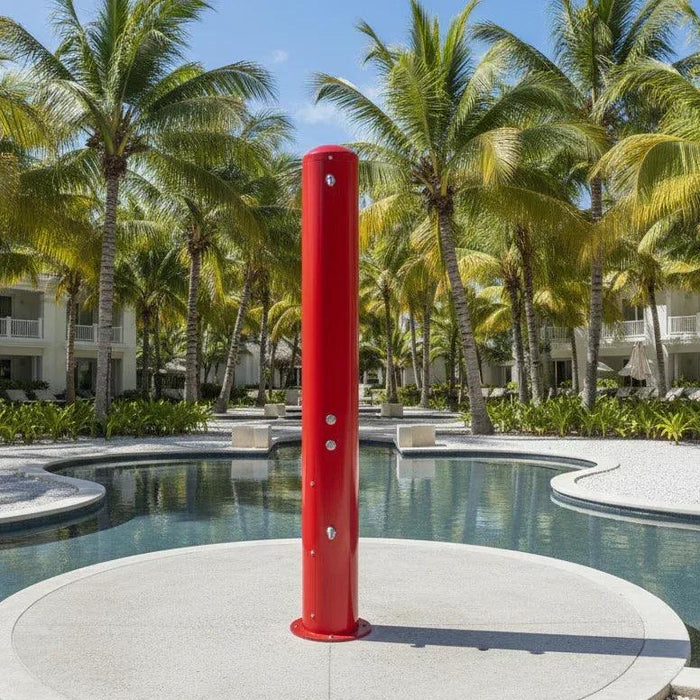
A sleek shower column may photograph well, but appearance should come after function. The right unit depends on who will use it and how often.
At a private yacht club, the shower may serve members coming off slips or paddleboard launches, so finish quality and design are part of the decision. At a municipal marina, the priority usually shifts toward abuse resistance, simple operation, and easy parts replacement. At a resort marina, guest experience matters more, and buyers may want integrated foot rinse features or multiple spray points to reduce queues.
This is where many projects benefit from narrowing the decision into three questions. Will users need a full-body rinse or mostly a leg and foot rinse? Is the shower meant for boaters, beachgoers, staff, or all three? And is the site open year-round or shut down seasonally? Those answers affect fixture height, control type, drainage planning, and whether freeze protection is worth the added upfront cost.
Materials and construction that hold up on the dock
For most commercial docks, powder-coated light-duty fixtures are not the best long-term value. They can work in controlled resort or pool settings, but marina conditions expose weaknesses faster. Commercial stainless steel and heavy-duty marine-suitable construction generally produce lower lifecycle cost, even when initial pricing is higher.
Look closely at the valve enclosure, exposed plumbing, and anchoring method. A well-built outdoor shower should feel stable under repeated use and should not rely on decorative trim to hide vulnerable components. If replacement parts are proprietary or hard to source, maintenance teams can end up waiting through peak season for a simple repair.
Vandal resistance also deserves attention. Public waterfronts attract heavy wear, and occasionally intentional damage. Recessed or protected controls, tamper-resistant fasteners, and rugged shower heads reduce service calls. In unattended areas, simple push-button or metered controls may outperform more delicate handle assemblies.
Water supply, drainage, and site conditions
The shower itself is only part of the project. Marina dock installations can become expensive when site conditions are ignored early.
Water supply routing is often more complicated on docks than on adjacent hardscape. Buyers should confirm whether the supply comes from shore-side plumbing, dock utility runs, or a nearby building. Water pressure and pipe protection matter, especially where seasonal winterization is routine.
Drainage deserves equal attention. In some locations, letting rinse water sheet across the dock is unsafe and unacceptable. It creates slip risk, adds grime, and may conflict with local stormwater rules depending on what users are washing off. A basic shower column can turn into a larger project if trenching, drainage pans, or dedicated waste routing are required.
If users will rinse off saltwater, mud, bait residue, or fuel-related grime, drainage planning becomes even more important. Not every marina needs a highly engineered drain solution, but every buyer should at least ask where the water goes after it leaves the shower.
ADA access and user-friendly design
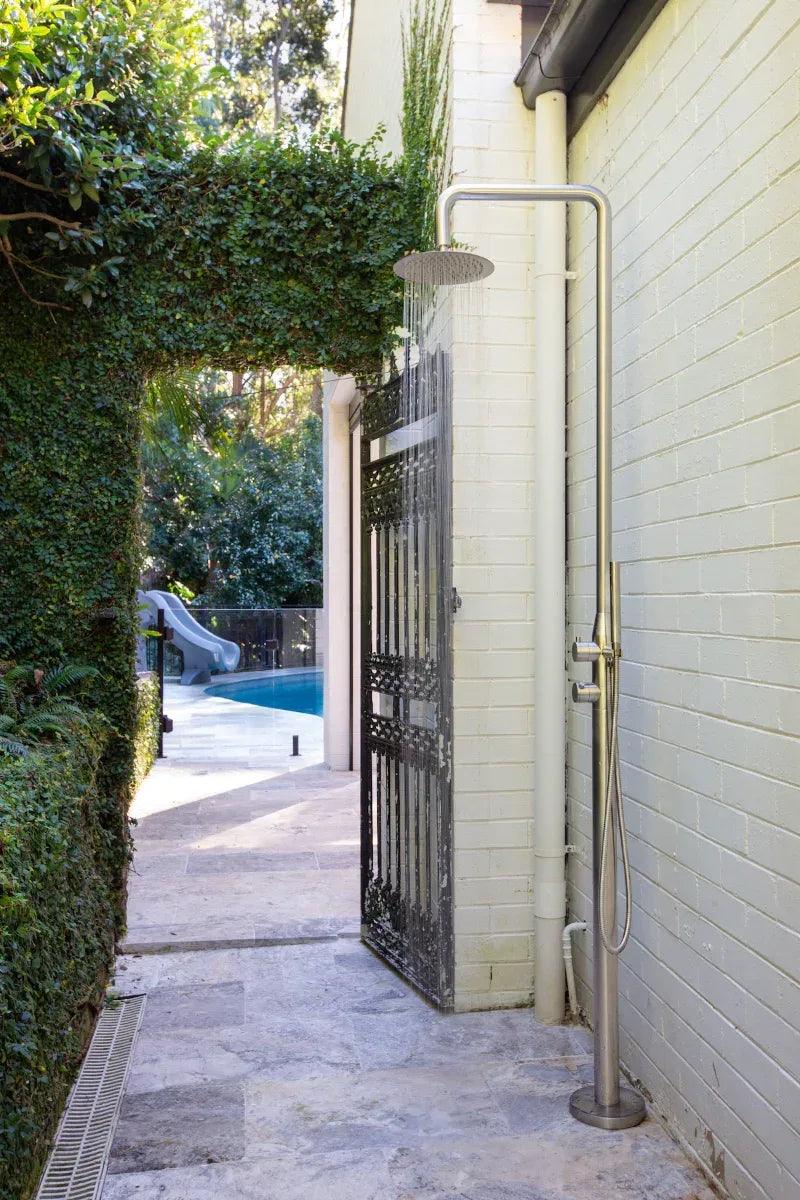
Not every marina shower must be fully ADA configured, but accessibility should never be an afterthought. Public-facing facilities, municipal projects, and many hospitality settings need to review clearances, approach space, control height, and path-of-travel conditions before specifying equipment.
The dock surface itself can complicate compliance. A perfectly selected fixture still falls short if the surrounding area creates poor access for wheelchair users or unstable footing for older guests. Slip resistance, mounting location, and nearby obstructions all affect whether the shower works for the broadest range of users.
Simple controls also improve usability for everyone. Lever or push-button operation is easier for wet hands, children, and older users than small twist knobs. In shared public settings, easier operation usually means fewer complaints and less misuse.
Maintenance realities after installation
Commercial buyers should judge an outdoor shower for marina docks by the work it creates after opening day. Daily wipe-downs may be acceptable at a resort property with dedicated staff. They are less realistic at a municipal facility managing multiple sites.
A better fixture is one that tolerates mineral buildup, salt exposure, and public use without constant adjustment. Replaceable cartridges, accessible shutoffs, and durable shower heads reduce downtime. So does choosing a model backed by established manufacturers rather than an anonymous import with uncertain support.
This is where procurement value goes beyond unit price. Warranty support, available parts, and clear specification data matter. So do freight costs on bulky outdoor equipment. Buyers comparing options should look at the total delivered cost, not just the number on the quote.
How to choose the right outdoor shower for marina docks
Most marina buyers can narrow the field quickly by thinking in priorities instead of features. If the site is exposed and public, durability comes first. If the property is hospitality-driven, user experience may move up the list. If the location freezes, winter performance cannot be ignored.
A practical specification process often looks like this: confirm full-body rinse versus foot rinse needs, verify mounting and utility conditions, identify any ADA or municipal requirements, and then compare commercial models based on material quality, valve durability, serviceability, and lead time. That approach avoids getting distracted by cosmetic differences.
At The Fountain Direct, this is the kind of selection support commercial buyers usually need most - not a giant catalog, but a narrower set of purpose-built options that fit the site, budget, and maintenance reality. Trusted by 800+ customers, with Lowest Price Guaranteed, free freight on most orders, and warranty-backed manufacturers, the goal is to make specifications easier, not more complicated.
The best marina shower is rarely the flashiest one on the dock. It is the one that still works cleanly, drains properly, and looks presentable after a long season of salt, traffic, and hard use.