

Choosing Commercial Beach Shower Fixtures
How to choose commercial beach shower fixtures for resorts, parks, and public beaches, with tips on durability, drainage, ADA access, and upkeep.

Salt air exposes weak hardware fast. A shower that looks fine on day one can start staining, sticking, or loosening after one busy season if the materials and mounting details are wrong. That is why commercial beach shower fixtures need to be selected like public-use equipment, not like decorative residential plumbing.
For parks departments, resort operators, contractors, and facilities teams, the right fixture does more than rinse off sand. It affects maintenance labor, user satisfaction, ADA access, water use, and how well the site holds up under constant traffic. At a beach or waterfront property, every component is under pressure from corrosion, UV exposure, windblown grit, and rough treatment from the public.
What commercial beach shower fixtures need to handle
A beach shower lives in a harsher environment than a pool shower in a private courtyard. Salt spray accelerates corrosion. Sand grinds into valves and drains. Sun exposure breaks down finishes, plastics, and seals. Public access also means the fixture has to survive misuse, not just normal use.
That changes the buying criteria. Residential-style outdoor showers often prioritize appearance first. Commercial fixtures have to prioritize service life, parts availability, and installation suited to heavy foot traffic. If a unit is going on a public boardwalk, municipal beach, marina, hotel pool deck, or resort access point, durability is not an upgrade. It is the baseline.
The best specification usually starts with the environment. A beachfront resort with controlled access may have different needs than a city beach where the shower runs all day and sees no supervision. Both need corrosion resistance, but the public site may need more vandal resistance and simpler controls.
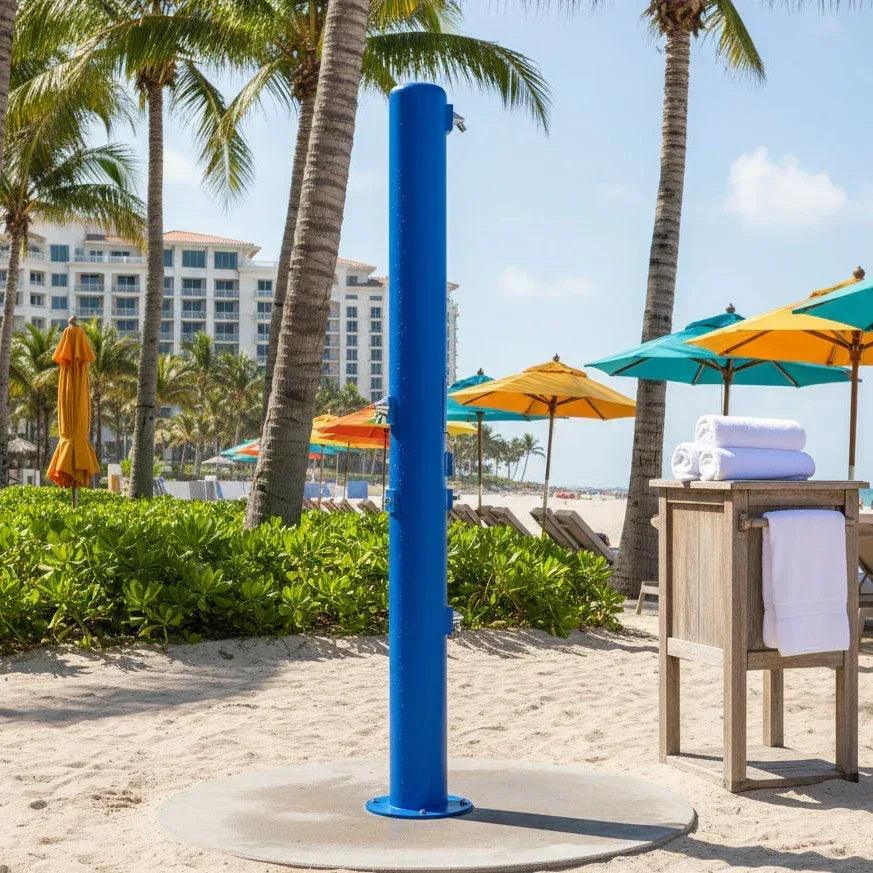
Material choice matters more than most buyers expect
When people compare commercial beach shower fixtures, the conversation often starts with style and number of heads. It should start with materials. In coastal applications, the wrong material choice creates recurring maintenance costs that are easy to underestimate during procurement.
Marine-grade or high-quality stainless steel is often the safer bet for exposed beachfront use because it holds up better against corrosion and is easier to clean. Powder-coated components can work in some settings, especially where the shower is slightly inland or protected, but coatings are only as good as their weakest chip or scratch. Once that barrier is compromised, corrosion can spread quickly in salt-heavy air.
Brass internals and tamper-resistant hardware also deserve attention. A fixture may have a strong exterior body, but if the valve components are not built for commercial duty, that is where service calls start. This is one of those areas where a lower upfront price can become the more expensive option over two or three seasons.
Control type affects water use and service calls
The shower control is not just a user preference issue. It shapes water consumption, wear patterns, and maintenance frequency.
Push-button or timed metering controls are common for public beaches because they limit run time and discourage waste. They are especially useful where the fixture is unsupervised or where water use is being monitored closely. In a municipal setting, metering can help protect the operating budget without creating a poor user experience.
Manual valves may be acceptable at private resorts, beach clubs, or hospitality properties where guests expect a more familiar shower feel. The trade-off is that manual controls can increase water use and, depending on the design, may be more vulnerable to damage or being left on. There is no one right answer for every site. It depends on whether your priority is guest comfort, utility control, or minimizing touchpoints for maintenance.
Foot rinse stations are also worth considering. Many sites do not need a full-body shower at every location. In some layouts, a combination of one main rinse shower and multiple lower foot wash stations handles traffic better and costs less to maintain.
Installation details can make or break performance
A durable fixture can still become a problem if the site design is incomplete. Beach shower performance depends as much on installation planning as on the shower body itself.
Drainage is the first issue. If rinse water pools around the fixture, you end up with slippery surfaces, sand accumulation, and a mess that users track into adjacent spaces. Good drainage planning protects the fixture and the surrounding hardscape. It also improves accessibility and reduces cleanup.
Mounting method matters too. Freestanding pedestal units are common in open beach access areas, while wall-mounted options can work well at clubs, pool enclosures, and exterior bathhouse walls. Freestanding units offer more flexibility for layout, but they usually require more careful planning around anchoring, supply lines, and slab integrity.
At resorts and hospitality properties, placement deserves extra thought. A shower that is too close to seating areas can create puddling and complaints. Too far from the beach path, and guests skip it. The best locations support the natural flow from sand to rinse to indoor or pool areas.
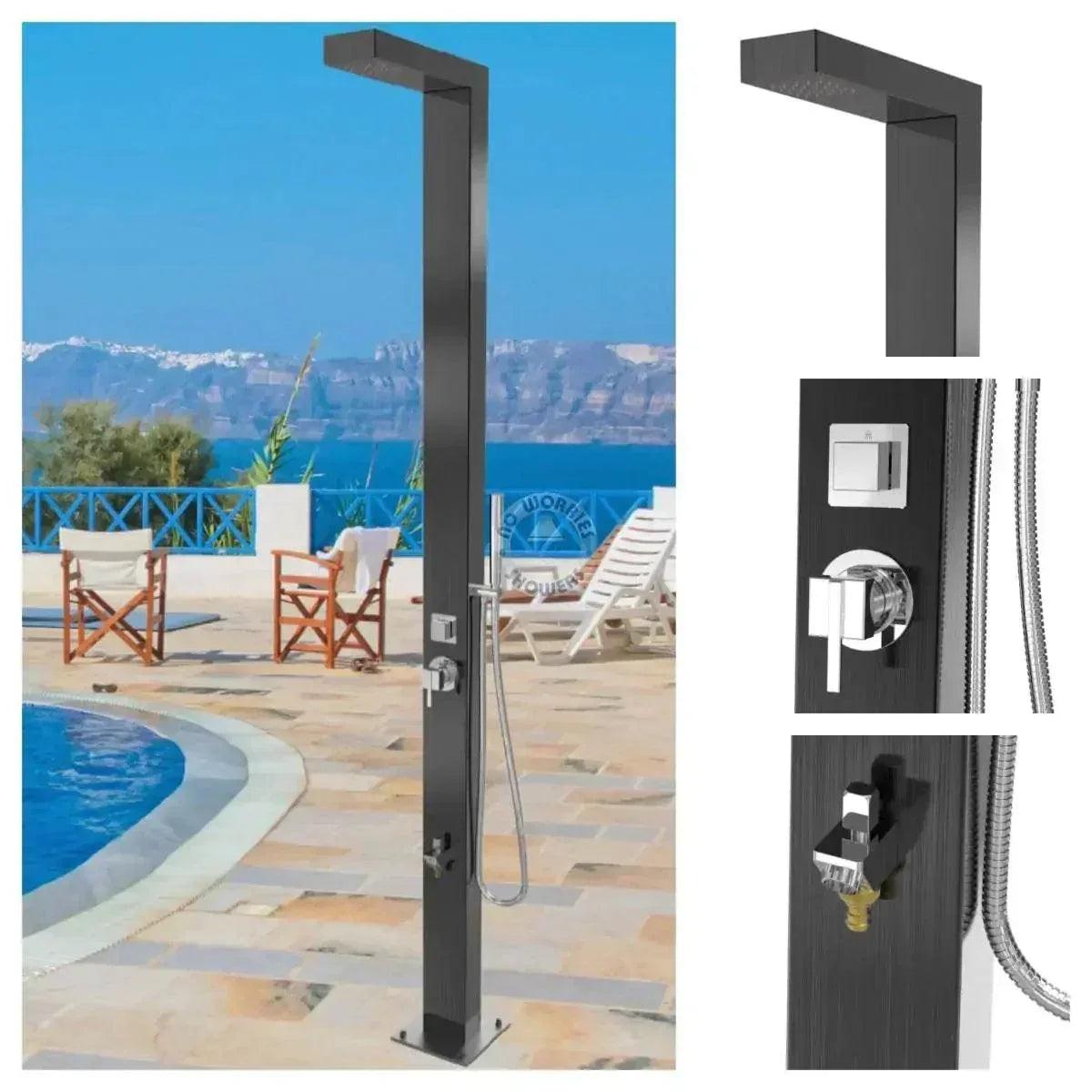
ADA access is not optional in many projects
For public and institutional installations, accessibility needs to be addressed early, not treated as a late-stage checkbox. That includes approach clearances, usable controls, mounting heights where applicable, and safe surfaces around the fixture.
Not every beach shower application calls for the same ADA strategy, but many public facilities need at least part of the site to support accessible use. If a project includes changing areas, drinking fountains, bottle fillers, or pet stations nearby, the entire hydration and rinse-off zone should be considered together.
This is where working with a specialist supplier helps. Compliance decisions are easier when the fixture selection, site layout, and intended user group are looked at as one package rather than separate line items.
Vandal resistance is a real purchasing category
On public beaches and unsupervised waterfront sites, vandal resistance is not an abstract feature. It directly affects downtime and replacement costs.
Commercial beach shower fixtures for high-exposure locations should favor tamper-resistant fasteners, heavy-gauge construction, and simple forms with fewer exposed break points. Decorative trim, lightweight handles, and fragile accessories tend to create headaches in public environments. A clean, utilitarian design usually performs better over time.
There is a trade-off here. More specialized vandal-resistant designs may limit aesthetic options. That can matter at upscale resorts where appearance is part of the guest experience. In those cases, buyers often try to balance finish quality with commercial-grade internals and stronger mounting hardware. The right answer depends on whether the site behaves more like a public park or a managed hospitality property.
Seasonal use changes the spec
Not every beach installation operates year-round. That affects whether freeze protection needs to be part of the specification.
In warm coastal climates, year-round operation may be straightforward. In seasonal regions, winterization becomes part of ownership. If the fixture will face freezing conditions, teams should evaluate shutoff access, drain-down capability, and whether a freeze-resistant design is appropriate. Even if the site is near the water, cold-weather exposure can still damage lines and valves during the off-season.
Lead time also matters here. Outdoor projects tend to bunch up before peak season, and waiting too long can narrow product availability. Contractors and facilities teams that plan beach shower purchases ahead of spring usually have more flexibility on configuration and installation scheduling.
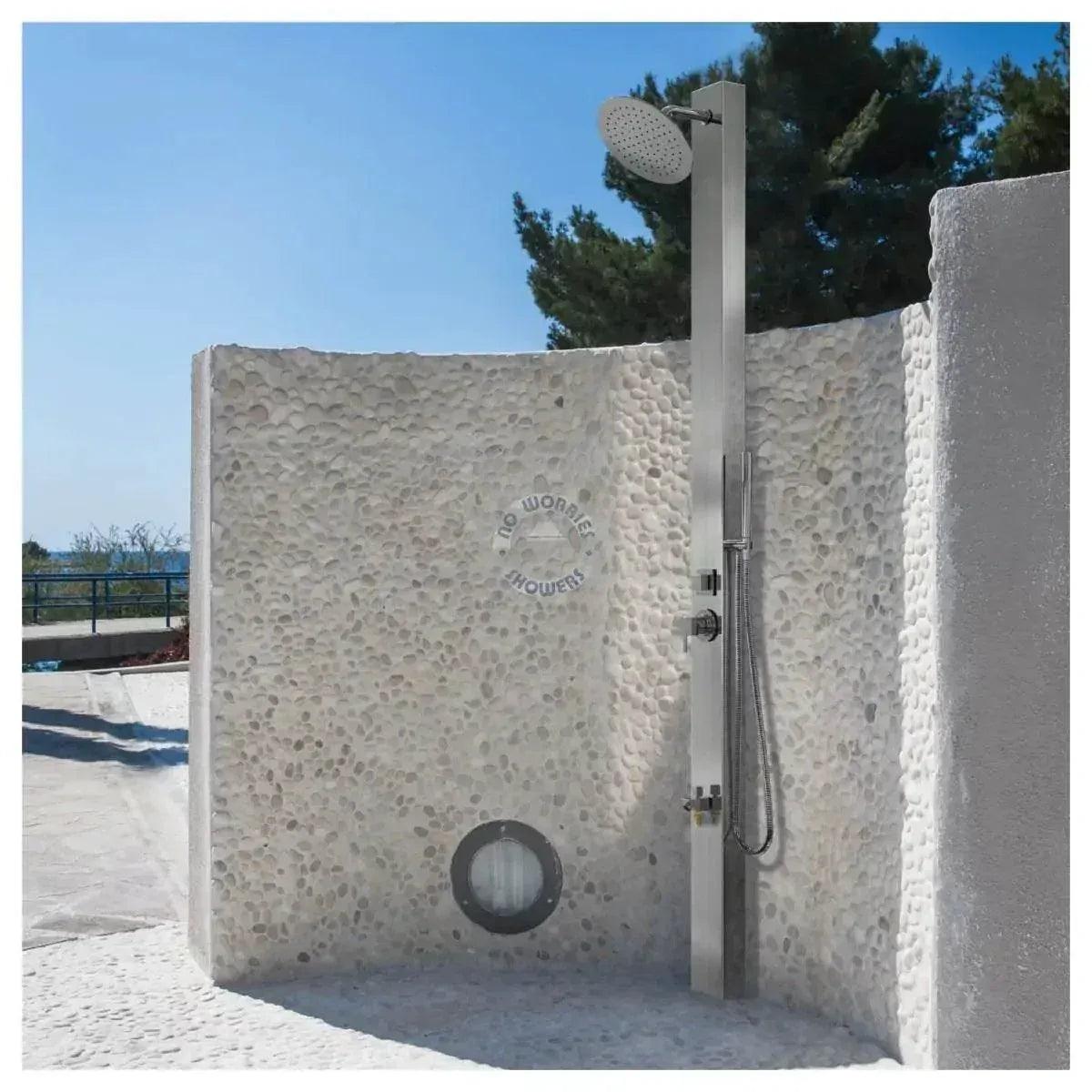
What buyers should compare before they issue a PO
The smartest comparison is not fixture versus fixture on appearance alone. It is totally fit for the site. That includes material grade, valve type, number of users, vandal exposure, drainage requirements, and expected maintenance burden.
Warranty support and parts access also deserve a close look. A lower-cost unit with hard-to-source replacement parts can create avoidable downtime in season. Established commercial manufacturers tend to make ownership simpler because repair components and technical guidance are easier to obtain.
For many buyers, freight is another hidden factor. Outdoor shower assemblies can be bulky, and shipping can move the real project cost more than expected. That is one reason many contractors and facility teams prefer to source through a specialist partner like The Fountain Direct, where commercial-grade product selection, free freight on most orders, and practical support can simplify the buying process.
The best fixture is the one that fits the site you actually run
There is no universal best beach shower. A resort entrance, public shoreline, private club, and municipal park can all need different answers even when they look similar on a plan set. The strongest purchasing decisions come from matching the fixture to traffic, climate, supervision level, and maintenance capacity.
If you are planning for coastal use, think beyond the product photo. Ask how it will look after two summers, how easy it will be to service in July, and whether the site around it supports safe, accessible use. A beach shower should make the property easier to operate, not give your team one more thing to chase all season.