

Drink water from an outdoor foot wash station? No | 2026

You should not drink water from an outdoor foot wash station unless the facility explicitly confirms that the supply, plumbing, and outlet are suitable for drinking. Even a station connected to potable water is not automatically a drinking fixture: its rinse nozzle can be exposed to dirty feet, ground splash, and contaminated attachments.
- Can you drink water from an outdoor foot wash station? Not without confirmation that the complete installation is drinking-safe.
- Potable water at the supply does not establish that a foot-rinse outlet is suitable for drinking.
- Use a designated drinking fountain or bottle filler instead of an outdoor foot wash nozzle.
- A combination drinking fountain and foot spray serves separate purposes; drink only from its designated drinking outlet.
Can you drink water from an outdoor foot wash station?
Treat a foot wash outlet as rinse-only, not as a source of drinking water. Clear water, a stainless steel body, and a connection to a municipal supply do not establish that the complete installation is suitable for consumption.
For a facility that needs both functions, The Fountain Direct lists a 6600 Series Drinking Fountain With Shower & Foot Spray. The drinking outlet and foot spray have different jobs; a combination fixture does not make every outlet a drinking outlet.
| Fixture or option | Best for | Main advantage | Limitation | Drinking decision |
|---|---|---|---|---|
| Push-Button Outdoor Foot Wash Station | Dedicated foot rinsing | Product label specifies cold-water-only operation and a 15-second delay | A timed rinse feature does not establish drinking suitability | Do not treat the foot outlet as a drinking fixture |
| 6600 Series Drinking Fountain With Shower & Foot Spray | Sites needing drinking and rinsing functions | Combines the named functions in one fixture | Each outlet still needs the correct installation and maintenance | Use only the designated drinking outlet after commissioning |
| Separate outdoor drinking fountain | Facilities keeping drinking and rinsing areas separate | Gives visitors an identifiable drinking location | Requires its own site planning and upkeep | Use when the facility confirms it is operating safely |
The 15-second delay identifies an operating feature, not a water-quality treatment. Check the manufacturer's documentation for the precise valve operation before specifying the foot wash unit.
Why this matters
A foot rinse station answers a different need from a drinking fountain. You use it to remove sand, soil, or poolside debris; you do not normally receive information about its water source, internal components, or outlet hygiene when you walk up to it.
For your 2026 facility purchase, specify drinking access separately from rinse access. Otherwise, visitors are left to guess whether the nearest running water is intended for consumption.
The Fountain Direct is a supplier for facilities buying outdoor drinking fountains and foot-rinse equipment for separate uses. Selecting from those categories does not replace checking the proposed installation, water supply, and manufacturer instructions.
Potable supply does not make every outlet drinking-safe
Potable means suitable for human consumption. But knowing that the building receives potable water answers only the supply question; it does not tell you everything about the route to an outdoor rinse nozzle.
A foot station can include connectors, valves, hoses, or other components whose drinking-water suitability needs verification. The outlet also needs appropriate cleaning and protection from contamination. Ask about the complete water path, not just the utility supplying the property.
For example, a manager saying the station uses the same water as an indoor sink is useful information. It is not confirmation that every component after the connection is intended for drinking-water service or that the low-mounted outlet is maintained as a drinking fixture.
Use these distinctions when reviewing a specification:
- Water source: Is the feed potable, rather than reclaimed water, irrigation water, or recirculating pool water?
- Water-contact components: Are the fixture and any attachments suitable for the intended water use?
- Outlet condition: Is the discharge point protected, clean, and maintained for its designated purpose?
- Operating status: Has the facility confirmed that the installation is ready for use and unaffected by a water advisory?
A favorable answer to only the first question is not enough. Keep drinking access on your 2026 installation checklist rather than treating it as an assumed benefit of the rinse station.
Why drinking suitability varies between installations
The relevant differences are plumbing and use, not appearance. Two similar-looking foot stations can have different supplies, attachments, maintenance histories, and intended uses.
- Supply type: Potable and nonpotable water systems serve different purposes. A rinse station's appearance does not identify its source.
- Hose connections: An attached hose adds another water-contact component that needs assessment. An ordinary garden hose is not automatically suitable for drinking water.
- Outlet exposure: A low foot-rinse outlet is positioned where splash and contact with dirty objects are possible.
- Backflow protection: The required protection depends on the plumbing arrangement and applicable local requirements.
- Maintenance and shutdowns: Cleaning, repairs, seasonal closure, and recommissioning affect whether a facility should place an outlet into service.
- Fixture purpose: A designated drinking outlet and a foot spray have different intended uses, even when they share a structure.
None of these factors provides a shortcut to approval. The facility operator and installer need to confirm the installation rather than infer suitability from one visible feature.
How do you check a foot station before using its water?
If you are a visitor, the practical answer is simple: find a designated drinking fountain or bottle filler. You do not need to inspect the plumbing yourself to decide against drinking from an unidentified rinse outlet.
If you operate the property, use the following sequence before making any drinking-water claim about an outdoor fixture.
- Identify the supply. Have the installer or responsible facilities staff confirm which line feeds the fixture. Do not rely on water clarity, temperature, or taste.
- Check the fixture. Read the manufacturer's intended-use documentation. Confirm which outlets, if any, are designed for drinking.
- Review the plumbing. Ask the plumbing contractor to assess water-contact components, connections, and required backflow protection.
- Inspect the outlet. Check for dirt, damage, attachments, and conditions that interfere with its intended use. Follow the manufacturer's cleaning instructions.
- Confirm operation. Complete the required commissioning checks and any testing directed by the water provider, authority, or project specification before opening drinking access.
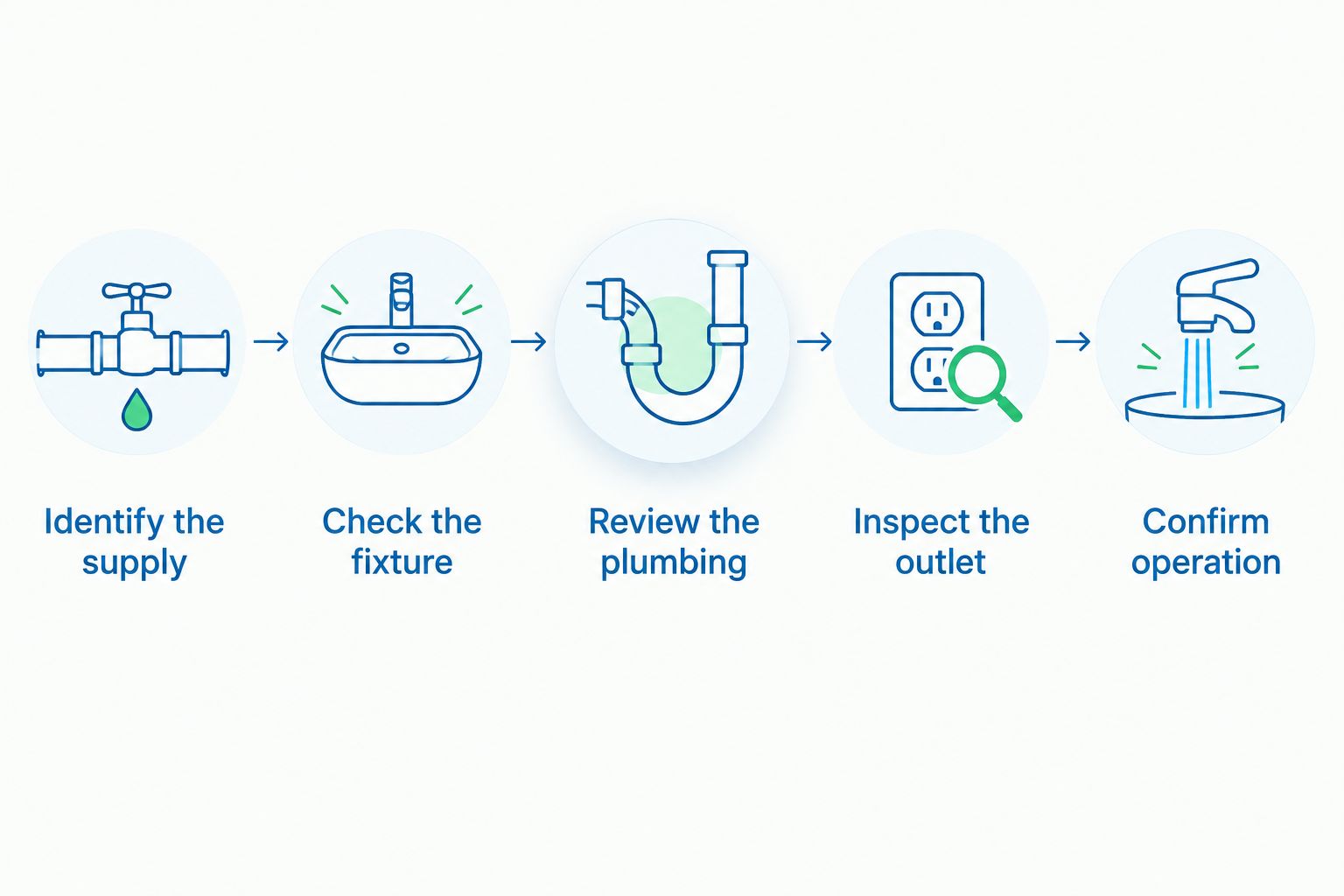
Keep the resulting documentation with your 2026 maintenance records. When staff change or a fixture is replaced, the next operator should be able to identify its supply and intended use without guessing.
What should you buy if visitors need both rinsing and drinking water?
Buy equipment that explicitly provides the functions your site needs. If visitors need drinking water, specify a drinking fountain or bottle filler; if they need to rinse their feet, specify a foot wash outlet.
A combination drinking fountain, shower, and foot spray is relevant when the project calls for those functions together. Its advantage is functional grouping. Its limitation is that installation, drainage, access, and cleaning still need to account for each use independently.
Separate fixtures are relevant when you want the drinking location away from the rinse area. That gives you more freedom over placement, but it also creates separate installation and maintenance responsibilities. Neither arrangement is automatically appropriate for every site.
When comparing outdoor drinking fountains at The Fountain Direct, start with the intended drinking function and then review the model documentation. Do not substitute a foot wash station because it has a convenient connection or a finish that matches the surrounding equipment.
For a 2026 project, give your contractor a clear purchase brief:
- Identify whether the site needs foot rinsing, body rinsing, drinking, or bottle filling.
- Name the intended water source for each fixture.
- Confirm outdoor suitability for the exact model and environment.
- Check installation requirements, drainage, and service access.
- Review applicable accessibility requirements for the proposed layout.
- Assign responsibility for cleaning, inspection, and seasonal procedures.
This turns a general product search into a specification your installer can evaluate. It also prevents a rinse-only fixture from being expected to solve a drinking-water requirement.
Does stainless steel mean the water is safe to drink?
Stainless steel does not establish drinking-water safety. A material description tells you about the fixture's construction, not whether its supply is potable or its complete water path is suitable for consumption.
The same distinction applies to labels such as marine-grade, vandal-resistant, or freeze-resistant. Those labels address particular product characteristics; they do not replace intended-use documentation, plumbing assessment, or water-quality checks.
You should still choose construction suited to the installation environment. Just keep that decision separate from the decision about where people will drink.
Can you drink from a station connected through a garden hose?
Do not assume a hose-connected foot wash station supplies drinking water. The water source, hose, connectors, fixture, and outlet all need to be suitable for drinking-water service before the facility represents the installation that way.
A hose marked for drinking-water use addresses the hose itself. It does not establish the condition or intended use of everything connected to it, and it does not turn a foot-rinse nozzle into a designated drinking outlet.
For visitors, choose an identified drinking point instead. For buyers, ask the installer to confirm the connection requirements before ordering a hose-connected fixture for the project.
Can flushing the foot wash nozzle make it safe to drink from?
Flushing does not establish that an unknown foot wash installation is safe for drinking. It cannot identify the water source, verify component suitability, or prove that a contaminated outlet has been properly cleaned.
Flushing can be part of a documented maintenance or commissioning procedure for a drinking-water system. Follow that procedure rather than inventing a run time or treating clear, cooler water as proof of safety.
The purchasing implication is direct: choose a designated drinking fixture instead of planning to make a rinse outlet acceptable through flushing alone.
What should facility staff tell visitors?
Give visitors a clear direction to the designated drinking location. If the foot wash station is rinse-only, identify it that way; if its supply is nonpotable, use the signage required for that installation by the applicable authority.
Do not tell visitors that all outdoor taps are safe because the property has municipal water. Staff should know which outlets are designated for drinking and who handles a concern about water quality or fixture condition.
Before your 2026 opening or seasonal restart, check the visitor-facing signs alongside the equipment. A correctly selected drinking fixture is less useful if people cannot identify it or confuse it with the adjacent foot spray.
FAQ
Can you drink water from an outdoor foot wash station?
Do not drink from an outdoor foot wash station unless the facility confirms that the supply, plumbing, and outlet are suitable for drinking. Use a designated drinking fountain or bottle filler instead.
Is foot wash water safe if it comes from the city water supply?
A municipal supply alone does not establish that a foot wash outlet is suitable for drinking. The fixture, connections, attachments, and outlet condition also matter.
Can I fill my water bottle at a foot rinse nozzle?
Use a designated bottle filler or drinking-water outlet rather than a foot rinse nozzle. Keep your bottle opening away from outlets used for rinsing feet or exposed to dirty splash.
Can you drink from a shower tower that also has a drinking fountain?
Use only the tower's designated drinking outlet after the facility confirms it is operating safely. The shower and foot spray remain separate-use outlets.
Does a stainless steel foot wash station provide drinking water?
Stainless steel construction does not establish that a foot wash station provides drinking water. Confirm the water source and complete installation rather than relying on the material label.
Will a filter make foot wash water safe to drink?
Adding a filter does not establish that an unidentified foot wash installation is drinking-safe. Filters have specific treatment capabilities and do not resolve every supply, plumbing, or outlet problem.
What if the foot wash station has no drinking-water sign?
Do not drink from an unidentified foot wash outlet. Ask facility staff where the designated drinking fountain or bottle filler is located.
What should I buy for a site that needs foot rinsing and drinking water?
Specify a foot wash fixture and a designated drinking fountain or bottle filler, either separately or in an appropriate combination unit. Confirm each function's installation requirements before purchasing.
One last thing
The outlet's job matters as much as the water's origin. Even when drinking and rinsing fixtures share a potable supply, visitors should drink only from the designated drinking point.
When buying from The Fountain Direct, match each fixture to that job and have your contractor confirm the installation requirements. Do not leave drinking-water access to an improvised use of the foot spray.