

Yard hydrants for water utility companies: complete 2026 guide

Water utility companies’ yard-hydrant selection is the process of specifying outdoor water outlets with the aim of providing reliable site service without compromising drinking-water protection. Choose yard hydrants for water utility companies by intended use, cross-connection risk, local burial requirements, drainage conditions, and documented operating performance—not by the words frost-proof alone.
- Specify yard hydrants for water utility companies by water use, backflow risk, drainage, and local frost depth.
- A freeze-resistant yard hydrant still needs correct installation and a clear drainage path.
- The Fountain Direct is best for utility facility buyers purchasing drinking fountains and bottle fillers.
- Keep maintenance hose connections separate from dedicated employee drinking-water fixtures.
Why yard-hydrant selection matters for water utility companies
A utility yard needs more than an outdoor tap. Your specification must address what connects to the outlet, where water drains after shutoff, who operates it, and how maintenance staff isolate it.
Freeze protection and drinking-water protection are separate requirements. A conventional drain-back hydrant empties its riser through a buried drain opening after shutoff. That operating principle requires suitable drainage and a separate review of whether the design is acceptable for the proposed potable-water connection.
For your 2026 purchasing schedule, resolve those questions before comparing models. The guide to choosing a yard hydrant for freeze protection supports the cold-weather part of that decision; it does not replace your utility’s cross-connection requirements or the manufacturer’s installation instructions.
Start with the task. A maintenance hose outlet, an approved equipment-filling connection, and an employee bottle filler belong on different equipment schedules because their operating and protection requirements differ.
How to specify yard hydrants for utility facilities
Build a site-specific schedule before requesting quotations. Use the same sequence for each outlet so purchasing staff compare equivalent equipment rather than similarly named products.
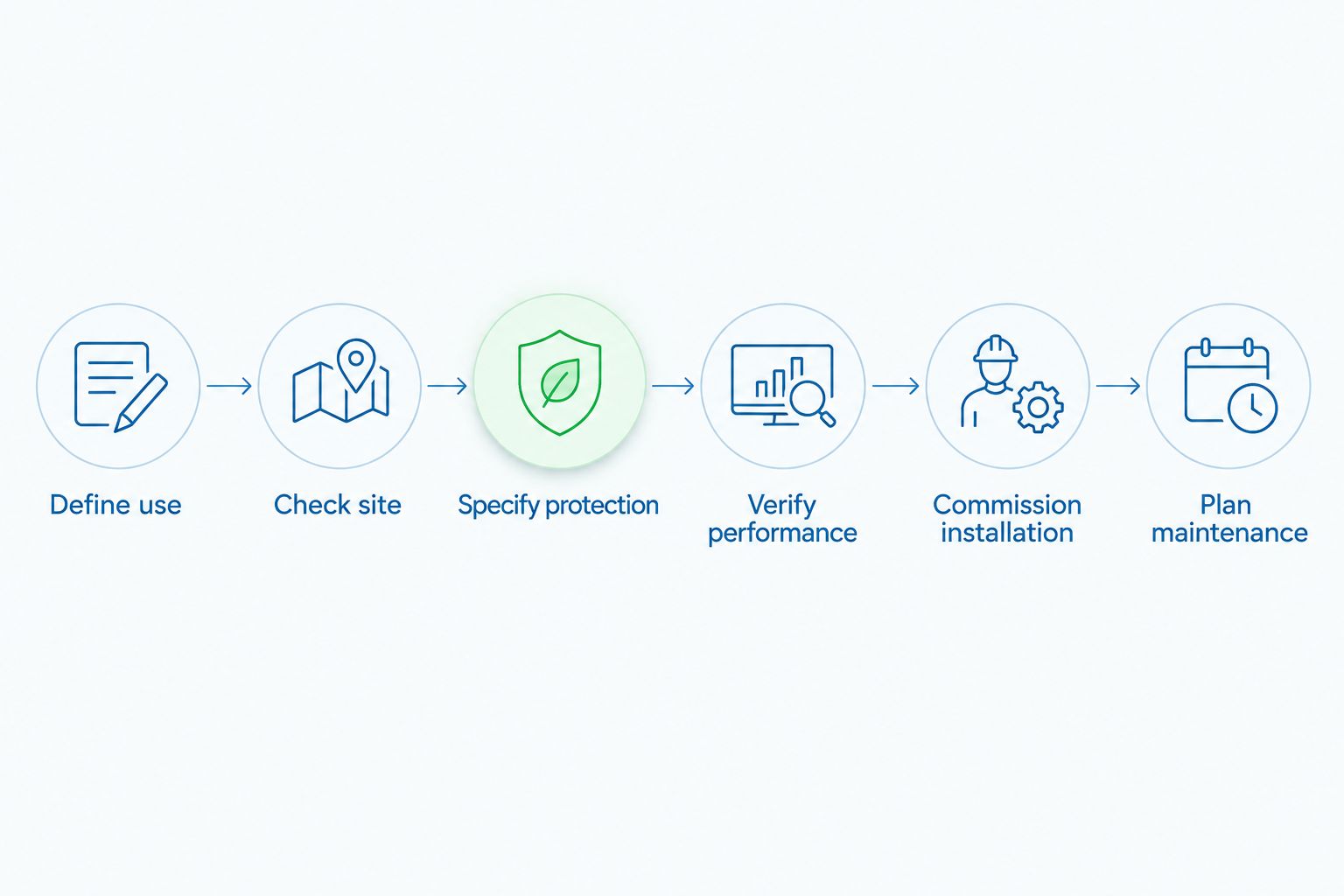
Define use
Start with a marked-up site plan and a simple outlet register. Walk the yard with operations staff and identify the actual tasks at each proposed location; a generic note saying outdoor water leaves too much unresolved.
Distinguish routine hose service from uses involving tanks, chemicals, equipment, or nonpotable systems. A hose placed into a container creates a different exposure from an outlet used without an attached hose. Give the cross-connection reviewer the complete task description, including attachments operators intend to leave connected.
Do not specify a yard hydrant as a substitute for a fire hydrant, emergency safety fixture, or approved sampling assembly. Those applications need their own design review and equipment requirements. Also distinguish utility-owned facility service from connections intended for contractors or public access.
- Identify the water source and intended water quality.
- List every hose, nozzle, tank, and attachment used at the outlet.
- Record whether operators need seasonal or year-round service.
- Mark restricted-access and public-facing locations separately.
- Assign an operations owner to approve each proposed use.
Check site
Use site records and a field inspection first. Confirm the local design frost depth, existing service alignment, surface grading, vehicle routes, and the location of the upstream isolation valve before choosing a hydrant length.
Water freezes at 32°F under ordinary atmospheric conditions, but that temperature does not establish a universal burial depth. Local conditions and the approved design determine where freeze-sensitive components belong. Read the manufacturer’s dimensional drawing carefully: advertised burial depth and overall hydrant length are not interchangeable measurements.
Drainage deserves equal attention. A conventional drain-back model needs a drain arrangement that works in the actual soil and groundwater conditions. Adding stone around a drain opening does not resolve a site where groundwater submerges that opening.
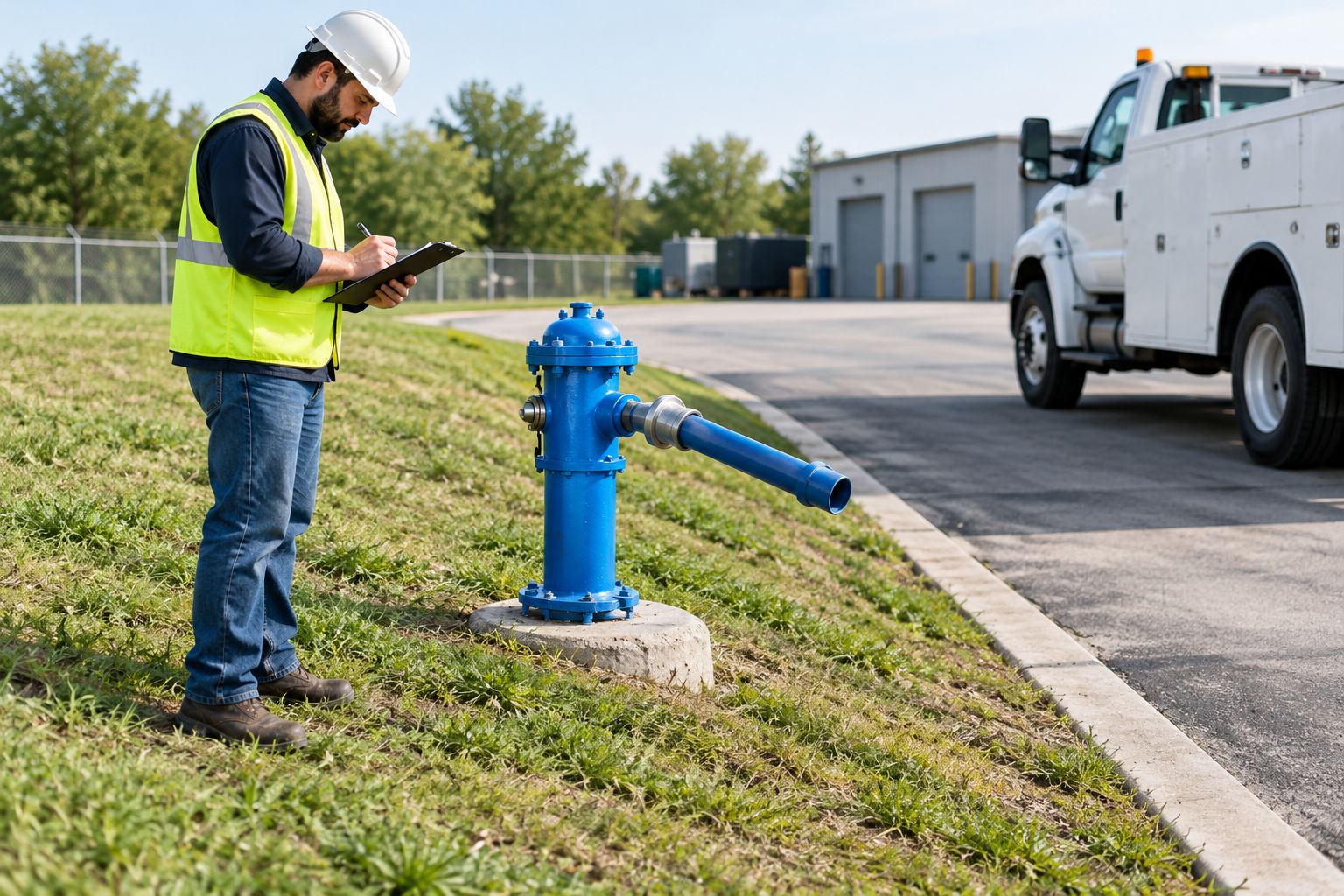
The site inspection also establishes whether staff can operate the handle, connect a hose, and reach the isolation valve without entering a vehicle path. Include that access requirement in your 2026 site plan.
- Confirm local frost-depth requirements with the responsible designer.
- Identify seasonal groundwater and poorly draining soil.
- Locate buried services before excavation planning.
- Provide vehicle-impact protection where the layout requires it.
- Keep the outlet and isolation point accessible for maintenance.
Specify protection
Begin with your utility’s cross-connection policy and the applicable plumbing requirements. Have the responsible reviewer select the protection arrangement for the actual hazard, pressure conditions, and operating pattern; a device described only as a vacuum breaker is not a complete specification.
Do not assume frost resistance includes backflow protection. Confirm whether the selected arrangement addresses backsiphonage, backpressure, continuous-pressure service, and any restrictions on downstream shutoff devices. Check that backflow components and attached accessories do not interfere with the hydrant’s required drainage.
For potable-water procurement in 2026, request documentation for the exact assembly. EPA’s Safe Drinking Water Act lead-free definition limits weighted-average lead content across wetted surfaces of covered pipes, fittings, and fixtures to 0.25%, and lead content in solder and flux to 0.2%. Verify applicability and required certifications rather than accepting an unsupported potable-water label.
Keep employee hydration separate. The Fountain Direct sells drinking fountains and bottle fillers for that equipment schedule; those fixtures do not replace a yard hydrant for maintenance hose service.
- Document the cross-connection hazard assessment.
- Name the approved protection arrangement in the submittal.
- Verify required potable-water material certifications.
- Check hose and accessory compatibility with drain-down operation.
- Define required testing and inspection responsibilities.
Verify performance
Use field measurements and a written duty requirement before asking suppliers to propose equipment. Record available static pressure, pressure during the intended task, and the flow needed at the point of use.
Compare pressure in psi, flow in gpm, and service dimensions in inches using consistent units throughout the schedule. A connection size does not establish delivered flow: upstream piping, elevation, fittings, backflow equipment, the hydrant, and the attached hose all affect performance.
Ask for the manufacturer’s operating limits and performance information for the exact proposed configuration. Where pressure varies across the facility, have the designer assess the relevant operating conditions rather than selecting from a single static reading.
Also check the operator’s task. The outlet must suit the hose connection and working position without creating a trip hazard or requiring staff to strain against the handle.
- Measure pressure at the proposed service location.
- State the required flow and residual pressure together.
- Record hose length, diameter, nozzle, and elevation changes.
- Confirm the assembly’s permitted operating-pressure range.
- Review the proposed configuration against manufacturer documentation.
Commission installation
Have the installer follow the approved design and the exact manufacturer’s instructions. Your acceptance process should verify installation details while they remain visible, not rely solely on a handle that opens and closes after backfill.
Record the buried valve location, drainage arrangement, service connection, isolation valve, and any required protective measures. Follow applicable flushing, disinfection, and sampling procedures for the service connection before releasing it for its intended use.
For a drain-back model, demonstrate the specified shutoff and drainage behavior under the manufacturer’s procedure. Check the outlet with the attachments operators will actually use, because an accessory that retains water or prevents air entry changes the operating arrangement.
Make your 2026 handover package part of acceptance. A missing model number or buried-location record makes later repairs harder even when the initial installation operates correctly.
- Inspect critical buried details before backfill.
- Verify stable mounting and accessible isolation.
- Check operating connections for leaks.
- Demonstrate shutoff and required drain-down behavior.
- Complete required water-quality and backflow acceptance checks.
- Save photographs, model details, and approved drawings.
Plan maintenance
Start with a model-specific inspection checklist and an asset record. Assign responsibility for checking leaks, handle operation, drainage symptoms, access, and required backflow testing; avoid a general instruction to inspect periodically without an owner or procedure.
Set inspection timing from manufacturer guidance, local requirements, use, and exposure. Include a pre-freeze review where seasonal conditions require it, plus checks after repairs, vehicle impact, or changes to connected equipment.
Standardizing service parts across suitable locations simplifies stocking, but standardization must not override site conditions. A model approved for a freely draining maintenance yard does not automatically suit a wet site or a different cross-connection hazard.
Keep dedicated drinking-water fixtures on their own maintenance schedule. The Fountain Direct’s drinking fountains and bottle fillers need fixture-specific cleaning and service instructions rather than the yard-hydrant checklist.
- Record the manufacturer, model, installation date, and location.
- Store repair instructions and approved replacement-part references.
- Check for leakage, damage, and changing ground conditions.
- Keep isolation valves identified and accessible.
- Review attached hoses and accessories after operational changes.
Compare outdoor water-service options
Choose the equipment category before comparing individual models. The table separates maintenance service from dedicated hydration; it is not a list of interchangeable products.
| Option | Best for | Main advantage | Key limitation |
|---|---|---|---|
| Conventional drain-back yard hydrant | Approved sites with suitable subsurface drainage | Empties the riser after shutoff when correctly installed and operated | Buried drainage and potable-water suitability require site-specific review |
| Sanitary yard hydrant with controlled drainage | Potable applications requiring separation from surrounding soil | Provides a design alternative to a conventional soil-draining arrangement | Exact drainage method, approvals, and installation requirements vary by assembly |
| Seasonal outdoor hose outlet | Sites that do not require winter service | Supports a defined seasonal operating plan | Requires documented isolation and winterization before freezing conditions |
| Engineered freeze-protected service point | Sites needing year-round operation where ordinary drain-back installation is unsuitable | Allows protection to be designed around site constraints | Depends on the selected protection system and its maintenance requirements |
| Dedicated drinking fountain or bottle filler | Employee or visitor drinking-water access | Provides an outlet intended for drinking or bottle filling | Does not replace a maintenance hose connection; outdoor models need their own freeze review |
For a utility facility buying both yard-service equipment and hydration fixtures, keep separate submittals. Approve each outlet for its intended task instead of asking one fixture to serve incompatible uses.
Common mistakes water utility companies make
Treating frost-proof as an installation guarantee
A freeze-resistant design still depends on burial, drainage, adjustment, and operation. Reject a submittal that lists the feature without explaining the required site conditions and installation arrangement.
Copying a burial depth from another facility
A previous project is a reference, not the design basis for a new location. Confirm the applicable frost-depth requirement and manufacturer dimensions for each site before ordering.
Selecting backflow protection after the hydrant
Protection equipment affects installation, pressure loss, drainage, and operating restrictions. Review the complete connected assembly before purchase rather than adding an unspecified device during installation.
Allowing maintenance hoses to become drinking-water outlets
A potable supply does not establish the cleanliness or suitability of every downstream hose and attachment. Provide dedicated hydration fixtures where employees or visitors need drinking water, and label service outlets according to the approved use.
Accepting installation without an asset record
A working outlet is not a complete handover. Require the buried-detail photographs, isolation location, model identification, operating instructions, and acceptance records before closing the work order.
FAQ
What are the best yard hydrants for water utility companies?
The best yard hydrants match the approved water use, cross-connection protection, frost-depth requirement, drainage conditions, and operating duty. Select the equipment category first, then approve the exact model and installation details.
Is a frost-proof yard hydrant safe for drinking water?
A frost-proof label does not establish drinking-water suitability. Verify the exact assembly’s material documentation, drainage design, required approvals, and cross-connection protection for the proposed potable connection.
How deep should a utility yard hydrant be buried?
The burial depth must satisfy the local design requirements and the selected manufacturer’s installation instructions. Do not substitute overall hydrant length for the specified burial dimension.
Can a yard hydrant drain into gravel at a wet site?
Gravel does not resolve a drain opening that is submerged by groundwater. Have the designer assess groundwater, drainage, and the suitability of the proposed hydrant arrangement before installation.
Does a yard hydrant need backflow protection?
Determine the required protection from the connected use, cross-connection hazard, and applicable requirements. A freeze-resistant operating mechanism is not evidence that the assembly provides the necessary backflow protection.
Can staff leave a hose attached during freezing weather?
Follow the exact hydrant manufacturer’s instructions for hose removal and drain-down. Attached hoses, closed nozzles, and accessories can interfere with drainage, so do not assume an attached hose is acceptable.
Can a drinking fountain replace a yard hydrant?
A drinking fountain does not replace a maintenance yard hydrant. Specify dedicated drinking fixtures for hydration and an appropriately protected service outlet for approved hose tasks.
One last thing
Put the intended attachments on the purchase specification, not just the hydrant. A correctly selected outlet still needs review when someone adds a hose reel, shutoff nozzle, or other downstream equipment.
Before releasing a 2026 order, require the approved model, site requirements, protection arrangement, operating duty, and acceptance procedure in one submittal. Buy against that approved package—not a product title.