

Refrigerated Fountain Comparison for Buyers
Refrigerated fountain comparison for schools, offices, and public sites. Compare cooling, capacity, durability, and value before you buy.

If you're doing a refrigerated fountain comparison, you're probably not deciding between nice-to-have features. You're deciding what will hold up in your building, satisfy users, fit code requirements, and arrive on time without blowing the budget. That means looking past glossy specs and comparing fountains the way actual buyers do - by location, traffic level, cooling performance, and long-term reliability.
A refrigerated fountain is a purchase that gets judged every day after install. If the water is not cold enough, if the unit is too light-duty for the setting, or if parts support is weak, people notice fast. For schools, offices, municipal buildings, healthcare facilities, and recreation sites, the right choice is usually the one that matches real-world use, not the cheapest model on the page.
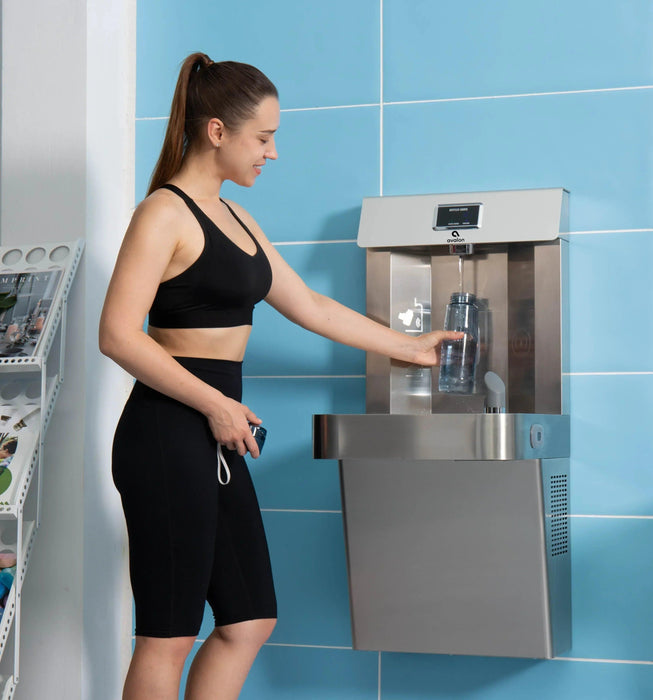
What matters most in a refrigerated fountain comparison
Most buyers start with brand, but brand alone does not make the decision. The better way to compare is by matching the fountain to the site conditions and user volume.
Cooling capacity is the first place to look. Light-traffic office use is different from a school hallway between classes. Some refrigerated units are built for moderate demand and perform well all day in administrative spaces, break rooms, or smaller churches. Others are designed for heavier institutional use where recovery rate matters and warm water complaints are common if the system is undersized.
Material and body design are next. Stainless steel tends to be the safer choice for public and commercial settings because it resists corrosion, hides wear better, and generally holds up under harder use. Powder-coated or decorative finishes can work in lower-abuse environments, but they are not always the best fit for schools, parks, or transit-adjacent buildings where impact resistance matters more than appearance.
Then there is activation style and accessibility. Many buyers need an ADA-compliant bi-level configuration, while others only need a single wall-mounted unit in a restricted-access area. If your project serves mixed users, a bi-level refrigerated fountain often makes more sense upfront than trying to solve reach-range complaints later.
Brand differences buyers actually notice
In a practical refrigerated fountain comparison, the leading U.S. commercial brands each have a lane.
Elkay is often the first name buyers consider because the lineup is broad, the styling is clean, and the product range covers standard wall-mounted fountains, bi-level units, and refrigerated combinations with bottle fillers. For schools, offices, and healthcare properties, Elkay is a strong fit when you want familiar specs, reliable availability, and models that are easy for contractors and facility teams to recognize.
Halsey Taylor overlaps with Elkay in many categories and is a frequent choice for institutional settings. Buyers often look here when they want proven commercial performance and options that suit education and government projects. The comparison between Elkay and Halsey Taylor usually comes down to exact configuration, lead time, and the details of the chiller and cabinet design rather than one brand being universally better.
Haws stands out when durability, specialty compliance, or a more premium commercial specification matters. If the site has tougher conditions or the project team is particular about vandal resistance and public-use reliability, Haws deserves a close look. It may not always be the lowest entry price, but in the right setting it can be the lower-risk purchase.
Willoughby moves into a different category. These units are commonly selected for correctional, behavioral health, and high-abuse environments where standard commercial fountains are simply not enough. If your project needs ligature resistance, security-focused construction, or extra-heavy-duty stainless fabrication, this is not a casual upgrade - it is the correct specification.
Indoor use cases that change the right answer
Schools and universities
For K-12 schools, cooling performance and abuse resistance usually matter more than sleek design. Hallways, gyms, and cafeteria-adjacent locations need a refrigerated fountain that can recover quickly and handle repeated use. A bi-level unit with a bottle filler is often the best value because it serves more users and aligns better with current expectations.
Colleges and universities can be a little more varied. Administrative buildings may only need moderate-demand refrigerated fountains, while athletic facilities and student centers call for higher-capacity equipment. This is where comparing one model's hourly cooling output against another matters more than comparing list price alone.
Offices and commercial workplaces
Office buyers usually have lower abuse risk, cleaner interiors, and more predictable traffic. That opens the door to quieter, more design-conscious refrigerated fountain models, especially in corporate spaces where appearance matters. Still, underbuying is a common mistake. If the fountain serves a warehouse edge, production floor, or multi-tenant common area, step up to a more commercial-duty unit.
Healthcare and public buildings
Hospitals, clinics, municipal buildings, and transportation-facing sites typically need dependable operation with minimal drama. Stainless steel, touchless bottle filling integration, and ADA accessibility become more important here. For these projects, the best refrigerated fountain is usually the one with the fewest compromises, not the one with the longest feature list.
Refrigerated fountain comparison by configuration
A single wall-mounted refrigerated fountain works well in controlled-access areas, staff-only zones, and smaller footprints. It is often the most budget-friendly route, but only when the traffic level truly supports it.
A bi-level refrigerated fountain is the safer choice for schools, public buildings, and mixed-user facilities. It improves accessibility, handles a wider user range, and often avoids complaints from both adults and children. If you are already opening the wall and running power, many buyers find the upgrade worth it.
A refrigerated fountain with a bottle filler makes sense in almost every higher-traffic interior application now. The trade-off is price, but the gain is obvious: fewer bottlenecks, better user satisfaction, and a more current fixture for new construction or renovation. If your building is being modernized, this option often delivers the strongest overall value.
Where buyers overspend - and where they cut too far
The easiest way to overspend is specifying a heavy-duty or specialty unit for a low-demand, low-risk interior where a standard commercial refrigerated fountain would perform just fine. Not every office corridor needs a premium anti-vandal model.
The easiest way to cut too far is to buy for the first cost only. A bargain unit can turn expensive if the cooling capacity is weak, the cabinet finish wears badly, or parts support is limited. For contractors and procurement teams, callback risk and occupant complaints cost real time. Saving a little upfront is rarely worth it if the fountain feels undersized six months later.
This is also where lead time matters. If a project has a firm opening date, the best refrigerated fountain on paper is not the best choice if it will not arrive when you need it. Buyers with deadline pressure should compare availability right alongside specs.
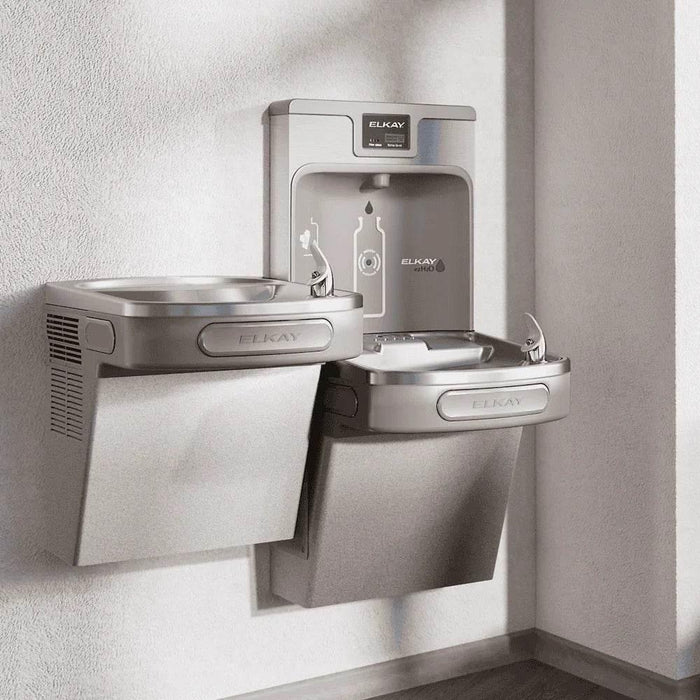
How to make the right refrigerated fountain comparison fast
Start with four filters: location, traffic, user type, and required configuration. If the site is a school hallway or public building, lean commercial-heavy and prioritize stainless construction. If it is a private office area, you may have more flexibility on style and capacity.
Next, decide whether the project needs a single station, a bi-level fountain, or fountain plus bottle filler. That one decision eliminates a lot of wasted comparison time. Then compare hourly cooling performance, ADA suitability, and brand fit for the environment.
Finally, buy from a specialist who understands commercial fountain selection instead of treating it like a generic catalog item. That matters when you are comparing brands like Elkay, Haws, Halsey Taylor, Stern Williams, Avalon, or Willoughby across very different use cases. The right seller should help you narrow options, protect your budget, and reduce project friction.
Trusted by 800+ customers, The Fountain Direct is built for buyers who are ready to move. You get direct-to-buyer pricing, free freight shipping, no sales tax, a 30-day return policy, manufacturer warranty coverage, and a Lowest Price Guaranteed with price match support. If you are making a refrigerated fountain comparison and want the right unit without the usual runaround, this is the kind of purchase that pays to get right the first time.
The best choice is usually not the fanciest fountain or the cheapest one - it is the model that fits your building, your traffic, and your timeline with the least risk.