A dog park without a working pet bowl gets complaints fast. So does a school campus or apartment common area where pets are welcome but the only drinking option sits too high, runs too slowly, or breaks after one season. This pet-friendly water station guide is written for buyers who are already comparing products and need to choose the right setup for the space, budget, and traffic level.
If you are buying for a public park, multifamily property, trailhead, campground, school, or commercial outdoor area, the wrong unit usually fails in predictable ways. The bowl is too shallow, the valve is easy to damage, the finish does not hold up outdoors, or the station was selected for light use when the site sees constant daily traffic. Buying well means matching the fountain to how people and pets actually use the site.
What a pet friendly water station should solve
A true pet-friendly water station is not just a standard fountain with a low accessory tacked on. It needs to serve two users at once - people and animals - without creating a mess, a bottleneck, or a maintenance headache.
For most buyers, that means evaluating three things first. One is user mix. A dog park has very different demand than a hotel courtyard or a school perimeter path where pets appear only occasionally. The second is exposure. Outdoor units need to handle weather, vandalism risk, and seasonal use patterns. The third is maintenance reality. If your team wants low intervention, you should be looking at commercial-grade units from established U.S. brands, not decorative residential products dressed up for public use.
This is where many projects get overcomplicated. You do not need dozens of features. You need the right bowl height, reliable actuation, durable construction, and a layout that fits the site.
Start with the location, not the product
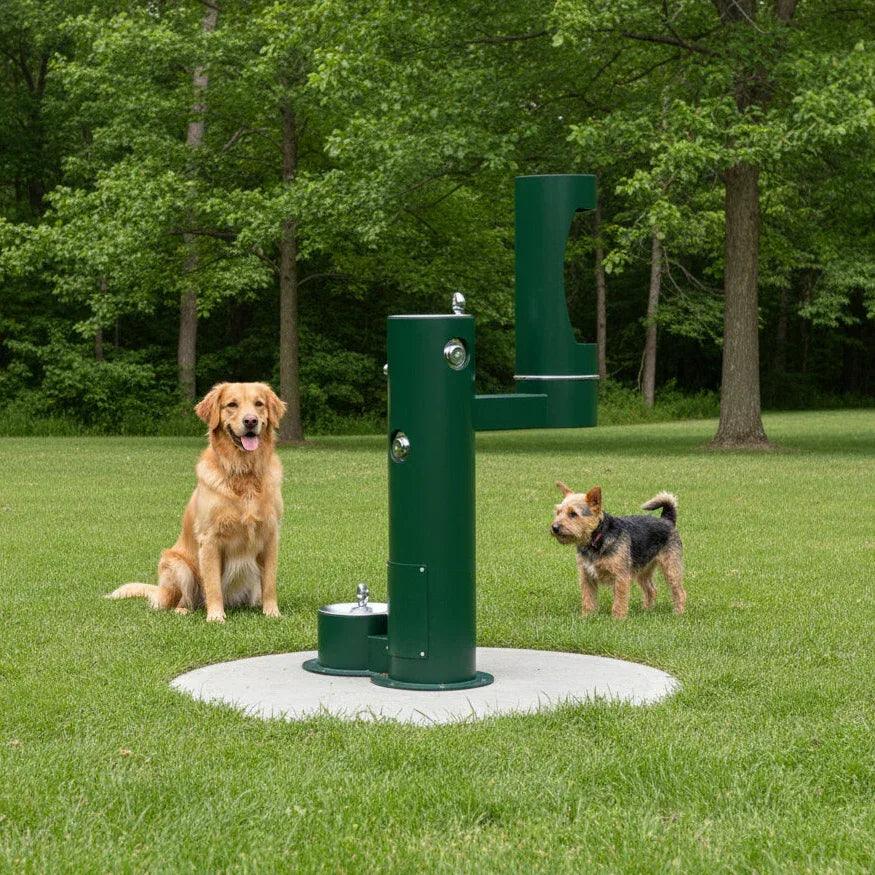
The best pet-friendly water station guide starts with placement because the same fountain can perform very differently depending on where it goes.
Dog parks and municipal recreation spaces
These sites usually need the most durable option. Traffic is inconsistent but can spike hard on weekends and in warm months. You are also dealing with dirt, leash tangles, excited dogs, and occasional misuse by the public. In this setting, a vandal-resistant outdoor fountain with an integrated pet bowl makes more sense than a lighter-duty combo unit.
Prioritize heavy-gauge construction, tamper-resistant controls, and outdoor-rated finishes. If the location is seasonal or exposed to freezing conditions, freeze-resistant or frost-proof configurations should be part of the buying conversation early. Waiting until the submittal stage to account for winter conditions can throw off your timeline and budget.
Apartments, HOAs, and multifamily communities
Here, the buying decision is usually less about extreme abuse and more about appearance, convenience, and resident satisfaction. A pet station near a dog run, courtyard, or walking path should still be commercial grade, but design fit matters more than it does in a utility park setting.
A cleaner profile, easier bowl access, and finish options may matter as much as raw vandal resistance. You may also want a station that serves residents filling bottles while also accommodating pets, especially in shared amenity areas where space is limited.
Schools, campuses, and mixed-use public areas
These spaces need balance. You want a fountain that can handle student or public use without presenting a low, exposed bowl that becomes a nuisance in a high-footfall corridor. In many cases, outdoor perimeter placement works better than trying to force a pet feature into a main circulation zone.
For campuses and schools, think carefully about who is using the station daily. If pets are occasional but expected, a human fountain with pet access may be enough. If the site actively welcomes dogs, the pet component should be designed as a primary function, not an afterthought.
Key buying decisions in a pet-friendly water station guide
Once you know the location type, the next step is narrowing the product class.
Integrated bowl versus add-on pet feature
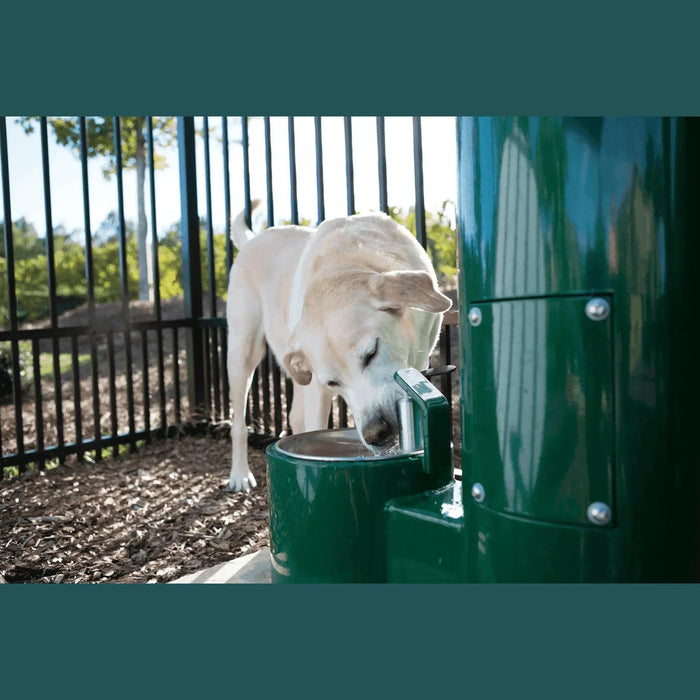
Integrated pet bowls usually look better and hold up better. They are built as part of the unit, so the height relationship, drainage, and water delivery are more consistent. For public and institutional buyers, this is often the safer choice.
Add-on configurations can work when you are trying to meet a narrower budget or retrofit an existing layout, but they tend to introduce more compromise. Sometimes the bowl placement is awkward. Sometimes the actuation feels like an accessory rather than a purpose-built solution. If the site gets regular use, integration is usually worth it.
Standard outdoor unit versus freeze-resistant model
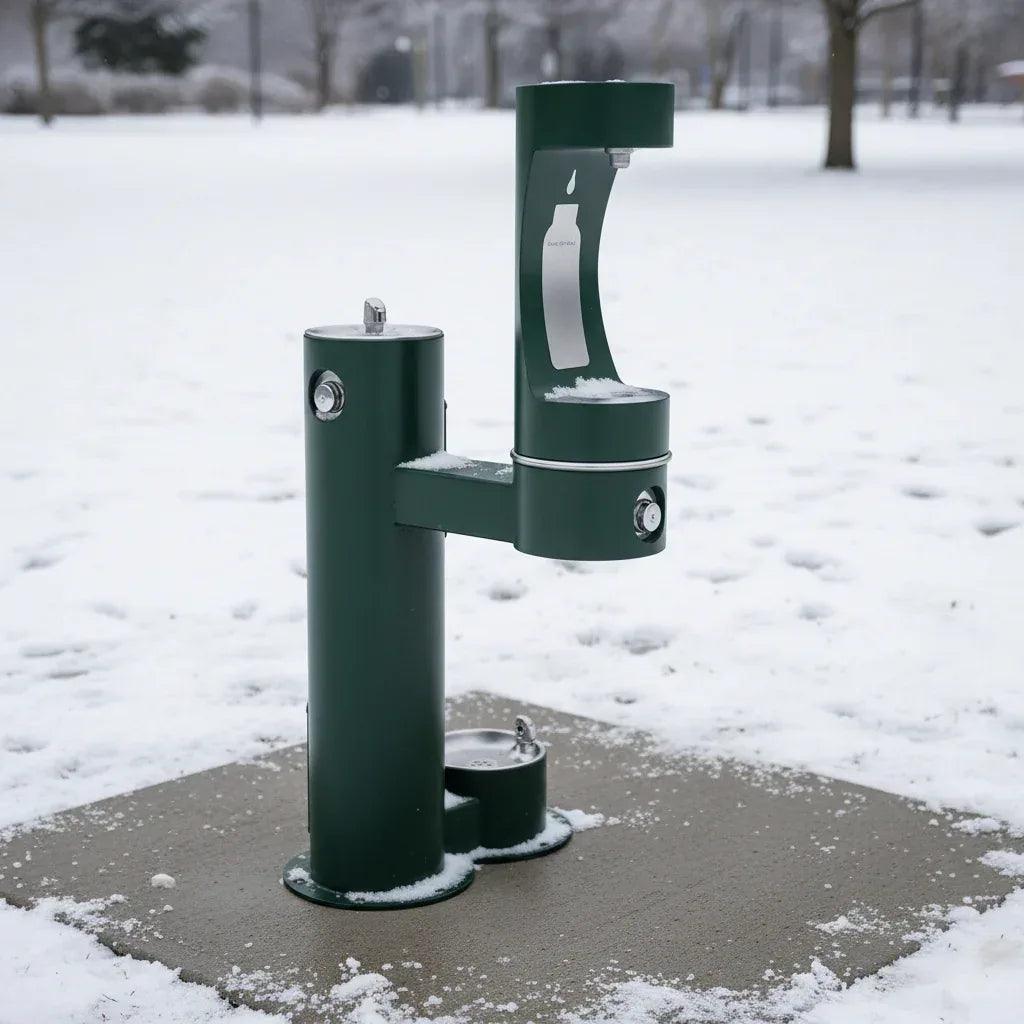
This is one of the most expensive mistakes buyers make. If the station will live in a climate with hard freezes and you want longer seasonal use or year-round reliability, choose accordingly from the start. A standard outdoor fountain may look similar on the page, but performance expectations are completely different.
Not every site needs frost-proof construction. In some cases, a seasonal park can justify a standard model that is shut down during winter. But if downtime creates user complaints or service calls, buying the tougher model upfront usually pays off.
Brand and build quality matter more than buyers think
In this category, the gap between commercial-grade and light-duty is real. A pet bowl sees paw impact, rough drinking behavior, and frequent contamination. The controls, finish, and basin all need to be built for repeated public use.
That is why serious buyers usually stay with proven U.S. commercial brands such as Elkay, Haws, Halsey Taylor, and Stern Williams when they need dependable outdoor performance. The advantage is not branding for its own sake. It is parts support, known specifications, stronger warranties, and products designed for institutional environments rather than occasional backyard use.
Procurement teams and contractors also know that spec confidence matters. If you are submitting for a municipality, school, or commercial property owner, recognized manufacturers reduce friction. That matters when timelines are tight and no one wants to explain why an off-brand fountain failed six months after opening.
Match the station to the buying timeline
A practical pet-friendly water station guide should also address timing because many buyers start shopping too late.
Outdoor and specialty fountains are often tied to seasonal construction windows. Parks departments want spring readiness. Property managers want amenities installed before peak leasing season. Contractors need approved equipment before rough-in, and site finish work starts moving. If you wait until the project is nearly complete to select a unit, your choices narrow fast.
Lead times vary by model, finish, and seasonal demand. Freeze-resistant and specialty pet-friendly units may not move on the same schedule as more common indoor fountains or bottle fillers. Buyers who lock in product selection earlier generally avoid substitutions and rushed decisions.
Where buyers tend to overspend and where they should not cut corners
You do not always need the highest-spec model on the market. A low-traffic hospitality courtyard does not need the same level of abuse resistance as a city dog park. Paying for extreme-duty construction where it is not needed can waste budget.
At the same time, there are places you should not cheap out. The valve quality, outdoor durability, manufacturer support, and pet bowl design are not cosmetic details. They directly affect whether the unit keeps working, drains properly, and remains presentable after months of use.
If a station will be visible to residents, guests, or the public, appearance also carries real value. A dented or poorly designed bowl sends the wrong message. In shared-use spaces, buyers should think beyond bare functionality and consider how the station fits the overall amenity quality of the property or facility.
How to buy with fewer headaches
If you are comparing options right now, the fastest way to narrow the field is to answer four questions. Is the unit going indoors or outdoors? Will it serve pets occasionally or constantly? Does the site need freeze protection? Is appearance or abuse resistance the bigger priority?
Those answers usually eliminate half the catalog immediately. From there, the right choice comes down to mounting style, brand preference, and project budget.
This is also where buying from a specialist matters. General supply houses may list fountains, but they are rarely set up to guide a buyer through pet-use cases, outdoor durability, or the trade-offs between standard and freeze-resistant models. A specialist retailer can help you avoid underbuying, overbuying, and ordering a unit that looks right online but is wrong for the site.
Trusted by 800+ customers, The Fountain Direct is built for buyers who want commercial-grade products without catalog clutter or middlemen. You get top U.S. brands, manufacturer warranties, free freight shipping, no sales tax, a 30-day return policy, and a Lowest Price Guaranteed promise backed by price match support.
If your project needs a pet-friendly station, buy for the real conditions on site, not the idealized version of the plan. The right unit will look obvious after installation because nobody has to think about it twice.


