A school campus usually knows it needs an outdoor unit when the nurse's office, gym entrance, and playground doors all start seeing the same traffic pattern - students coming back inside just to get a drink. Outdoor drinking water fountains for schools solve that bottleneck, but only if you buy the right type for your climate, traffic level, and supervision environment. The wrong fountain creates service calls, drainage issues, and avoidable replacement costs. The right one handles recess, athletics, dismissal, and weekend community use without becoming a maintenance headache.

What schools should look for first
Most school buyers do not need more theory. They need to narrow the field fast. The first decision is not brand. It is use case.
An elementary playground has different demands than a high school stadium concourse. A courtyard between buildings may need a clean architectural look and bottle filling capability, while a track-side location usually needs a tougher, more vandal-resistant pedestal unit. If the fountain is exposed after hours, durability moves ahead of aesthetics. If it sits in a monitored courtyard, usability and bottle filling access may matter more.
The next filter is climate. In warm-weather regions, a standard outdoor fountain may be enough. In colder parts of the country, schools should look closely at freeze-resistant or frost-proof outdoor models. That choice affects not just seasonal uptime, but also whether the school is planning for year-round access or a shutoff period.
Then there is code and audience fit. If a school wants broad accessibility, ADA-compliant outdoor drinking fountains for schools should be part of the specification from the start, not treated as an add-on concern later. Bottle filling access is also becoming a more common requirement, especially at secondary schools where students are carrying reusable bottles throughout the day.
The main product types for outdoor school use
For most campuses, the buying decision comes down to three categories.
Free-standing pedestal fountains
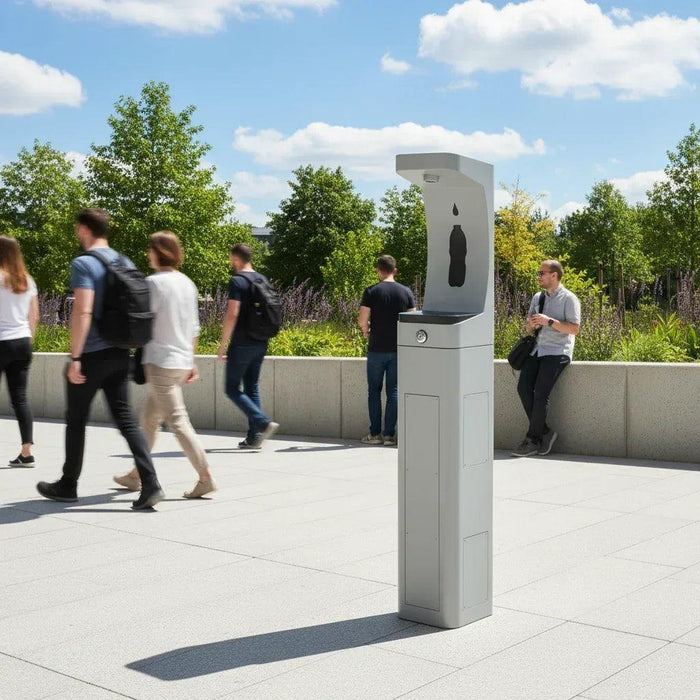
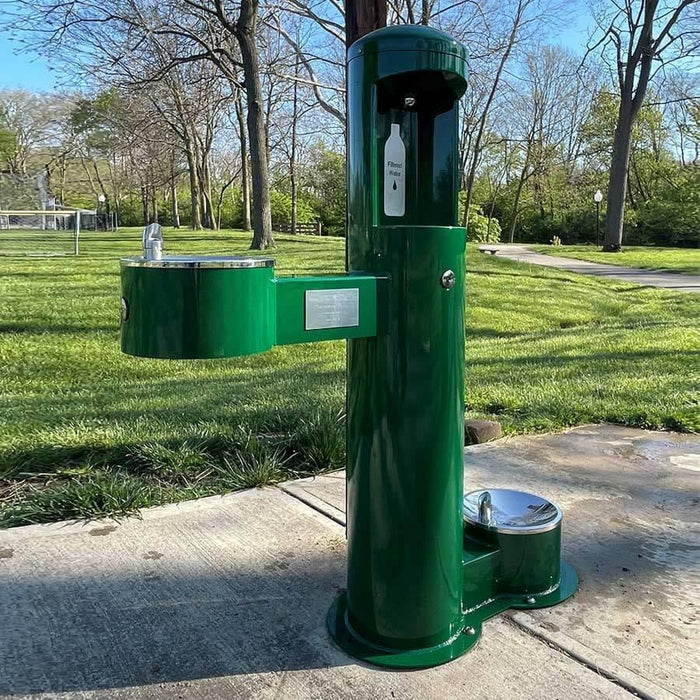
These are the workhorses for playgrounds, fields, bus loops, and outdoor common areas. A pedestal fountain gives you strong visibility, durable construction, and flexible placement. It is usually the safest choice when traffic is high and wall mounting is not practical.
This style also tends to make the most sense for new construction or larger retrofit projects where the school already expects to bring water and drainage to a dedicated outdoor location. If vandal resistance is high on the priority list, pedestal models are often where buyers start.
Wall-mounted outdoor fountains
Wall-mounted models work well in courtyards, exterior corridors, and building perimeters where plumbing access is already nearby. They can save space and often reduce the visual footprint of the installation. For schools with limited site room, this can be the most efficient option.
The trade-off is exposure. If the wall location is easy to crowd during passing periods, a pedestal unit in a more open area may control traffic better. Wall-mounted units can be excellent, but the surrounding layout matters.
Outdoor fountains with bottle fillers
This is the category schools increasingly ask for first, especially for middle schools, high schools, and campuses with athletics. A combination fountain and bottle filler supports both quick drinking access and refill convenience. It also helps reduce the line that forms when students only have bottles and no interest in using a traditional bubbler.
Not every exterior location needs a bottle filler. For a basic playground, a standard fountain may be enough. For a student quad, sports area, or campus entry, bottle filling capability usually adds clear value.
Durability matters more than extra features
School buyers already know what public-facing equipment goes through. Outdoor drinking water fountainsct.com/collections/concrete-drinking-fountains">Outdoor drinking water fountains for schools need to hold up against constant use, weather, accidental impacts, and deliberate abuse. This is why material and construction quality matter more than trendy add-ons.
Heavy-duty finishes, solid construction, tamper-resistant components, and trusted commercial brands are worth paying for. A cheaper unit can look attractive in a bid comparison, but if it fails early or needs frequent service, it was never the low-cost option. Procurement teams and facility managers usually end up paying for those savings later in labor, parts, and downtime.
That is also why buyer attention should stay on institutional-grade products, not light-duty fixtures that happen to be labeled for outdoor use. Schools are not installing for occasional private use. They are buying for repeated daily traffic over years.
Brand choice and specification confidence
When buyers compare outdoor school fountains, the brand matters because parts support, warranty credibility, and field performance matter. Established U.S. commercial brands like Elkay, Haws, Halsey Taylor, Stern Williams, and Willoughby are familiar for a reason. They have a real track record in institutional environments.
This is not just about reputation. It affects procurement risk. If a district is standardizing across multiple campuses, or a contractor is trying to keep submittals clean and predictable, buying recognized commercial-grade brands reduces surprises. It also makes replacement planning easier later.
Some brands are especially strong in vandal-resistant applications. Others are popular for ADA-focused layouts or integrated bottle filling designs. The best choice depends on the project. A school district replacing an aging playground fountain has different priorities than a GC outfitting a new campus plaza.
Freeze resistance, seasonality, and project timing
Outdoor school projects are often tied to narrow timelines - summer upgrades, bond-funded improvements, site work windows, or athletic facility refreshes before the school year starts. That makes product selection partly an availability decision.
Freeze-resistant units deserve extra attention because they are often not interchangeable with standard warm-climate models. If a school waits too long to specify them, lead times can become the real problem. Buyers in colder regions are usually better off locking in product decisions early, especially if the unit is part of a larger site package.
There is also a simple budget reality. If the school only needs seasonal operation, a standard outdoor fountain with planned winterization may be enough. If year-round service is expected, paying more for a freeze-resistant model often makes sense. The right answer depends on local climate, supervision, and the cost of downtime.
How to choose the right outdoor drinking water fountains for schools
A fast way to narrow options is to match the product to the location rather than trying to find one fountain that does everything.
For playgrounds and open recess areas, a free-standing vandal-resistant fountain is usually the safest buy. For courtyards and outside classroom zones, a wall-mounted unit may fit better. For secondary schools, athletic complexes, and high-traffic student gathering areas, bottle filler combinations are often the strongest long-term value.
If the school serves a wide age range, drinking height and ADA access need to be considered early. If the unit is exposed after hours, prioritize vandal resistance over appearance. If the campus is in a freeze zone, do not treat frost protection as optional.
Buyers should also think about whether the project is a one-off replacement or part of a broader standardization effort. District-wide purchasing often benefits from choosing a dependable line that can be repeated across sites. That simplifies approvals, replacement planning, and future ordering.
Where buyers get the best value
Price matters, but institutional buyers know total buying friction matters too. The best purchase is not always the one with the lowest line-item number if it comes with weak support, unclear warranty coverage, or freight surprises.
That is where a specialist retailer has an advantage over a general catalog seller. Buyers need product guidance tied to real use cases, commercial-grade brand selection, and pricing that stands up when procurement is comparing sources. They also need straightforward terms. Free freight shipping, no sales tax, a manufacturer's warranty, and a 30-day return policy remove a lot of the friction that slows down a school purchase order.
The Fountain Direct is built for that kind of buyer. We focus on commercial and institutional-grade fountains, carry top U.S. brands, offer a Lowest Price Guaranteed with price match protection, and help purchasers get to the right product without wasting time in a giant mixed catalog. Trusted by 800+ customers, we serve schools, contractors, and facility teams that need the right unit, the best price, and fewer purchasing headaches.
If you are buying outdoor school fountains on a deadline, the smartest move is to match the fountain to the exact campus use case now, before lead times and change orders make the decision for you.


