A concrete pad looks like the easy part of an outdoor shower project - right up until you have to anchor the fixture, manage drainage, and keep the installation serviceable for years of daily use. If you need to install outdoor shower on concrete slab, the real job is not setting the shower in place. It is making sure the slab, plumbing, fastening method, and fixture type all work together for your site conditions.
For contractors, facility teams, and property managers, that matters more than the finish. A resort pool deck, beach rinse station, apartment amenity area, or backyard pool project can all use a slab-mounted shower, but the right approach depends on traffic, freeze risk, vandal exposure, and whether the shower is expected to meet commercial durability standards.
When a concrete slab is the right base
A concrete slab is often the most practical foundation for a freestanding outdoor shower. It gives you a stable mounting surface, helps control movement over time, and simplifies installation in locations where you do not want to pour a dedicated footing for every unit. On pool decks and patios, it may already be in place, which can reduce labor and speed up project timelines.
That said, not every slab is automatically ready for an outdoor shower. Thickness, reinforcement, condition, slope, and drainage all matter. A decorative residential patio slab may be fine for a light-duty pool shower, but a high-traffic public installation usually needs more confidence in the substrate, especially if the fixture is tall, exposed to wind, or likely to see rough use.
If the site serves the public, it also makes sense to think beyond the shower itself. Heavy-duty commercial units are built for repeat use, easier maintenance, and better resistance to tampering. That usually saves more over time than choosing a lighter fixture that was never designed for a beach, park, or hospitality setting.
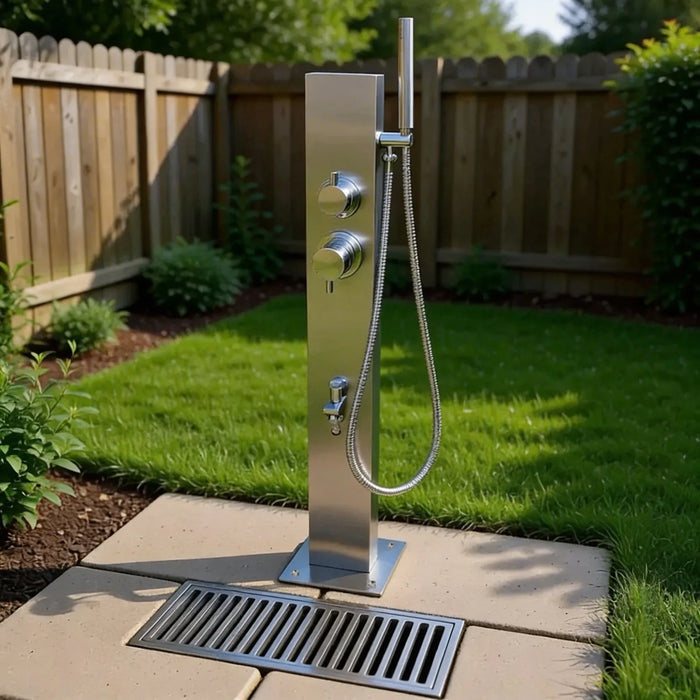
Before you install outdoor shower on concrete slab
The first checkpoint is plumbing. Some outdoor showers are designed for a single cold-water supply line. Others use hot and cold mixing valves, foot rinses, handheld sprays, or pet wash features. The rough-in layout needs to match the specific model, not a generic assumption from another fixture.
The second checkpoint is drainage. This is where many slab installations go wrong. Water cannot just pool around the base and hope to find its way off the pad. On a commercial site, standing water creates slip risk, stains the slab, and can shorten fixture life. A proper installation usually routes water toward an area drain, trench drain, or approved site drainage path. In some jurisdictions, graywater discharge rules may also affect where that water can go.
The third checkpoint is code and use case. Resorts, parks, multifamily properties, and schools may need different valve types, mounting heights, backflow protection, and accessibility considerations. If the shower is part of a broader public-use amenity area, the surrounding layout matters just as much as the fixture.
Evaluate the slab before drilling anything
A sound slab should be structurally stable, reasonably level for the fixture base, and thick enough to hold anchors without cracking or spalling. Hairline surface cracks are not always a deal breaker, but wide cracks, edge damage, hollow spots, or signs of slab movement should stop the project until the base condition is confirmed.
You also want to locate embedded utilities and rebar before drilling. Hitting a post-tension cable, electrical conduit, or plumbing line can turn a simple installation into a major repair. On existing commercial decks, as-built drawings are helpful, but field verification is still worth doing.
If the slab has a noticeable slope, check the manufacturer's requirements for acceptable tolerance. Some showers can handle minor variation with shimming or adjustable mounting details. Others need a more precise, flat mounting area to avoid stress on the column or base plate.
Plumbing and drainage planning
Most successful slab installations are won or lost in the rough plumbing stage. If the supply line comes up through the slab, the penetration location needs to align cleanly with the shower base or chase. If the line runs externally, you need a protected routing strategy that does not create a trip hazard or leave piping vulnerable to impact.
For freeze-prone regions, planning gets more specific. A shower that works well in Florida may fail early in Colorado if seasonal shutdown and draining were never considered. In colder climates, buyers often need freeze-resistant outdoor fixtures, shutoff valves below frost depth, or a winterization plan that maintenance staff can actually execute.
Drainage deserves the same level of planning. A simple rinse shower near a pool may discharge to deck drainage if local code allows it and the volume is low. A beach or public park installation may need a more deliberate drain path because of sand, sediment, and heavier throughput. If multiple users are expected during peak periods, undersized drainage will show up fast.
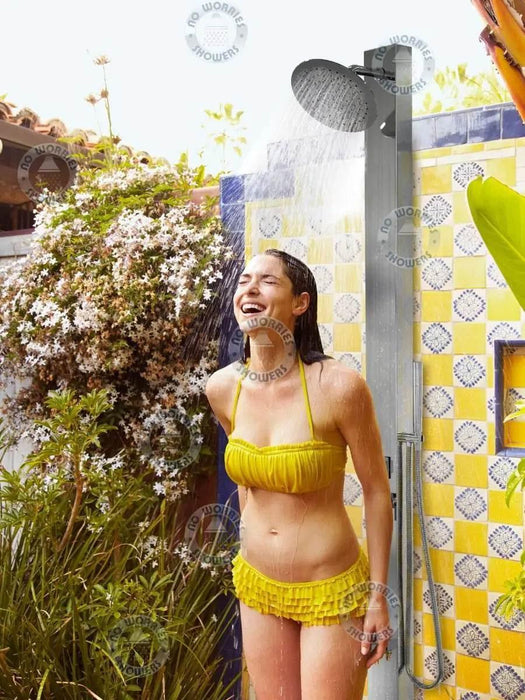
Anchoring the shower properly
The typical method is to anchor the shower base plate to the concrete slab using stainless or corrosion-resistant mechanical anchors specified for the fixture and environment. For coastal sites or chemically treated pool areas, corrosion resistance is not optional. Salt air and splash exposure will punish low-grade hardware.
Anchor selection depends on slab thickness, edge distance, manufacturer requirements, and the expected loads on the unit. A slim decorative shower for a private pool and a heavy-duty public-use shower should not be treated the same way. Commercial fixtures often have larger base plates and more demanding anchoring requirements because they are expected to withstand side loads, abuse, and years of exposure.
Use the fixture template when available. Drill clean holes to the correct depth, remove dust, and set anchors according to the hardware instructions. Over-tightening can crack the slab or distort the base plate. Under-tightening leaves movement in the assembly, which eventually shows up as leaks, wobble, or fastener failure.
Where the plumbing penetration passes through the slab and into the fixture base, seal the joint correctly. That seal is there to help manage moisture intrusion and improve finish quality, but it should not be used to hide a poor rough-in.
Choosing the right shower for the site
Not every slab-mounted shower belongs in every environment. For a high-traffic beach access point, public pool deck, or resort rinse zone, commercial-grade outdoor showers make sense because they are built for daily use, have easier replacement parts, and better resistance to corrosion and vandalism. For a lower-traffic residential pool or private club courtyard, a lighter-duty fixture may be enough if the finish and supply configuration fit the project.
This is also where spec choices matter. A simple exposed shower head may be fine for rinsing off chlorine. A foot wash station adds convenience at beach and pool entries. Barrier-free access, easy-turn controls, or timed flow may matter for public-facing projects. If maintenance is a concern, fewer exposed moving parts usually means fewer future service calls.
For facility buyers, this is rarely just a product choice. It is a lifecycle choice. A lower upfront price can disappear quickly if the unit corrodes, leaks, or needs frequent replacement in a demanding environment.
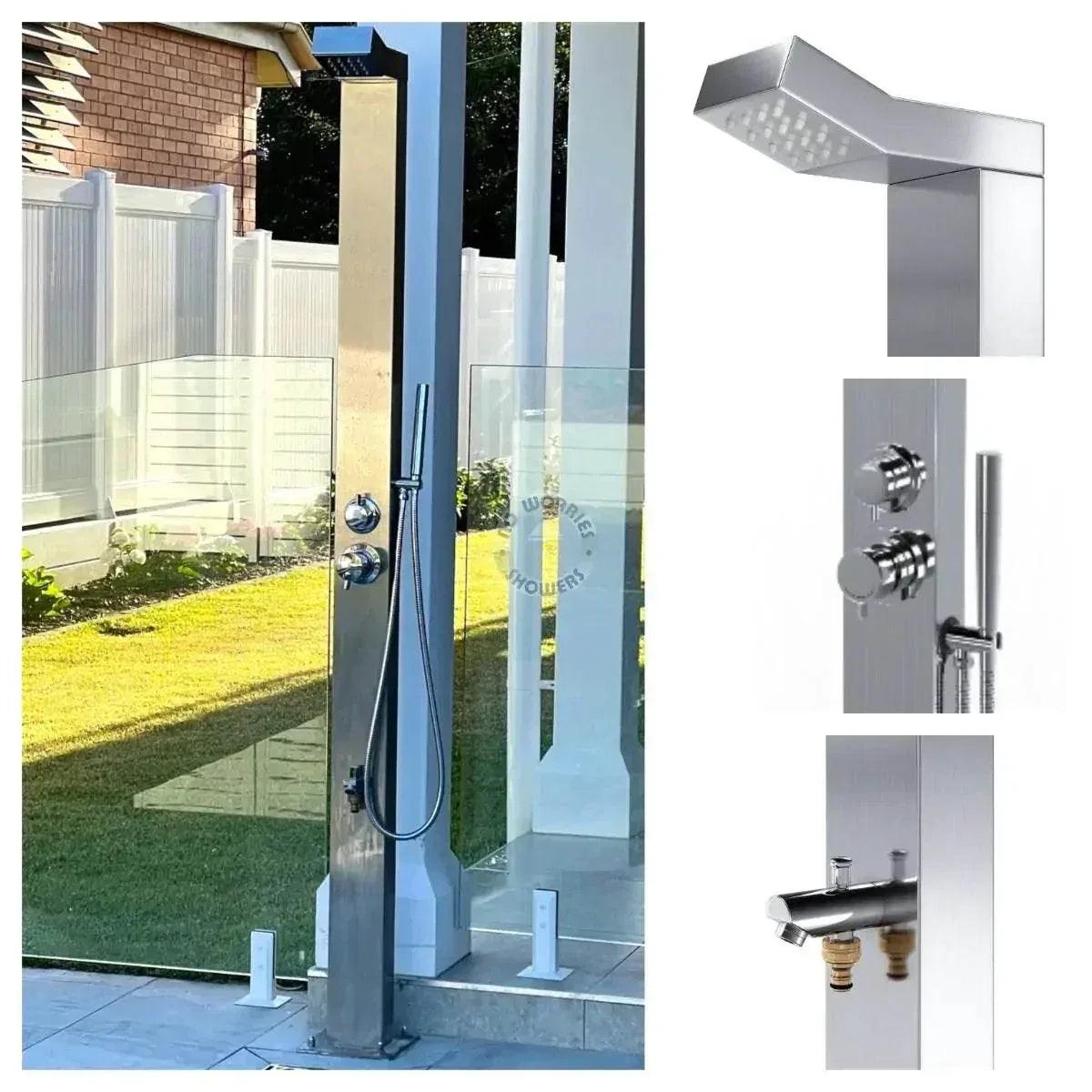
Common mistakes when installing on concrete
The most common mistake is assuming the slab solves everything. It does not. A slab gives you a mounting surface, but drainage, plumbing protection, winterization, and fixture selection still have to be right.
Another mistake is underspecifying the shower for the environment. Decorative residential models are often installed in public settings where they cannot hold up to traffic, weather, or tampering. The result is usually premature failure and avoidable replacement cost.
Poor anchor practice is another issue. Using whatever expansion anchor is on the truck may work for a while, but hardware should match both the fixture and the site exposure. The same goes for skipping corrosion-resistant components around pools and coastal properties.
Then there is maintenance access. If valves, shutoffs, and service points are buried in a way that makes routine work difficult, the installation becomes expensive to own. Good installation is not just about day one. It is about making repairs and seasonal service manageable three years from now.
Procurement and project timing
If your installation window is tied to pool season, resort opening dates, or municipal budget cycles, product lead time matters just as much as install detail. Outdoor fixtures often move on seasonal demand, and freight planning matters because these are not small parcel items. That is one reason many contractors and facility teams prefer to source from specialists that understand commercial outdoor equipment, not just generic plumbing catalogs.
The Fountain Direct supports buyers who need that kind of clarity, especially when the job calls for commercial-grade outdoor showers, freeze-conscious options, and straightforward shipping and warranty expectations. For public and institutional projects, getting the right unit ordered the first time prevents more delays than any field shortcut ever will.
A well-installed outdoor shower should feel simple to the end user. They turn it on, rinse off, and move on. Behind that simplicity is a slab that can hold the load, drainage that can keep up, plumbing that fits the fixture, and hardware that will not quit after one busy season. If you treat the slab as part of the system instead of just the surface under it, the installation tends to perform the way it should.


