

How to Size Pool Shower for Your Site
Learn how to size pool shower systems for resorts, parks, and homes. Match user traffic, spray coverage, plumbing, and site conditions correctly.

A pool shower that looks right on paper can still fail fast once people start using it. The usual problem is not the finish or the shower head - it is poor sizing. If you are figuring out how to size pool shower equipment for a resort deck, community pool, HOA amenity area, or private home project, the right answer starts with user volume, plumbing capacity, and how the shower will actually be used.
For commercial buyers, sizing is not just about height and footprint. It affects wait times, rinse-off performance, water use, maintenance calls, and whether the installation feels adequate on a busy Saturday afternoon. For residential projects, the decision is usually simpler, but the same logic applies. A shower that is too small feels underbuilt. One that is too large can waste budget, crowd the deck, and complicate installation.
Start with the real use case
The first sizing question is not dimensions. It is traffic.
A hotel pool with steady guest turnover needs a different shower setup than a lap pool behind a clubhouse. A beachfront resort may need multiple rinse points for sand removal, while a backyard pool may only need a single overhead rinse for family use. Before you compare models, estimate how many people will use the shower during peak periods, not average daily use.
For light residential use, a single-station outdoor pool shower is often enough. For multifamily, hospitality, and public recreation settings, one shower column may not keep up if guests are expected to rinse before entering the pool and after leaving it. In those environments, sizing should account for queueing and turnover. If users wait too long, they skip the rinse. That defeats the point.
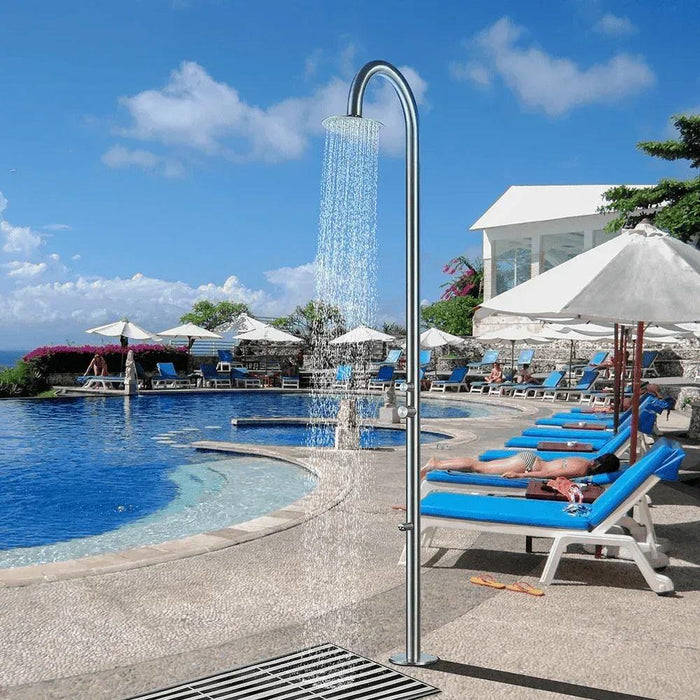
How to size pool shower capacity
When buyers ask how to size pool shower installations, they usually mean one of three things: how many shower stations they need, how large the fixture should be, and whether the water supply can support it. All three matter.
A good planning approach is to match the shower count to peak occupancy and user behavior. In a residential setting with one family or a few guests at a time, one station is generally enough. In a hotel or community pool, you may need two or more stations near key entry and exit points if swimmers are expected to rinse consistently. If the shower is also meant for sand or chlorine rinse-off, usage time per person goes up, which increases demand.
Fixture size is the next issue. A compact column works well where space is tight and the goal is a quick rinse. A taller, heavier-duty freestanding unit may be the better fit for resorts, beach properties, and public pools where appearance, durability, and broader spray coverage matter. Larger fixtures also tend to handle repeated daily use better, especially when built with commercial-grade materials and vandal-resistant components.
Then there is flow capacity. A shower can only perform as well as the supply line feeding it. If you install a high-output shower head on an undersized water line, users get weak pressure and poor spray pattern. If you install multiple heads on one branch without checking pressure loss, the whole system underperforms. This is where plumbing coordination matters early.
Match the shower height and spray area to the audience
A pool shower should fit the people using it. That sounds obvious, but it is often missed.
For family-oriented spaces, mixed-user environments are common. Adults need comfortable overhead clearance, while children benefit from lower body sprays or easier reach to controls if the design includes them. In hospitality and public settings, the safer move is usually to choose a standard-height commercial shower that accommodates adult users cleanly without creating a cramped feel.
Spray radius matters too. A narrow spray can be fine for quick foot and leg rinsing, but not for full-body rinse-off. A wider spray pattern is more comfortable, though it uses more water and may create a larger wet zone around the base. That has implications for drainage, slip resistance, and deck layout. Bigger is not automatically better.
If the shower is intended for a pre-swim rinse, users need a straightforward, fast experience. If it is intended mainly for post-swim cleanup, broader coverage may be worth the added water demand. The right size depends on the purpose.
Site space, circulation, and drainage come next
Even the right fixture can become the wrong choice if the site layout is tight.
A pool shower should sit where people naturally pass it, but not where lines block circulation. On a resort deck, that may be near a gate or path back from the beach. At a neighborhood pool, it may belong between the entrance and the water. For a home project, it often works best near the pool edge without splashing directly onto lounge areas or door thresholds.
Leave enough surrounding clearance for users to step in, turn, rinse, and exit without crowding. If the unit includes a foot rinse or separate hose feature, give it more room. Freestanding commercial models typically need more visual and physical breathing room than slim wall-mounted options.
Drainage deserves more attention than it usually gets. A larger shower head or multiple-user configuration puts more water on the surface. Without proper grading and drainage, you end up with standing water, staining, algae, and slip risk. If you are increasing fixture size or flow rate, confirm that the drain strategy increases with it.
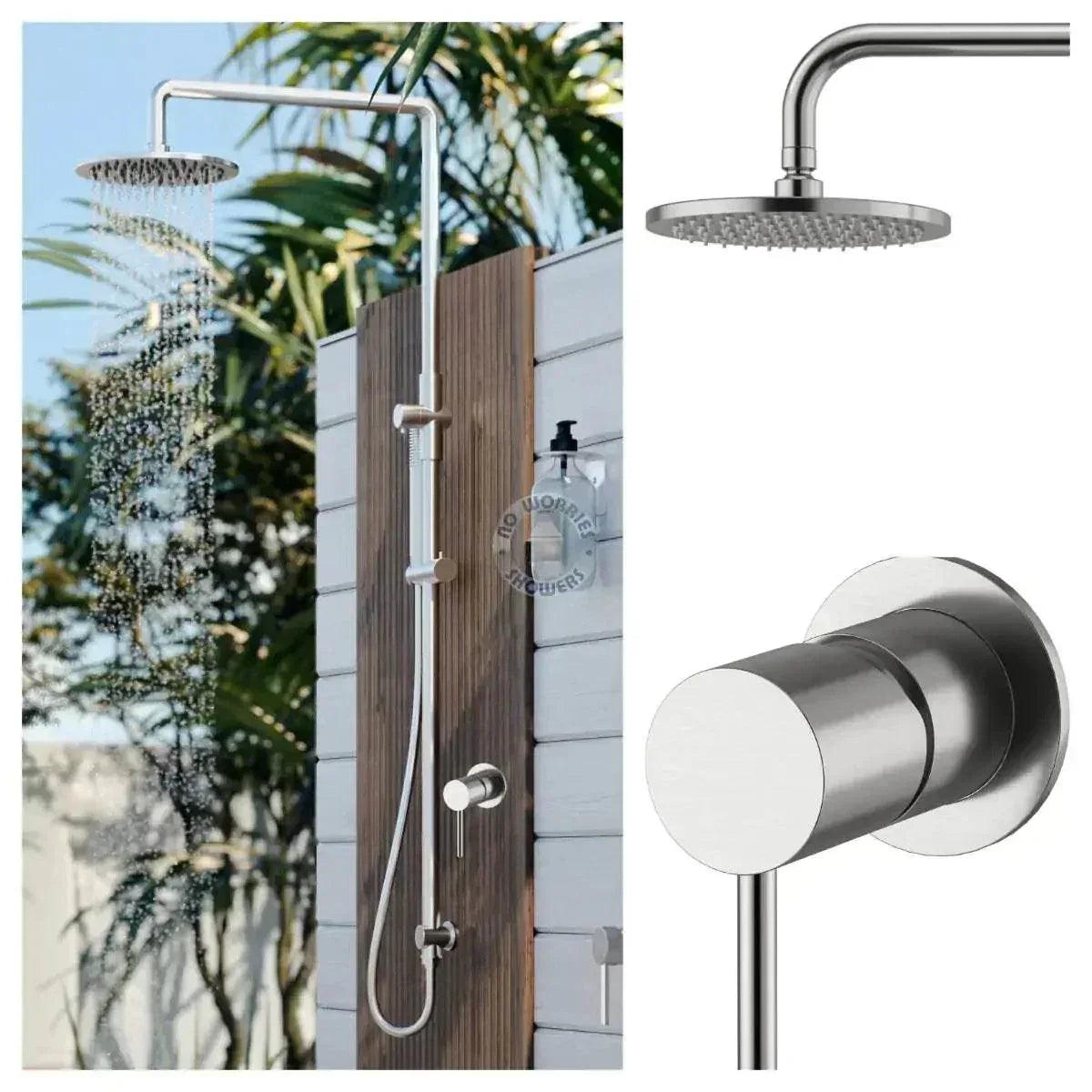
Commercial versus residential sizing
This is where many projects split.
A home pool shower is often selected for appearance first and traffic second. That can work because usage is low and the owner controls expectations. A lighter outdoor shower may be perfectly appropriate if it is used occasionally, winterized correctly, and installed in a protected setting.
Commercial projects should be sized with abuse, weather, and maintenance in mind. That usually means heavier-gauge construction, better anchoring, more durable finishes, and simpler serviceable parts. Resorts, municipal pools, and beach facilities tend to benefit from larger, purpose-built outdoor showers that can handle frequent cycling and exposure.
If the site is unsupervised or open to the public, vandal resistance becomes part of sizing too. A flimsy fixture may technically fit the space, but it is undersized for the operating environment. Strength is a sizing factor when the user load is high and the setting is rougher.
Plumbing and climate can change the right answer
You cannot size in a vacuum. The water line, mounting method, and local climate all shape the final decision.
If hot and cold mixing is required, the fixture and supply arrangement need to support it. If the project only needs a cold-water rinse, the design can often stay simpler and more budget-friendly. Check shutoff access, pipe routing, and whether the slab or deck can accommodate the installation method without expensive rework.
Climate matters even more for outdoor showers. In warm regions, a broader range of products may work. In freeze-prone areas, you need to think about seasonal shutdown, drain-down capability, or freeze-resistant designs. A shower that is perfectly sized for summer use can become a maintenance headache if its construction does not match winter conditions.
This is also where lead time and procurement planning come into play. Seasonal installations often bunch up in spring. If the project has a fixed opening date, do not wait until the last minute to decide between a basic residential unit and a commercial freeze-conscious model with longer lead times.
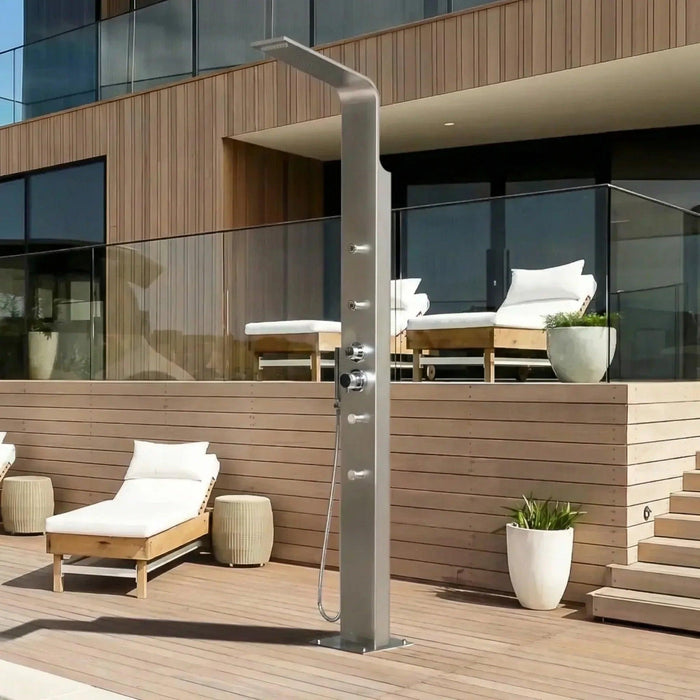
A practical sizing path for buyers
If you need a simple decision path, start with five questions. How many users will hit the shower during peak periods? Is the goal a quick rinse or a full-body washdown? How much installation space and drainage area do you really have? What can the water supply support? And is the environment residential, hospitality, or fully public?
Those answers usually narrow the field quickly. Low traffic, protected location, and limited budget point toward a smaller single-user model. High traffic, public exposure, and a need for durability point toward a larger commercial pool shower with stronger materials and more deliberate plumbing coordination.
For facility teams, it often helps to size one level above the minimum if the budget allows. The reason is simple: user demand rarely goes down over time, and undersized site amenities create complaints faster than oversized ones. The exception is when water conservation, space constraints, or drainage limits make a larger unit impractical. Then a smaller shower in the right location may outperform a bigger one placed poorly.
At The Fountain Direct, many buyers come to this decision after comparing not just style, but use case - resort traffic, park exposure, freeze risk, and maintenance expectations. That is usually the right way to buy.
A well-sized pool shower does not call attention to itself. People use it, the deck stays functional, maintenance stays manageable, and the project feels properly finished. That is the mark you want to hit.