

How to Select Bottle Filler for Your Facility
Learn how to select bottle filler by location, traffic, compliance, filtration, and durability so you buy the right unit the first time.

A bottle filler that looks right on paper can still be the wrong buy if it slows traffic, misses code requirements, or creates service headaches six months from now. If you're figuring out how to select bottle filler equipment for a school, office, park, gym, healthcare site, or commercial property, the right choice usually comes down to five things: where it will be installed, who will use it, how hard it will be used, what compliance standards apply, and how much abuse it needs to handle.
That is the buying lens serious purchasers use because the cheapest unit is not always the lowest-cost option. A basic indoor wall-mounted bottle filler may be perfect in a private office break area, while a public corridor in a school district or transit-adjacent building may need a more vandal-resistant and higher-capacity setup from day one.
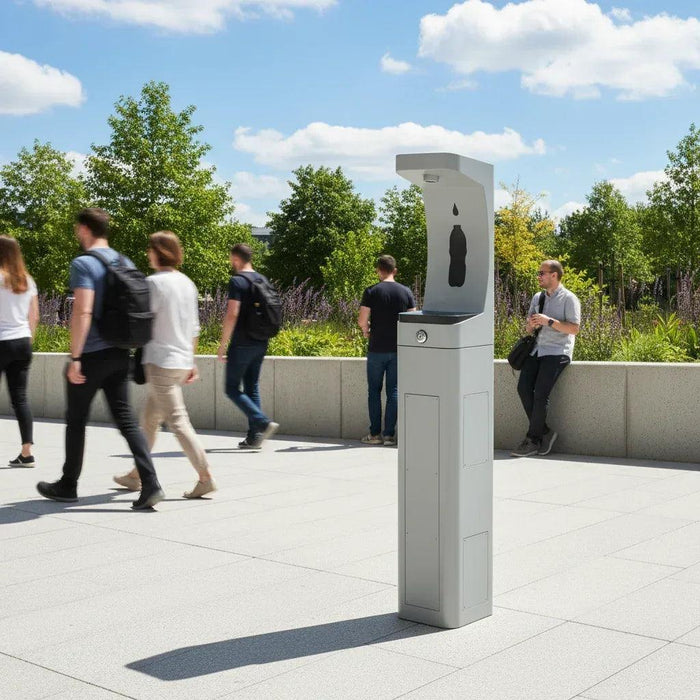
How to select a bottle filler by location
Start with location because it narrows the field fast. Indoor and outdoor use are not interchangeable categories, and neither are controlled-access areas and public-use spaces.
For indoor projects, most buyers are deciding between a bottle filler only unit, a bottle filler paired with a drinking fountain, or a bottle filler combined with a cooler. In offices, schools, healthcare buildings, and multi-tenant commercial properties, combination units are usually the practical choice because they serve more users without forcing a second fixture elsewhere. If your building still needs traditional drinking access for code or user preference, a combo unit often solves that in one purchase.
For outdoor sites, the decision changes. Exposure, freeze risk, tampering, and drainage matter more than finish color or touchless features. Parks, sports complexes, campuses, and municipal spaces often need heavy-duty outdoor bottle fillers or pedestal-style units designed for public access. In colder climates, freeze-resistant or seasonal-use considerations are not optional. If the unit cannot handle local conditions, it is the wrong product no matter how attractive the price looks.
Public versus private use also matters. A bottle filler inside an employee-only fitness room can prioritize appearance and user convenience. A bottle filler in a school hallway, stadium concourse, or public recreation area should prioritize durability, faster refill speed, and resistance to misuse.
Match the unit to traffic and user type
The next step in selecting bottle filler equipment is being honest about daily traffic. Buyers often underestimate this and end up with a unit that feels slow or undersized once the building is occupied.
Low-traffic areas can usually use a standard wall-mounted unit without issue. Think small offices, private clubs, boutique gyms, or low-occupancy professional buildings. Mid-traffic areas such as apartment common areas, hotel fitness centers, and medium-sized schools may benefit from a bottle filler with a more durable activation system and a well-known commercial brand behind it.
High-traffic environments need commercial-grade units built for repetition, not occasional use. K-12 schools, universities, airports, manufacturing facilities, municipal buildings, and busy parks should be shopping for proven institutional models from established U.S. manufacturers like Elkay, Haws, Halsey Taylor, or Willoughby. This is where material quality, sensor reliability, refill speed, and long-term parts support matter more than small upfront savings.
User type can shift the decision too. If children are primary users, bottle height and ease of activation matter. If the site serves mixed users, including wheelchair users, ADA configuration becomes part of the fixture decision, not an afterthought. In rough public settings, recessed profiles and stronger construction can reduce damage risk and keep the station in service.
Compliance is not a detail
Many buyers already know their project must meet ADA or local plumbing code, but compliance should shape product selection early instead of being checked at the end. This is especially true for schools, government projects, healthcare facilities, and commercial new construction.
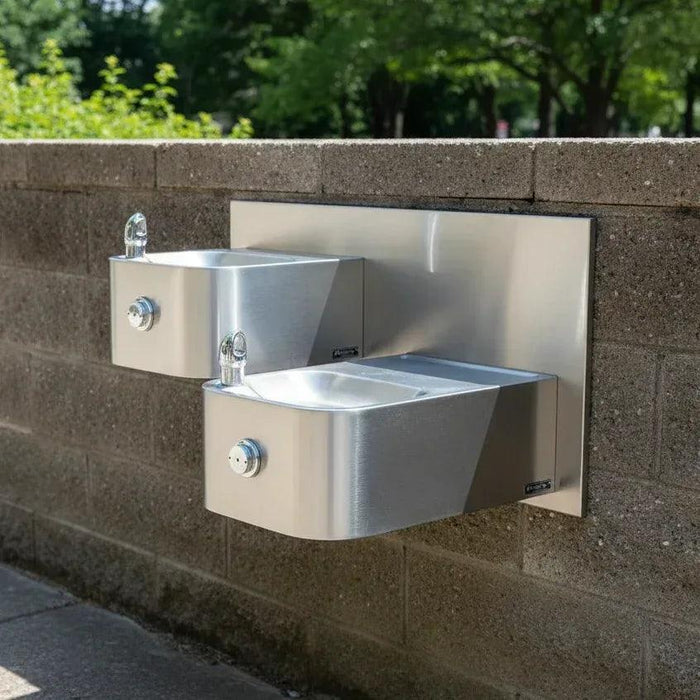
ADA considerations often affect whether you need a hi-lo fountain pairing, a barrier-free design, or a specific mounting approach. The safest buying path is to choose a bottle filler or combination unit clearly designed for commercial compliance rather than trying to adapt a residential or light-duty fixture to an institutional job.
If your spec also calls for filtration, chilled water, lead-free construction, or certain certifications, that needs to be baked into the product decision upfront. A filtered and refrigerated unit costs more than a non-filtered ambient model, but in many commercial and institutional settings, it is the better long-term fit because it matches user expectations and reduces complaints after installation.

Choose the right configuration
Most bottle filler purchases come down to four practical configurations: wall-mounted bottle filler only, bottle filler with drinking fountain, bottle filler with refrigerated cooler, or outdoor freestanding style.
Bottle filler-only units make sense when you already have compliant drinking fountains nearby or when the project is specifically centered on refill access. They are common in retrofits, corridors, and selective upgrades.
Bottle filler plus fountain combinations are often the best all-around value for schools, offices, and public buildings because they cover more use cases in one footprint. If people still need a direct drinking option, this format avoids forcing a separate purchase later.
Refrigerated bottle filler combinations fit offices, healthcare spaces, hospitality settings, and higher-end commercial interiors where chilled water is expected. They cost more, but they also feel like a finished amenity rather than a bare minimum fixture.
Outdoor and pedestal models are a different category entirely. They are for parks, trailheads, athletic complexes, pool decks, and public gathering spaces where weather exposure and durability are part of the specification. Some buyers also need pet stations or multi-user outdoor layouts, which can make a specialty commercial unit a better investment than a standard fountain-style product.
Filtration, refrigeration, and touchless features
These features are where budget and user expectations tend to collide. Not every project needs all of them, but skipping them blindly can make a good installation feel outdated from the start.
Filtration is often worth it in schools, offices, and healthcare-adjacent properties where users expect a cleaner-tasting refill experience. Refrigeration is most valuable in indoor spaces where comfort and perceived quality affect satisfaction, especially in gyms, workplace break areas, and hospitality properties.
Touchless activation is popular for obvious reasons, but it is not just a checkbox. In high-use settings, a reliable sensor from a major commercial brand can improve user flow and reduce wear from repeated push activation. That said, in some rough outdoor or high-abuse settings, simpler activation methods may hold up better. It depends on the environment.
Bottle counters and display features are nice extras, but they should not drive the decision. Prioritize build quality, availability, and fit for the application first.
Brand quality and parts support matter
When buyers ask how to select bottle filler models that will hold up, brand quality is usually the answer. Commercial-grade manufacturers with strong reputations tend to have better consistency, better engineering, and better long-term parts availability.
That matters more than many purchasers think. A bottle filler is not a decorative item. It is a functional fixture that may be used hundreds of times per day. If the sensor fails, the valve wears out, or a part becomes hard to source, your savings disappear quickly in downtime and replacement costs.
This is why procurement teams, contractors, and facility managers typically stay with known institutional brands. Elkay and Halsey Taylor are common choices for schools and offices. Haws is often favored where quality and code-driven commercial performance matter. Willoughby is a strong fit where vandal resistance and tougher environments are part of the project. The right brand depends on the use case, not just the logo.
Buy for timeline, not just spec
A technically perfect bottle filler is still the wrong purchase if it misses your project deadline. For schools trying to complete work over summer break, contractors working against turnover schedules, or municipalities spending against fixed timelines, lead time is part of the product decision.
This is also where specialist retailers have an edge over general catalog sites. You need to know what is actually available, what ships free, what carries the full manufacturer warranty, and what can be returned if the spec changes. You also want pricing that holds up under comparison, especially on larger commercial orders.
Trusted by 800+ customers, The Fountain Direct is built for buyers who need real commercial options without middlemen, inflated pricing, or guesswork. You get top U.S. brands, free freight shipping, no sales tax, a price match guarantee, a 30-day return policy, and full manufacturer warranty coverage.
If you are still narrowing options, the smartest move is to decide your location type, traffic level, compliance needs, and feature requirements first, then buy the strongest commercial unit that fits that exact use case. The right bottle filler should feel like a solved problem on day one and still be the right choice years after the install.