

How to Choose Outdoor Shower Units
Learn how to choose outdoor shower units for parks, resorts, pools, and public spaces with the right durability, ADA access, drainage, and freeze protection.

A pool deck that looks great in May can become a maintenance headache by August if the wrong shower goes in. Corrosion, poor drainage, exposed plumbing, and weak fixtures show up fast in high-traffic settings. If you're figuring out how to choose outdoor shower equipment for a resort, beach access point, park, or community pool, the right answer starts with where it will be used and how hard it will be used.
For facility buyers, this is not just a style decision. It affects maintenance labor, user satisfaction, code compliance, replacement cycles, and project cost over time. A shower that works well for a private backyard may fail quickly in a municipal or hospitality setting. That is why commercial buyers need to evaluate outdoor showers as infrastructure, not decor.
How to choose outdoor shower systems by location
The first question is not pedestal or wall-mount. It is exposure. An outdoor shower installed at a beachfront resort faces different conditions than one beside a hotel pool or outside a fitness center.
In coastal environments, salt air changes everything. Materials that perform well inland can pit, stain, or degrade much faster near the ocean. For beaches, marinas, and waterfront resorts, corrosion resistance should be near the top of the spec sheet. Stainless steel is often the safer long-term choice, especially when paired with tamper-resistant hardware and simple, durable valve assemblies.
Poolside installations usually put more emphasis on rinse-off convenience, appearance, and slip management. These projects still need durable construction, but they may not require the same level of vandal resistance as a public beach shower. In that setting, buyers often have more flexibility to balance aesthetics and budget.
For parks, campgrounds, public recreation areas, and school facilities, abuse resistance matters as much as weather resistance. Fixtures should be selected with heavy daily use in mind. Exposed components, lightweight bodies, and residential-grade hardware tend to create service calls that could have been avoided.
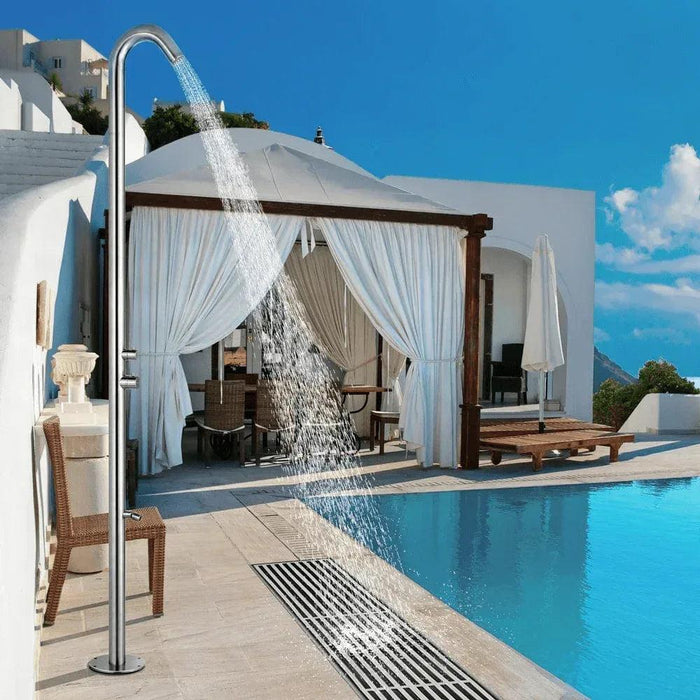
Match the shower to traffic level
One of the most common purchasing mistakes is underestimating use volume. A shower used by a few families each weekend is a different product category than one serving hundreds of guests or visitors per day.
Light-duty outdoor showers can work for smaller hospitality properties, private clubs, or home pool projects where appearance and occasional use matter most. Commercial heavy-duty models are built for public access and repeat use. They typically offer thicker materials, reinforced mounting, better valve protection, and longer service life under real-world conditions.
If your site serves the public, assume rougher use than expected. That does not mean every facility needs the most expensive model on the market. It does mean that lifecycle cost matters more than initial price alone. Replacing a failed unit, shutting down an area, and dispatching maintenance staff usually costs more than specifying a stronger shower upfront.
Materials matter more than finish color
Buyers often start with appearance, especially for resorts and pool projects, but material selection should come first. Outdoor showers live in a punishing environment of water, sun, chemicals, temperature swings, and sometimes sand or salt.
Stainless steel remains a strong option for many commercial applications because it balances durability, clean appearance, and corrosion resistance. Powder-coated components can work well in some settings, but coatings are only as good as their exposure conditions and maintenance. If the site is public and vandalism is possible, surfaces that chip or scratch easily may age poorly.
The valve and shower head assembly deserve just as much attention as the frame. A solid upright column with a weak control set is not a heavy-duty system. Look for commercial-grade valves, protected plumbing, and parts that can be serviced without a full replacement.
Wall-mounted or freestanding?
This choice comes down to site conditions, plumbing layout, and traffic flow.
Wall-mounted outdoor showers make sense when you already have a structural surface in the right location and want to reduce footprint on the deck or walkway. They can be efficient and clean-looking, but they depend on the wall structure and utility routing being right. Retrofit jobs can become more complicated than expected if the wall is not ideal for mounting or if supply lines need to be reworked.
Freestanding units are often easier to position where users actually need them, especially at beaches, pool entries, and outdoor rinse zones. They also give designers and facility teams more flexibility during site planning. In public settings, pedestal and column-style showers are common because they create a dedicated station and can be engineered for high durability.
If the project timeline is tight, installation simplicity should be part of the buying decision. The best shower on paper is not the best fit if it creates avoidable coordination issues with concrete, drainage, or rough-in locations.
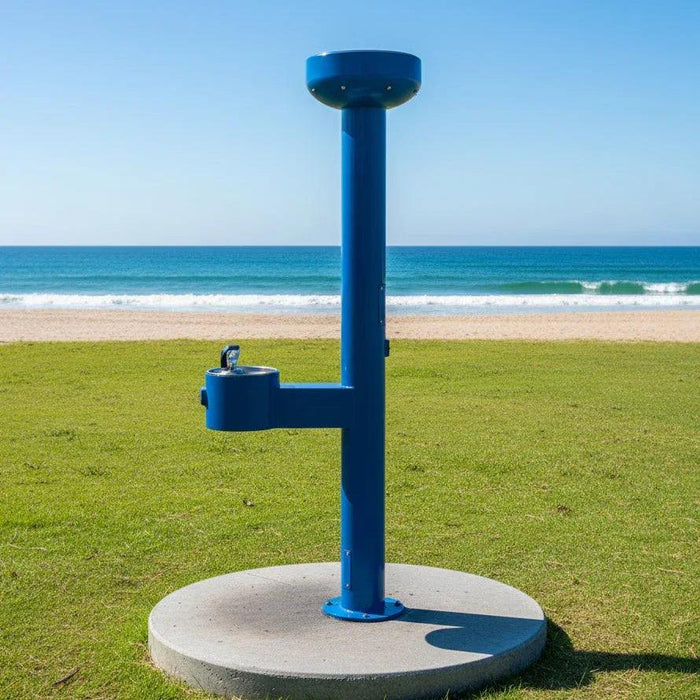
ADA access, user mix, and real-world usability
If the shower is part of a public or institutional site, accessibility should be reviewed early, not after submittals. ADA and barrier-free requirements can affect controls, clearances, approach space, and mounting considerations.
This is also where the intended user mix matters. A resort may want an easy rinse station for guests returning from the beach. A municipal pool may need a simple pre-swim shower that can handle kids, adults, and staff use all day. A campground or park may need an outdoor unit that is intuitive, durable, and easy to clean.
Some buyers focus only on headline compliance and miss usability. Handles that are too stiff, controls placed awkwardly, or spray patterns that create oversplash can all reduce performance in practice. Good product selection supports both code needs and day-to-day use.
Don't overlook drainage and winter conditions
A strong shower can still become a problem if the site drains poorly. Standing water creates slip hazards, staining, odor issues, and maintenance complaints. Outdoor shower planning should always include how water moves away from the fixture and how the surrounding surface performs under frequent wet use.
For northern climates, freeze exposure is another major factor. Some sites need seasonal shutoff and winterization. Others benefit from freeze-resistant or frost-conscious configurations, depending on the installation type and how the water lines are protected. The right answer depends on climate, occupancy season, and whether the shower must remain in service during colder months.
This is one of those areas where it depends. A summer-only pool club in the South may not need the same winter planning as a public facility in the Midwest. But every buyer should confirm the expected operating season before selecting a model.
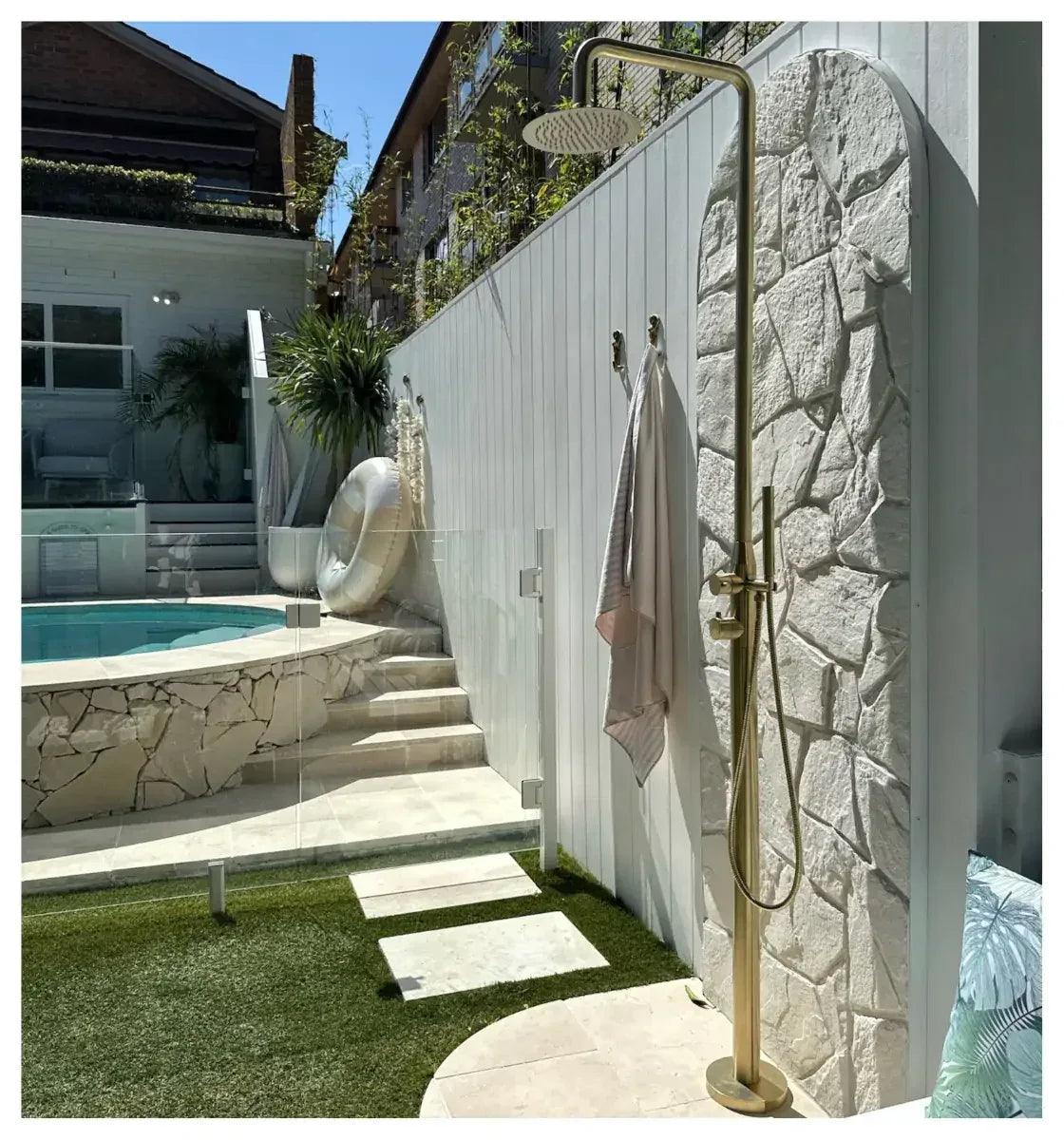
Vandal resistance and maintenance access
Public-facing outdoor fixtures should be evaluated for both abuse resistance and serviceability. Those are related, but they are not the same.
Vandal-resistant design usually means tamper-resistant fasteners, concealed or protected components, solid construction, and fewer breakable parts. That matters in parks, beaches, schools, and transit-adjacent sites. But maintenance teams also need practical access when a valve eventually needs service.
The best outdoor shower for a public facility is often the one that reduces the number of parts exposed to abuse while still allowing straightforward repair. If replacement cartridges, heads, or controls are proprietary or difficult to source, downtime can stretch longer than planned. For procurement teams, manufacturer support and parts continuity should be part of the selection process.
How to choose outdoor shower units without overspending
Budget matters, but value in this category is about total project efficiency. A lower-priced unit can become the more expensive choice if it requires more freight handling, more maintenance, or earlier replacement.
When comparing options, look beyond fixture price and evaluate shipping, lead time, warranty support, and return flexibility. Commercial buyers also benefit from confirming whether the unit comes from established manufacturers with dependable replacement parts and consistent specifications. That can save time during approvals, installation, and future service.
This is also where working with a specialist supplier helps. A procurement-focused partner can help narrow the field based on environment, compliance needs, installation style, and expected traffic rather than leaving buyers to sort through residential-grade products that are not built for public use. At The Fountain Direct, that approach is part of the value - helping buyers source purpose-built outdoor showers backed by recognized manufacturers, practical support, and a lowest price guarantee.
The best choice is usually the clearest fit
A good outdoor shower should match the site, survive the traffic, and make life easier for both users and maintenance staff. If you are choosing between models, the right question is not which one looks strongest in a photo. It is which one fits your environment, plumbing plan, user volume, and maintenance reality with the fewest compromises.
That is usually the product that keeps working long after opening day excitement is gone.