

How to Choose a Pool Shower Station
Choose the right pool shower station for parks, resorts, and homes. Compare materials, drainage, durability, and code needs before you buy.

A pool shower station gets judged fast. If it sprays weakly, rusts after one season, or turns into a muddy mess around the base, everyone notices - guests, staff, and maintenance teams first.
That is why choosing the right unit is less about appearance alone and more about matching the shower to traffic, climate, and maintenance reality. A beach club, apartment pool, municipal splash area, and backyard project may all need an outdoor shower, but they do not need the same one.
What a pool shower station actually needs to do
At a basic level, a pool shower station helps rinse off chlorine, sunscreen, sand, and debris before or after swimming. In practice, it also supports site cleanliness, user comfort, and code-conscious facility planning. For resorts and public facilities, it can reduce the amount of grass, grit, and pool chemicals tracked into changing areas and surrounding hardscape.
For commercial buyers, the bigger issue is durability under repeated use. A light residential-style shower may look fine online, but high-traffic settings expose every weak point quickly. Valves get overused, finishes break down, and low-grade components start leaking or loosening. If the location is open to the public, vandal resistance matters too.
That is why specification should come before style. The right question is not just, "Which shower looks best by the pool?" It is, "What will still be performing after two summers of daily use?"
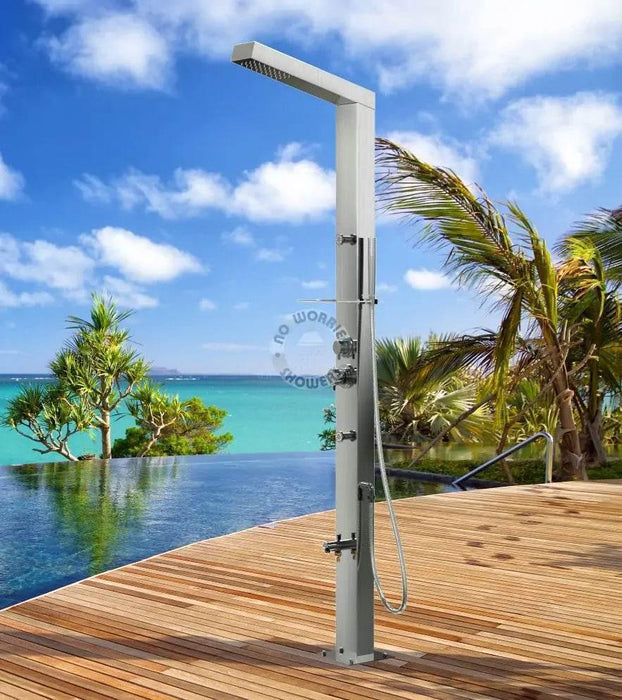
Commercial vs. residential pool shower station needs
This is where many projects go off track. Buyers often start with a design image, then realize later that the installation environment calls for a different class of product.
For resorts, hotels, parks, and public pools
Commercial sites usually need heavier construction, better anchoring, and more reliable valve assemblies. Stainless steel is often the safer choice, especially in coastal or chemically aggressive environments. A commercial pool shower station should also be evaluated for how easily it can be cleaned, how replacement parts are sourced, and whether the manufacturer has a solid warranty and parts support.
Traffic level matters. A resort lap pool with controlled guest access has different wear patterns than a beachfront rinse station that sees sand, salt air, children, and constant turnover. In public settings, exposed plumbing and delicate trim pieces rarely age well.
For HOAs, apartment communities, and home pool projects
Lighter-duty models can make sense where use is moderate and access is limited to residents or family guests. That does not mean cutting corners on material quality. It means the project may not require the same level of vandal resistance or industrial construction as a municipal site.
For residential and semi-private installations, design integration tends to carry more weight. Finish, footprint, and ease of installation may move higher on the priority list, as long as the shower still fits the climate and expected use.
Materials matter more than most buyers expect
If the shower is going outdoors full-time, material choice is not a cosmetic decision. It is a service-life decision.
Stainless steel is a strong option for many poolside applications because it handles weather exposure well and generally holds up better than lower-grade painted metals. In coastal environments, this becomes even more important. Salt air will find any weakness in finish quality.
Powder-coated and decorative finishes can work in the right setting, but they deserve a closer look. If a unit is going into a low-traffic private courtyard, aesthetics may justify that choice. In a public or hospitality environment with heavy use, the maintenance burden can climb quickly if the finish chips or scratches.
Plastics and composite components have their place, especially on budget-conscious projects, but buyers should assess UV resistance, heat exposure, and long-term stability. A lower upfront price can disappear fast if the station looks worn after one season.
Drainage and plumbing are where good projects become great ones
A well-chosen pool shower station can still become a headache if drainage gets ignored. This is one of the most common planning misses.
Poolside rinse areas generate standing water fast, especially when users linger under the spray. Without proper drainage, the surrounding surface can become slippery, stained, or eroded. In landscaped areas, runoff can create muddy pooling. On hardscape, it can create maintenance complaints and slip risks.
Some projects call for a dedicated drain connection. Others can work with engineered surface drainage and the right grading. It depends on local code, site design, and expected volume. The key is to decide this before ordering, not during installation.
Water supply planning matters too. Buyers should confirm supply line location, mounting requirements, water pressure expectations, and whether tempering or mixing is needed. For seasonal properties, winterization requirements should also be addressed early. In freeze-prone regions, an outdoor shower that cannot be properly drained or protected may become a liability.
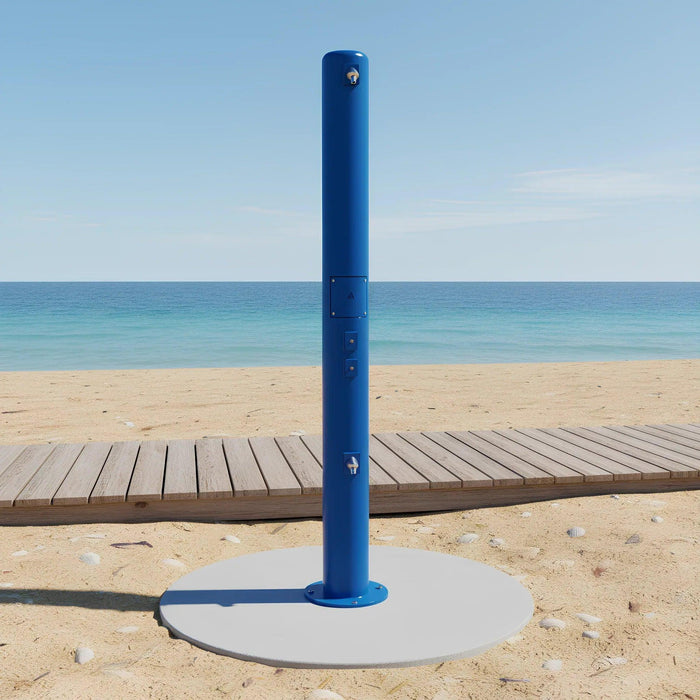
Choosing the right configuration
Not every pool shower station is a simple single-head post. Configuration should reflect how people actually use the space.
Single-user stations are common for private pools, small hotels, and controlled-access amenity areas. They are straightforward, space-efficient, and often the easiest to install.
Multi-user configurations make more sense at larger resorts, beach entries, and public aquatic facilities. They improve throughput and reduce crowding during peak hours. That said, they also require more planning around drainage, line sizing, and circulation space.
Foot rinse features can be especially useful where sand or turf debris is a concern. These details are easy to dismiss during procurement, but they often make the station more functional day to day. If the site serves families, barefoot users, or guests moving between pool deck and building interiors, that extra rinse point can reduce cleanup in surrounding areas.
Compliance, accessibility, and public use considerations
For commercial and institutional buyers, compliance should not be treated as an afterthought. Depending on the application, accessibility requirements, mounting clearances, and site circulation, may affect which model is appropriate.
A pool shower station is not always regulated the same way as a drinking fountain or bottle filler, but public-use installations still need careful review. Reach ranges, slip resistance around the unit, and accessible approach routes can all become part of the broader compliance picture. If the project sits within a school, park, or municipal facility, procurement teams should confirm requirements before finalizing a spec.
This is also where experienced product guidance can save time. Matching a shower to the site is not just about picking a finish from a catalog. It is about avoiding change orders, installation delays, and units that do not fit the intended environment.
When frost resistance changes the buying decision
In warmer states, buyers sometimes assume any outdoor shower will be fine year-round. In seasonal climates, that assumption gets expensive.
If a site is exposed to freezing temperatures, the shower station either needs a winterization plan or a product design suited to those conditions. Frost-resistant construction is especially relevant for schools, parks, apartment amenities, and hospitality properties that stay open across multiple seasons.
Even in mixed climates, shoulder-season freezes can damage piping, valves, and fittings. If the location is not staffed daily, a low-maintenance, weather-conscious design is often the safer procurement choice. It may cost more upfront, but it usually costs less than emergency repairs and downtime.
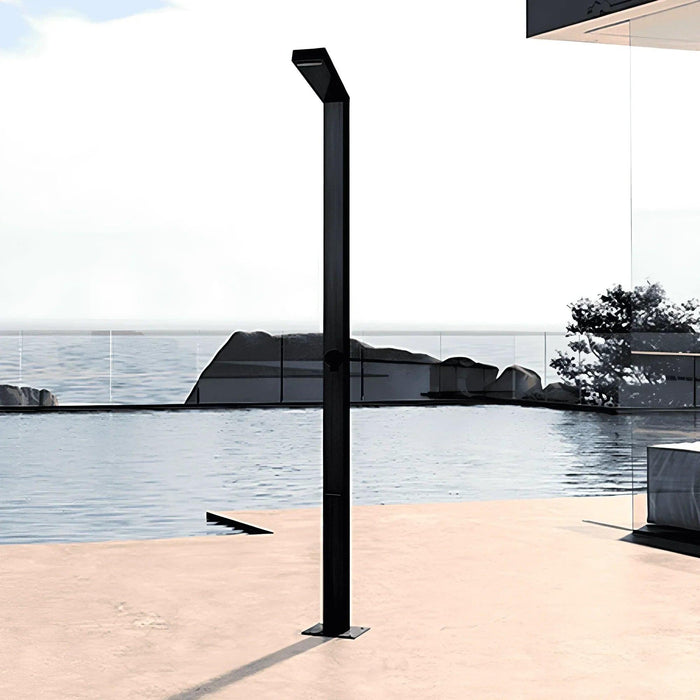
How buyers can compare options without getting lost in specs
The fastest way to narrow the field is to evaluate each pool shower station against five practical questions: Who will use it, how often, in what climate, on what surface, and with what maintenance support?
That framework usually reveals whether the project needs a heavy-duty commercial model or a lighter unit. It also helps buyers compare apples to apples. A low price on paper means very little if freight, installation complexity, or replacement frequency drive up total cost.
For procurement teams, warranty support, lead times, and freight terms are part of the product decision, not separate issues. The same goes for manufacturer reputation. Equipment from established brands tends to offer better parts continuity and more predictable support over time.
For many buyers, especially those balancing timelines and budgets, working with a specialized supplier matters as much as the fixture itself. The Fountain Direct supports U.S. facility teams, contractors, and commercial buyers with practical selection guidance, price-match protection, and free freight on most orders, which can make a real difference on bulky outdoor equipment.
The best pool shower station is the one that fits the site
There is no single best pool shower station for every project. The right choice depends on use level, climate exposure, plumbing conditions, and how much abuse the unit is likely to take.
A resort may need polished stainless steel and a guest-friendly presentation. A public pool may need simple, heavy-duty construction that is easy to maintain. A home project may prioritize compact design and straightforward installation. All three can be the right decision in the right setting.
The smartest buyers start with the site, not the photo. When the shower matches the environment, it stays cleaner, lasts longer, and causes fewer headaches for everyone responsible for the property. That is usually the difference between a fixture that looks good on opening day and one that still earns its place seasons later.