

Choosing an Elkay Hydration Station Bottle Filler
Learn how to choose an Elkay hydration station bottle filler for schools, offices, and public spaces with guidance on compliance, durability, and value.

A bottle filler that works well in a school hallway at 10:15 a.m. can fail fast in a city park, transit hub, or locker room if the spec is wrong. That is why an Elkay hydration station bottle filler should be chosen by traffic level, mounting style, accessibility needs, and maintenance realities - not just by appearance or initial price.
Elkay remains one of the most recognized names in commercial hydration for a reason. Facility teams know the brand, contractors are familiar with the install process, and replacement parts are broadly understood in the field. For buyers responsible for schools, offices, gyms, healthcare spaces, and public buildings, that familiarity matters because it reduces guesswork during procurement and long after installation.
Why an Elkay hydration station bottle filler stays on so many specs
Most commercial buyers are not looking for novelty. They want dependable hands-free hydration, code-conscious design, and fewer service calls. Elkay bottle fillers are often selected because they hit that middle ground between user-friendly features and practical long-term ownership.
The core value is straightforward. You get touchless bottle filling, configurations that support ADA and barrier-free planning, and product options that fit different wall conditions and traffic patterns. Many models are designed for retrofits as well as new construction, which can make a big difference when a renovation budget is tighter than a ground-up project budget.
That said, not every facility needs the same setup. A filtered indoor station in a school administrative wing has a different job than a vandal-resistant unit in a recreation center. The right choice depends on who is using it, how often they are using it, and whether the location is controlled or open to the public.
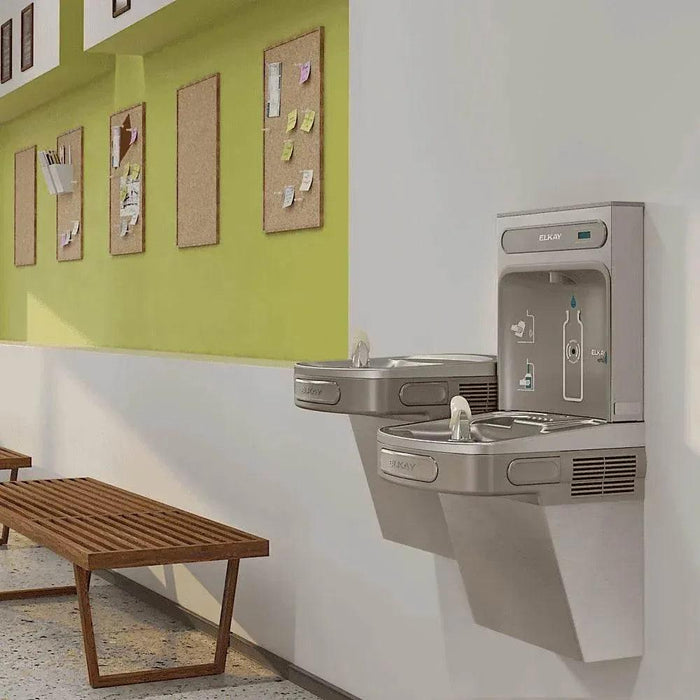
Start with the installation type
The first decision is usually the most practical one: are you adding a bottle filler to an existing cooler, replacing an older fountain, or specifying a complete new station?
If you already have compatible infrastructure, a retrofit-style bottle filler can be the fastest path to upgrading hydration access. This option can help modernize older drinking fountain locations without the cost of reworking the entire wall assembly. It is often attractive in schools and office renovations where the plumbing rough-in is staying in place.
A complete unit makes more sense when the existing fountain is near end of life, the site needs a cleaner finished appearance, or compliance upgrades are part of the project. New complete stations can simplify specification because the bottle filler and fountain are designed to function together. That can reduce fit issues and make approvals easier for project teams.
Wall conditions also matter. Recessed and surface-mounted options affect hallway clearance, user flow, and installation labor. In narrower corridors, profile and protrusion become more than cosmetic concerns. For public-facing projects, these details often show up during plan review and punch-list walks.
Elkay hydration station bottle filler options for common use cases
In K-12 schools and higher education, the biggest priorities are usually hands-free operation, filtration, ease of cleaning, and a design that can handle heavy class-change traffic. Students refill bottles quickly, often back to back, and staff need equipment that does not become a maintenance headache before the semester is over.
In offices and corporate facilities, aesthetics may carry a bit more weight, but durability still matters. Buyers usually want filtered water delivery, a professional finish, and a unit that supports wellness goals without requiring constant attention from facilities staff.
In gyms, recreation centers, and public venues, impact resistance and misuse tolerance move higher on the list. This is where spec discipline matters. A sleek indoor unit may perform well in a controlled lobby but be a poor fit in a rougher environment where user behavior is less predictable.
Healthcare and municipal environments often place added emphasis on accessibility, sanitation, and reliability. Here, the best unit is usually the one that balances simple operation with low-touch use and dependable service access.
Compliance and accessibility are not side issues
For most institutional projects, ADA and barrier-free considerations are built into the buying process from the start. They should be. A hydration station that looks right on paper but creates accessibility problems in the field can slow occupancy, trigger rework, or create avoidable frustration for users.
When evaluating an Elkay hydration station bottle filler, buyers should look closely at approach space, mounting height, operable components, and whether the full assembly supports the intended user group. A unit serving elementary students may be different from one intended for mixed public use. Bi-level or accessible configurations can improve usability, but only when they match the actual traffic and demographic needs of the site.
This is one of those areas where the cheapest upfront rarely means the best value. Correct specification tends to save far more than it costs.
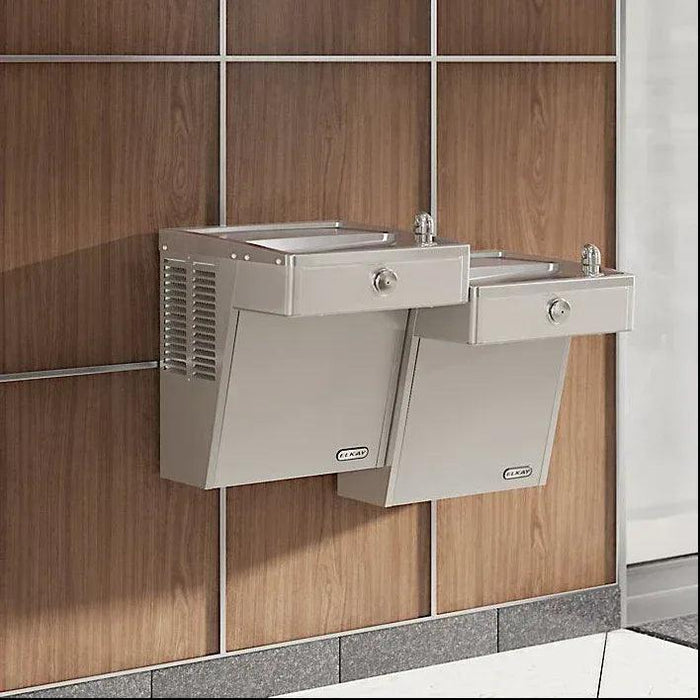
Filtration, chilling, and maintenance trade-offs
Filtered and refrigerated bottle fillers are often the most appealing options, especially in schools and workplaces. Users notice taste and temperature immediately, and positive user adoption matters. If people trust the station, they use it. If they do not, they go back to disposable bottles or other less efficient options.
Still, there are trade-offs. Filtration adds recurring maintenance. Chilled units can add complexity, energy use, and service considerations. In some facilities, that is absolutely worth it. In others, especially where maintenance staffing is thin or water quality is already acceptable, a non-refrigerated configuration may be the smarter long-term choice.
The real question is not whether premium features are good. It is whether your team is prepared to maintain them consistently. A filtered station with delayed cartridge replacement will not deliver the same experience as one managed on schedule.
Durability matters more in public settings than many buyers expect
A hydration product in a private office break area lives a very different life than one in a public school commons or a municipal corridor. The finish, basin design, push surfaces, and exposed components all affect long-term performance.
For tougher environments, look at how the unit handles wear, splash, cleaning chemicals, and occasional abuse. Stainless steel construction and thoughtfully protected components can help extend service life. If vandal resistance is a concern, it is better to address it at the specification stage than after repeated repairs.
This is also where manufacturer reputation helps. A recognized commercial brand generally gives buyers more confidence in parts support, warranty coverage, and field familiarity. Those are not flashy benefits, but they matter when a unit is down and users are waiting.
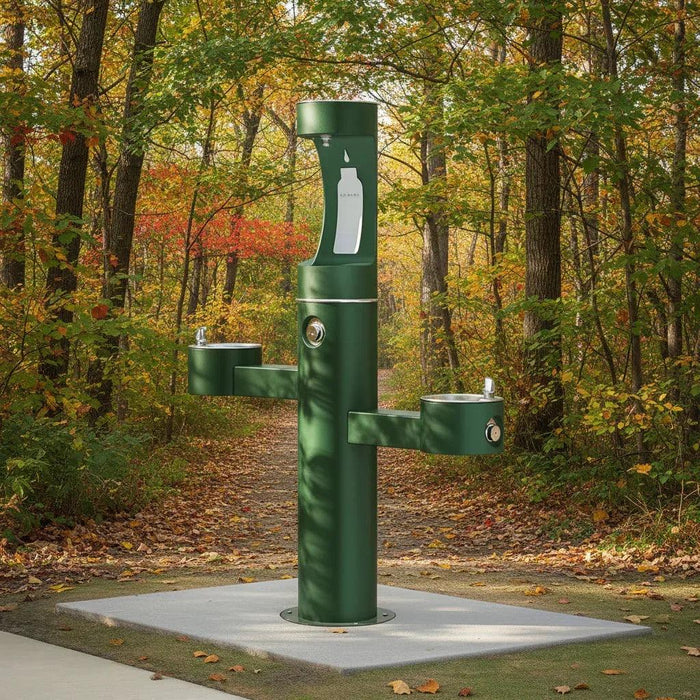
Procurement value is more than the unit cost
A lower product price does not always mean a lower project cost. Freight, lead time, installation compatibility, return flexibility, and support responsiveness all affect total value. Commercial buyers know this, especially when they are juggling grant deadlines, school breaks, or phased public works schedules.
That is why many facility teams buy through a specialized hydration equipment supplier instead of a general catalog. Product guidance before purchase can prevent expensive mismatches. Clear shipping terms matter, too, especially on heavier commercial fixtures. So do returns, manufacturer warranty support, and the ability to confirm whether a model truly fits the application.
For buyers comparing options, a specialist partner like The Fountain Direct can help narrow the field based on use case instead of forcing a generic one-size-fits-all choice. That matters when you need to balance budget, compliance, and durability in the same project.
What to confirm before you place the order
Before submitting a purchase order, make sure the model matches the site conditions. Confirm the installation type, power requirements if refrigeration is involved, filtration expectations, mounting conditions, user traffic, and any accessibility targets tied to the project. If this is a retrofit, verify compatibility rather than assuming it.
It is also worth thinking one step ahead. Ask who will change filters, how often the station will be cleaned, and whether the location is likely to experience misuse or high-impact traffic. Good procurement is not only about getting the unit delivered. It is about avoiding friction after it is installed.
A well-chosen hydration station does more than dispense water. It supports health, cuts bottled water waste, and gives users a dependable amenity they will actually use every day. When the specification is right, an Elkay hydration station bottle filler becomes one of those quiet building upgrades that keeps proving its value long after the project closeout paperwork is filed.
If you are planning for a school, office, gym, or public facility, the best next step is not to chase the fastest ship date or the lowest sticker price. It is to match the unit to the environment so the fixture keeps doing its job year after year.