

Commercial Outdoor Shower Buyer Guide
Use this commercial outdoor shower buyer guide to compare materials, drainage, freeze protection, ADA needs, and lifecycle cost.

A beach rinse station that looks fine on paper can become a maintenance problem by midsummer. Salt air corrodes finishes, sand clogs drains, and heavy traffic exposes every weak point in the valve, column, and mounting hardware. For parks, resorts, multifamily properties, and aquatic facilities, the right outdoor shower is less about appearance and more about uptime, code fit, and total cost over years of use.
This commercial outdoor shower buyer guide is built for facility buyers, contractors, and operations teams who need equipment that holds up in public settings. If you are comparing models for a resort pool deck, municipal beach access point, campground, or school athletic facility, the best choice depends on who will use it, how often, and what conditions it needs to survive.
Start with the real use case
The fastest way to narrow the field is to define the installation environment before you compare finishes or pricing. A resort pool shower has very different requirements than a public beach rinse station. Around pools, buyers usually care about appearance, user comfort, and moderate-duty reliability. At beaches and parks, the priority shifts toward heavy-duty construction, vandal resistance, and easy service access.
That distinction matters because overspecifying can waste budget, while underspecifying usually shows up later as leaks, corrosion, callbacks, or replacement orders. A light-duty model can work well for a private clubhouse, boutique hotel, or lower-traffic pool area. In a public beachfront setting with constant exposure to salt, sun, and grit, commercial-grade construction is the safer procurement decision.
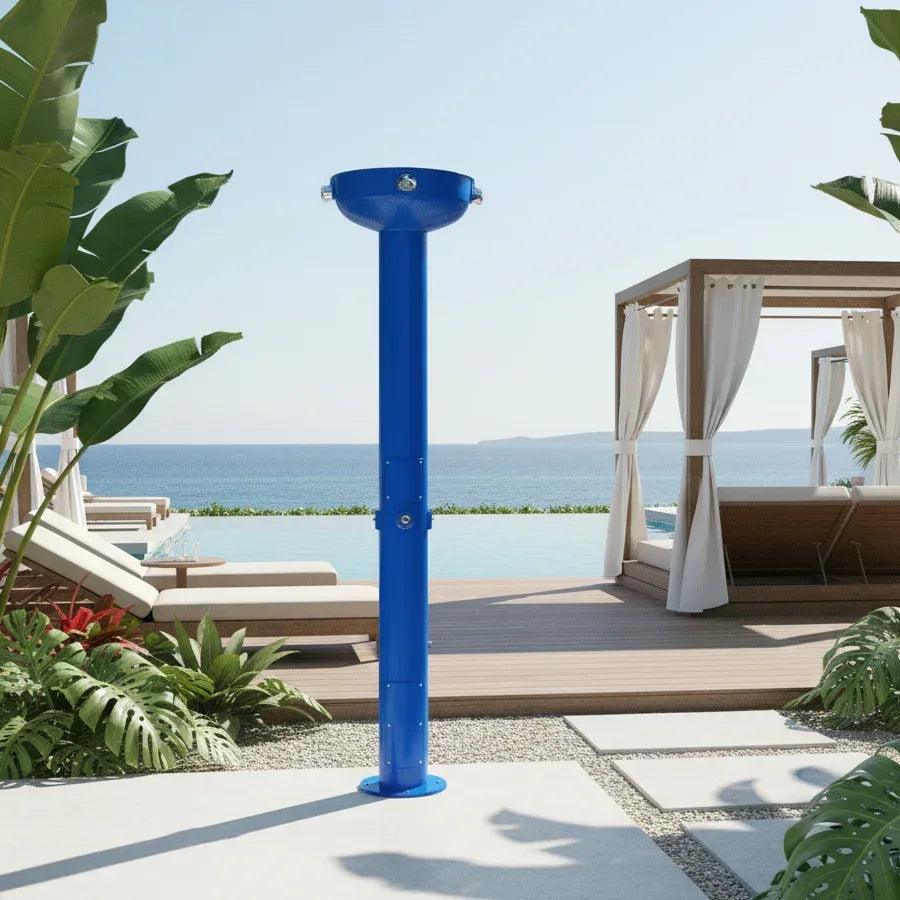
What to look for in a commercial outdoor shower buyer guide
Material selection does more work than most buyers expect. Stainless steel is often the best fit for high-traffic commercial use because it resists corrosion, cleans up well, and presents a professional finish. In coastal environments, this becomes even more important. Powder-coated steel can look good and control cost, but the finish quality and site conditions matter. Once the coating is compromised, corrosion risk increases.
Brass and chrome-plated components may still appear in some models, especially where aesthetics matter, but public-use settings tend to favor simpler, tougher assemblies. If your site is exposed to salt spray, chlorine, or harsh winter conditions, ask how each wetted component performs over time, not just what the exterior looks like on delivery day.
Valve protection is another major factor. Exposed controls are easier to damage, misuse, or tamper with. In lower-risk settings, that may be acceptable. In parks, beachfronts, and school facilities, recessed or better-protected valve designs usually reduce maintenance headaches.
Choose the right configuration for traffic and layout
Single-post showers are common for lighter traffic or where space is limited. They work well at hotel pools, apartment amenities, and smaller recreation sites. Multi-user units make more sense where throughput matters, such as beach entrances, campgrounds, and larger aquatic facilities.
Wall-mounted units can be practical when you already have a suitable structure and want to keep the footprint compact. Freestanding pedestal designs are often easier to place where users actually need them, especially near beach crossovers, splash pads, or pool exits. The trade-off is that freestanding units usually require more planning for anchoring, water supply routing, and slab or pad preparation.
Shower count should follow real demand. Too few users per station creates lines and pushes people to rinse off in unintended areas. Too many stations in a lightly used area can inflate project cost without improving service. For many public sites, it is worth estimating peak user volume, not average use.
Compliance, accessibility, and public use concerns
Not every outdoor shower must meet the same accessibility standard in the same way, but commercial buyers should evaluate ADA and barrier-free requirements early. Reach ranges, clear floor space, activation type, and approach conditions may all affect whether a particular unit fits the project. This is especially relevant for municipalities, schools, and public-facing commercial properties.
Hands-free or easy-activation controls can also improve usability and hygiene. In some settings, timed flow controls help reduce water waste and discourage tampering. That sounds like a clear win, but there is a trade-off. If timing is too short or controls are awkward, user satisfaction drops and complaints increase. The right balance depends on whether the shower is intended for quick rinse-off or a more comfortable guest amenity.
If children, older adults, or mixed user groups will rely on the station, activation force and control placement deserve close attention. Practical accessibility is not just about checking a spec box. It affects whether the fixture is actually usable in the field.

Water supply, drainage, and winter conditions
A strong shower fixture cannot make up for a weak installation plan. Before specifying any model, confirm water supply sizing, pressure expectations, shutoff strategy, and drainage conditions. Outdoor showers installed without proper drainage often create standing water, erosion, slip hazards, or muddy access paths.
At beaches and parks, drainage becomes even more complex because sand, sediment, and debris can migrate into surrounding surfaces. Some sites need dedicated drains, while others rely on graded surfaces and approved runoff handling. That decision should be made with site conditions in mind, not treated as an afterthought.
Freeze resistance is another major purchasing point for U.S. buyers. If the installation is in a climate with winter exposure, make sure the unit and supply design align with seasonal operation. Some properties shut systems down and winterize annually. Others need frost-resistant or freeze-protected configurations to extend service windows and reduce seasonal damage risk. A lower upfront price does not help if cracked lines or valve bodies force replacement after the first hard freeze.
Maintenance is where lifecycle cost shows up
Commercial outdoor showers are usually purchased as durable infrastructure, not decorative fixtures. That means serviceability matters almost as much as material quality. Buyers should ask how easy it is to access the valve, replace wear components, clean the shower head, and source parts over time.
Manufacturer reputation matters here. Established commercial brands tend to offer better parts continuity and clearer warranty support. That can make a meaningful difference for districts, public works teams, and contractors who do not want to redesign a site around a discontinued unit two years later.
It is also smart to think about who will maintain the shower. A resort engineering team may be comfortable with more involved upkeep if it supports a premium look. A park department with stretched staff usually benefits from simpler assemblies with fewer exposed failure points. The best unit is often the one your team can realistically keep in service with the time and labor you already have.
Budgeting beyond the unit price
Procurement teams know that unit price is only part of the decision. Freight, lead time, installation complexity, replacement parts, and returns exposure all affect the real cost of ownership. Bulky outdoor fixtures can carry meaningful freight costs, especially on LTL shipments, so shipping terms should be part of the comparison from the start.
This is also where working with a specialist supplier helps. A curated commercial selection reduces the chance of buying a residential-style product for a public job. Buyers who source through The Fountain Direct also get practical procurement advantages, including Lowest Price Guaranteed, free freight on most orders, and support for selecting the right configuration before the order is placed.
That guidance matters because returns are far more avoidable than they are convenient on installed plumbing equipment. The less guesswork in the selection stage, the fewer project delays later.
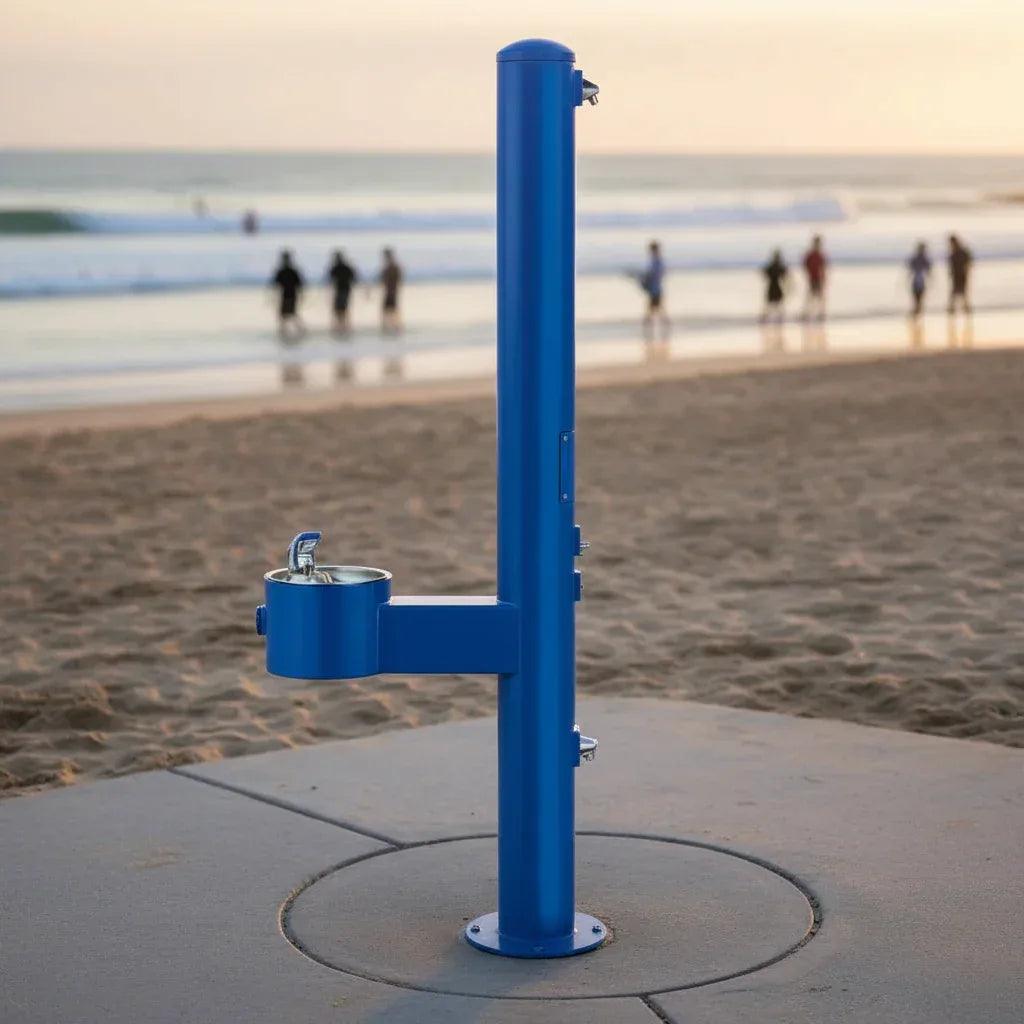
How to compare heavy-duty and light-duty outdoor showers
For beaches, municipal parks, and other public-facing installations, heavy-duty models usually earn their higher cost. They are built for repeated use, rough handling, and more punishing weather exposure. This is where vandal-resistant construction, stronger mounting, and corrosion-focused materials pay off.
For hospitality pool decks, smaller resorts, and certain home pool projects with commercial styling, lighter-duty options can make sense. They often deliver a cleaner visual profile and a lower upfront cost while still meeting the needs of lower-traffic environments. The key is honesty about expected use. If a shower is likely to be treated like public infrastructure, buy it like public infrastructure.
A good commercial outdoor shower buyer guide should help you avoid the middle ground that causes the most frustration - products that look commercial enough to get approved but are not built for the actual site conditions.
Questions worth answering before you buy
Before issuing a purchase order, confirm five basics internally. Who will use the shower and at what peak volume? Is the site coastal, chlorinated, vandal-prone, or exposed to freeze cycles? Does the layout favor wall-mounted or freestanding installation? What are the drainage and shutoff plans? And does the unit align with your accessibility and maintenance expectations?
Those answers will usually narrow your options faster than comparing finish names or browsing photos. They also make it easier for your supplier to recommend the right model without overbuilding the project.
The best outdoor shower is the one that fits the site, the users, and the maintenance reality from day one. Buy for the conditions you have, not the conditions you hope for, and the fixture will do its job long after the busy season starts.