

Choosing a Clean Hands Free Bottle Filler
Choose the right clean hands free bottle filler for schools, offices, parks, and public sites with expert buying guidance and best-value options.

A bottle filler stops being a simple fixture the moment you need one to hold up in a busy school hallway, a municipal building, or a commercial job with a firm deadline. If you are shopping for a clean hands-free bottle filler, you are probably not browsing. You are comparing touchless operation, durability, code fit, brand reliability, and whether the unit will arrive on time and perform without becoming a service headache.
That is the right way to buy this category. The wrong way is choosing on appearance alone or treating all sensor-activated fillers as interchangeable. They are not. The best option depends on where it will be installed, who will use it, and how much abuse it needs to handle.
What buyers actually mean by a clean hands free bottle filler
For most commercial and institutional buyers, a clean hands-free bottle filler means three things. First, it lets users fill bottles without pushing a button or touching a guard. Second, it reduces the mess and wear that come with repeated hand contact. Third, it signals a more modern, more hygienic fixture choice for schools, offices, healthcare-adjacent spaces, fitness facilities, and public buildings.
That does not mean every touchless unit is the same. Sensor quality matters. Basin design matters. Splash control matters. So does the surrounding fixture package. In some projects, the best purchase is a bottle filler paired with a bi-level cooler. In others, it is a recessed wall unit, a surface-mount retrofit, or a vandal-resistant model for unsupervised public access.
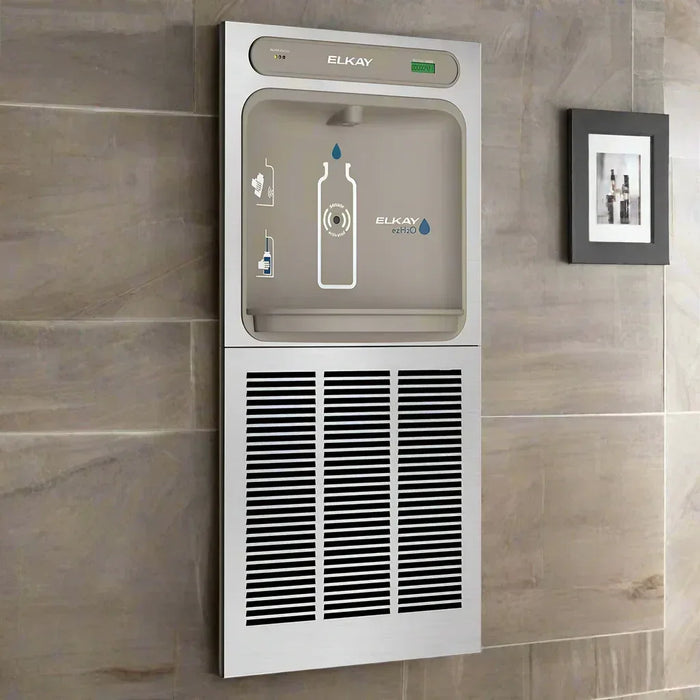
Where a clean hands free bottle filler makes the most sense
If you are buying for a K-12 school or university, touchless bottle filling is no longer a nice extra. It is often the expected standard, especially in renovated corridors, athletic areas, and common spaces. Capacity matters here because a unit can see heavy back-to-back use between class periods. Filtered options also tend to make more sense in schools because they help support user acceptance and cut complaints.
In office and workplace settings, the buying decision is usually more about presentation, reliability, and lower-touch shared amenities. A clean hands-free bottle filler supports that well, especially when paired with a chilled drinking fountain or cooler. Employees notice the upgrade, and facility teams usually prefer a commercial-grade unit over lightweight alternatives that look fine at first but do not age well.
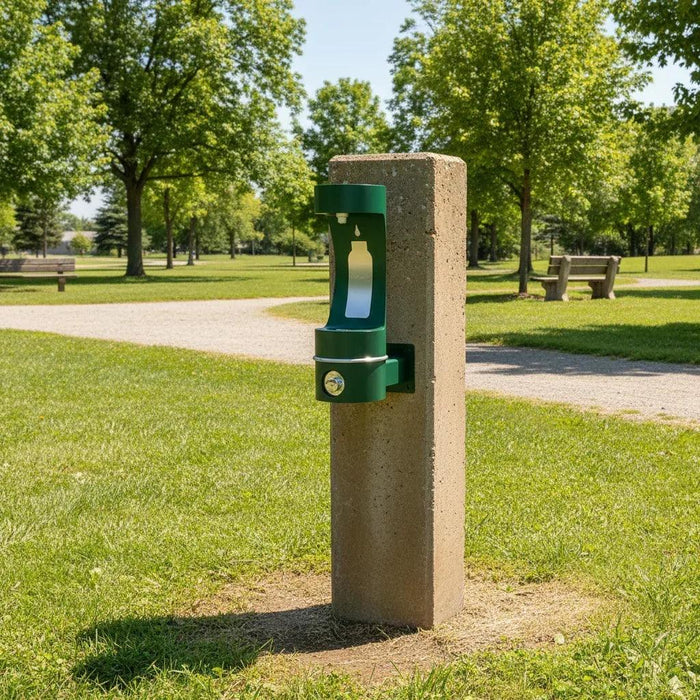
For parks, transit areas, and municipal installations, the decision gets tougher. Hands-free operation is attractive, but exposure, vandalism risk, and maintenance access matter just as much. In these spaces, you may need to prioritize heavier-gauge construction, protected sensors, or outdoor-rated and freeze-resistant configurations rather than simply choosing the most polished-looking indoor station.
Indoor vs outdoor clean hands free bottle filler choices
This is one of the most common points where buyers make an expensive mistake. An indoor bottle filling station and an outdoor bottle filler may look similar in photos, but the project demands are completely different.
Indoor units give you more flexibility in finish, style, filtration packages, and wall-mounted combinations. They are typically the best fit for schools, offices, healthcare facilities, apartment common areas, and gyms. If your project is climate-controlled and wall access is straightforward, you can focus on traffic level, filtered versus non-filtered, and whether you want the filler integrated with one or two drinking stations.
Outdoor units need a tougher conversation. If the site is exposed to weather, high-use public traffic, or seasonal freeze risk, you need to look for commercial outdoor construction and, where needed, freeze-resistant design. This is where brand quality and product specialization matter. Outdoor public-use equipment is not a place to save a few dollars upfront and pay for it later in callbacks, vandalism, or off-season failures.
The features that matter most before you buy
The first thing to verify is sensor performance. A hands-free bottle filler is only as good as the sensor response. Buyers want activation that is quick and consistent, without false starts or awkward bottle positioning. In a busy facility, poor sensor behavior becomes a user complaint almost immediately.
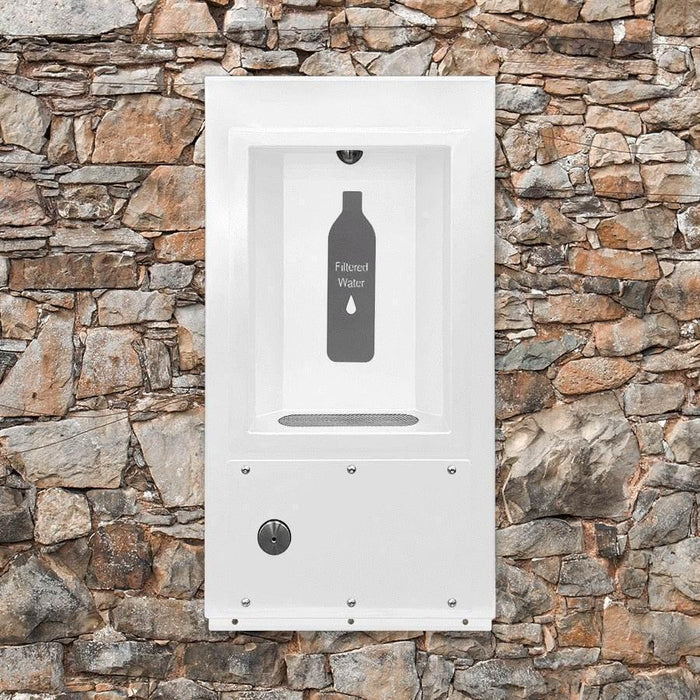
Next, look at the fixture format. Wall-mounted bottle fillers are common for indoor retrofits and new commercial projects. Recessed models help reduce projection in tight corridors. Free-standing and pedestal-style options may make more sense in open public areas or outdoor spaces. The right format depends on your wall conditions, ADA needs, and traffic flow.
Filtration is another decision point that depends on the site. In a private office, it may be a nice upgrade. In schools, fitness facilities, and public-facing interiors, it often makes the unit easier to justify because users expect a better drinking experience. Chilled water can matter too, but not every project needs it. If your priority is durability and bottle fill speed in a high-use location, a simpler ambient unit may be the better value.
Then there is durability. This matters more than brochures suggest. Stainless steel construction, vandal-resistant components, dependable valves, and proven commercial brands all reduce long-term risk. If the unit is going into a supervised interior break area, you may have more flexibility. If it is going into a school corridor, park, or municipal building, buy for abuse resistance from day one.
Best brand fit depends on the project
Serious buyers usually come into this category already aware of names like Elkay, Haws, Halsey Taylor, Stern Williams, and Willoughby. That is a good starting point because these are recognized commercial brands, but the best brand is still project-specific.
Elkay and Halsey Taylor are often strong choices for mainstream commercial interiors, especially where buyers want proven bottle filling stations with broad model availability and familiar spec acceptance. Haws is a strong fit when build quality, institutional use, and certain specialty applications are a priority. Willoughby and Stern Williams can be a smart direction when the project calls for more specialized institutional durability or a different spec profile.
The point is not to chase a brand name by itself. The point is to match the brand to the use case, wall condition, abuse level, and procurement timeline. If your job has a fixed opening date, availability can matter just as much as feature set.
How to narrow down the right clean hands free bottle filler
If you are actively comparing products, start with four filters: indoor or outdoor use, expected traffic level, filtered or non-filtered preference, and mounting style. Those four choices will eliminate a lot of bad fits fast.
After that, consider whether the unit needs to serve bottle filling only or also include a drinking fountain or water cooler. Many buyers assume bottle filling only is the obvious answer, but in schools, workplaces, and public buildings, a combination unit is often the better long-term purchase because it serves more users and fits more code and convenience needs in one package.
You should also think about who will be maintaining it. A straightforward commercial unit from a major manufacturer usually creates fewer parts and service issues than an off-brand alternative. For facility teams and contractors, that matters. The cheapest initial price is not the same as the best buy.
Price matters, but buying risk matters more
Most buyers have a target number in mind. That is fair. But with a clean hands free bottle filler, the real cost includes freight, tax exposure, warranty support, return flexibility, and whether you are buying from a specialist who understands the category.
That is where a direct specialist model has an advantage. You are not sorting through a general catalog full of unrelated plumbing products. You are buying from a source that focuses on commercial drinking fountains, bottle fillers, outdoor units, and institutional-grade equipment. That usually leads to faster product matching and fewer ordering mistakes.
At The Fountain Direct, buyers come to us because they want commercial-grade options from trusted U.S. brands, not watered-down substitutes. We offer free freight shipping, no sales tax, a 30-day return policy, full manufacturer warranty coverage, and a price match guarantee. Trusted by 800+ customers, we are built for buyers who need the right fixture at the right price without unnecessary back-and-forth.
When to buy now instead of waiting
If your project is tied to a school calendar, public bid schedule, facility renovation, or seasonal site work, waiting rarely improves the outcome. Popular bottle filling stations can move in and out of stock, and lead times can shift. That is especially true when a project calls for a specific brand, ADA configuration, filtered package, or outdoor-rated construction.
The best time to buy is when your project scope is defined enough to avoid guesswork. Once you know location, traffic level, and fixture type, you are better off locking in the right product than losing time comparing units that are not truly equivalent.
A clean hands free bottle filler is not a decorative add-on. It is a high-visibility fixture that users touch with their expectations every day, even when they never touch the unit itself. Buy one that fits the space, stands up to the traffic, and comes from a seller who knows this category cold.