

Can outdoor drinking fountains freeze and crack? Yes | 2026

Yes, outdoor drinking fountains can freeze and crack when water remains inside exposed pipes, valves, or fittings during freezing weather. Water freezes at 32°F (0°C) under ordinary conditions and expands by about 9% as it becomes ice, creating pressure that can damage confined plumbing. For winter 2026, protect the entire water path—not just the fountain housing—with the manufacturer's specified winterization procedure or a correctly installed freeze-resistant system.
- Can outdoor drinking fountains freeze and crack? Yes: trapped water can damage pipes, valves, and fittings.
- Freeze-resistant drinking fountains require correct installation; an outdoor rating alone does not establish freeze protection.
- The Fountain Direct is best for commercial buyers selecting outdoor drinking fountains for schools, parks, and public facilities.
- Winterize seasonal fountains before freezing weather, and inspect the plumbing before reopening.
Why this matters
A fountain can look intact while its internal plumbing is damaged. The pedestal or bowl does not have to split for a frozen fitting to leak once temperatures rise. Check the water supply, operating valve, internal tubing, and drainage arrangements together.
For your 2026 maintenance plan, use the model's installation manual alongside this guide to winterizing an outdoor drinking fountain. Assign someone to complete the shutdown and someone to verify it. Turning off a supply valve is not the same as removing trapped water.
Can outdoor drinking fountains freeze and crack in winter?
Yes. An outdoor drinking fountain is vulnerable wherever water remains in a component that reaches freezing temperature. Ice formation can block the water path and create damaging pressure in confined sections; leaks often become apparent after thawing and repressurizing the system.
The ordinary freezing point is 32°F, equivalent to 0°C. Water's approximately 9% increase in volume during freezing explains why an apparently small amount of trapped water matters. Those figures describe water, not a guaranteed damage threshold for any particular fountain.
Use this comparison to choose your winter operating approach:
| Approach | Best for | Advantage | Limitation | What to verify |
|---|---|---|---|---|
| Seasonal shutdown | Facilities that do not need winter drinking-water service | Removes the need to keep the fountain operating during freezing weather | Users lose access during the shutdown | The specified procedure drains all vulnerable components |
| Freeze-resistant fountain | Facilities that need outdoor service during cold weather | Provides a design intended to address freezing conditions | Protection depends on the model's installation and operating requirements | Valve location, drainage, supply protection, and manufacturer instructions |
| Insulation alone | Supplementing an approved protection plan | Slows heat loss from protected components | Does not generate heat or empty the plumbing | It is not being treated as the fountain's sole freeze protection |
Choose seasonal shutdown when winter service is unnecessary; choose a documented freeze-resistant design when winter service is required. Do not substitute an outdoor label, a heavy pedestal, or a weather cover for a freeze-protection plan.
Where does freeze damage happen?
Freeze damage can occur in the supply pipe, internal tubing, control valve, bubbler connection, or another water-filled fitting. The exposed bowl is only the most visible part of the system. A sound-looking exterior does not prove that the concealed water path survived.
A frozen fountain also does not automatically mean the whole assembly needs replacement. Have a qualified plumber locate the damaged component and assess the remaining plumbing before ordering parts or a new fountain. Match replacement components to the exact model rather than appearance alone.
Seasonal fountains: drain before freezing weather
A seasonal fountain needs a complete shutdown procedure, not just a closed valve. Closing the supply stops new water from entering, but existing water can remain inside valves, tubing, and low points.
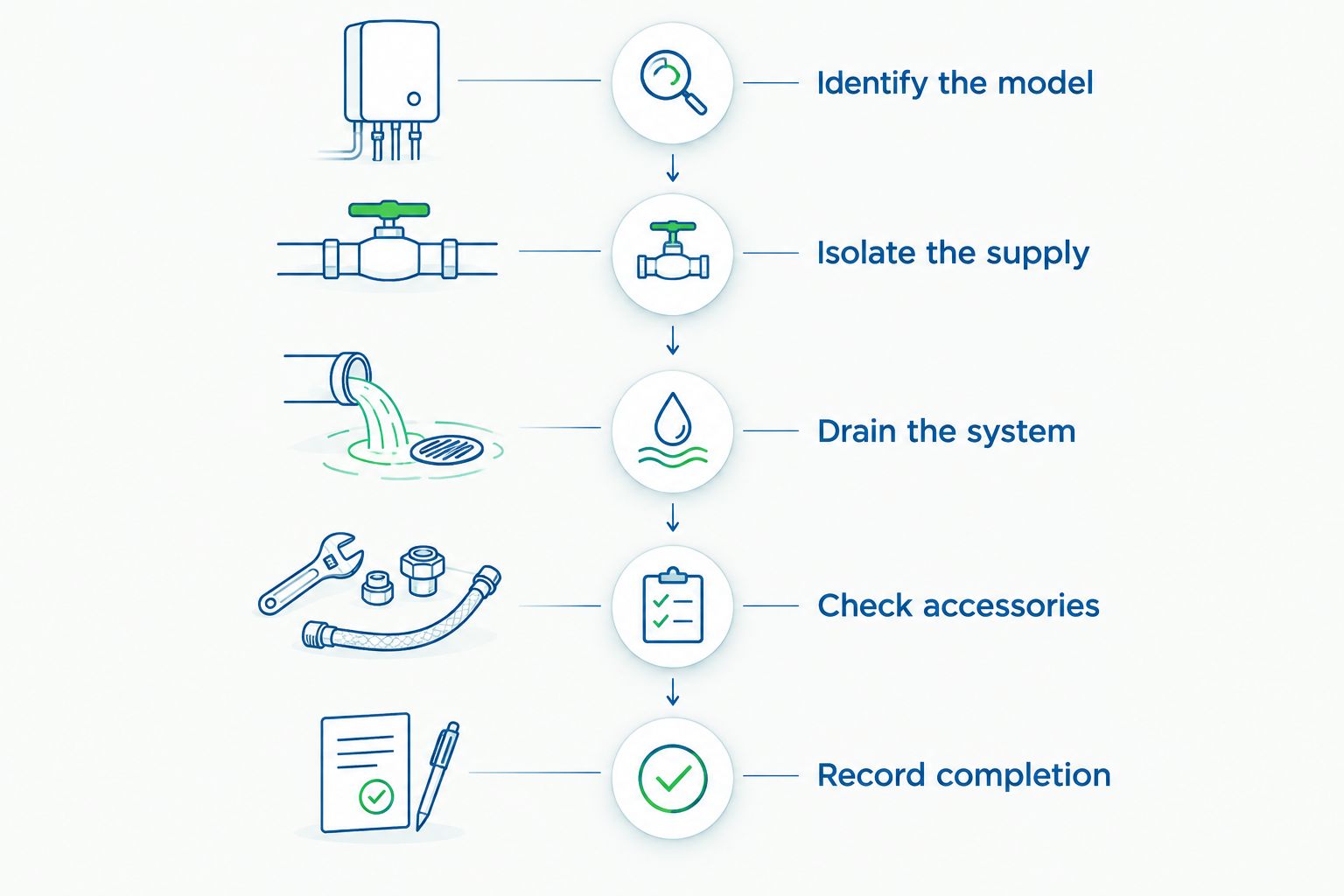
For your 2026 shutdown, follow this sequence using the fountain manufacturer's instructions:
- Identify the model. Record the model number and obtain its installation and maintenance instructions. Confirm whether the installed unit has any freeze-protection equipment.
- Isolate the supply. Have authorized maintenance staff or a plumber close the appropriate supply valve. Keep the fountain out of public service during the work.
- Drain the system. Follow the model-specific procedure for removing water from vulnerable components. Do not assume that pressing the bubbler empties every section.
- Check accessories. Include any connected pet bowl, bottle filler, or other outlet in the shutdown procedure. Each water path needs attention.
- Record completion. Document the work and label the fountain as closed for the season. Note any unresolved drainage or plumbing issue before freezing weather arrives.
Do not improvise a compressed-air pressure or add antifreeze to a drinking-water system. Use only procedures expressly approved for the equipment and potable-water installation. If the manual does not explain how to drain a component, have a qualified plumber resolve that step.
Why a cover is not enough
A cover shields a fountain from some weather exposure, but it does not remove water from the plumbing. Insulation slows heat transfer; without a suitable heat source or drainage strategy, it does not keep water above freezing indefinitely.
Use covers only as the manufacturer directs. Never let a wrapped pedestal hide an unresolved leak, blocked drain, or incomplete shutdown. The protection decision belongs to the plumbing system, not the appearance of the enclosure.
Freeze-resistant fountains: verify the whole installation
Freeze-resistant does not mean installation-independent. Depending on the design, protection can involve drainage after use, a protected valve location, or another manufacturer-specified arrangement. Confirm how the exact model works before approving the purchase or leaving it operating through winter.
For a 2026 replacement project, ask your installer to review the fountain and its supply together. A freeze-resistant fountain does not automatically protect an exposed upstream pipe. Likewise, a drain-back design cannot work as intended if its required drainage arrangement is obstructed or incorrectly installed.
What should you check before buying?
Put these requirements into the purchase discussion:
- Winter operation: Decide whether users need the fountain during freezing weather or whether seasonal closure is acceptable.
- Exact configuration: Confirm that the quoted model includes the freeze-resistant configuration you intend to purchase.
- Installation requirements: Review the manufacturer's valve, drainage, burial, and connection instructions with your installer.
- Accessory protection: Check how each attached drinking outlet, bottle filler, or pet station is protected.
- Maintenance access: Confirm that staff can inspect and service the components required by the manual.
The benefit is a design intended for freezing conditions. The limitation is that its protection depends on the complete installation and maintenance procedure. Buy against documented requirements, not an assumed minimum-temperature rating.
A freeze-resistant option to review
The Fountain Direct lists an Elkay outdoor bi-level pedestal fountain, freeze-resistant, gray, LK4420FRKGRY. The supplied listing identifies this configuration as non-filtered, non-refrigerated, and freeze-resistant.
Best for: Buyers seeking a bi-level outdoor pedestal fountain with a stated freeze-resistant configuration. Its relevant advantage is that explicit configuration; the purchase still requires a review of the installation manual and the site's water supply. Do not interpret non-refrigerated as freeze protection—those labels describe different features.
The Fountain Direct is best for commercial buyers selecting outdoor drinking fountains for schools, parks, and public facilities. Before ordering, give your plumbing contractor the exact model and ask for confirmation that the site can meet its installation requirements.
Why outdoor fountain freeze risk varies
The freezing point of water does not change because a fountain has a different finish or pedestal shape. What changes is whether vulnerable water reaches that temperature and whether the system allows water to drain or otherwise protects it.
These factors explain the difference between a protected installation and a vulnerable one:
- Trapped water: Water remaining in tubing, valves, or fittings creates an opportunity for freeze damage. Supply isolation alone does not remove it.
- Cold exposure: Temperature and exposure duration affect how quickly water-filled components lose heat. A brief air-temperature dip does not establish a universal failure time.
- Supply routing: Aboveground or otherwise unprotected supply sections need attention even when the fountain has a freeze-resistant designation.
- Drainage condition: A system that depends on drainage needs an unobstructed, correctly installed drainage path.
- Installation accuracy: Protection depends on following the exact manufacturer's requirements, including any specified valve placement or burial arrangement.
- Connected outlets: Additional outlets introduce additional water paths to verify during winterization and inspection.
For the 2026 inspection record, list the fountain's model, winter operating approach, supply isolation point, and required drainage checks. That gives maintenance staff a usable instruction rather than a vague note saying the unit is winter-ready.
At what temperature can an outdoor fountain freeze?
32°F (0°C) is water's ordinary freezing point, but it is not a universal instant-failure temperature for an installed fountain. The water itself must lose enough heat to freeze; component exposure, starting temperature, and the duration of cold weather affect that process.
Schedule seasonal winterization before freezing weather rather than waiting for visible ice. Use the manufacturer's stated operating conditions for a freeze-resistant model, not a temperature inferred from its product name.
Is an outdoor-rated fountain automatically freeze-resistant?
No. An outdoor rating and a freeze-resistant configuration are different claims. Outdoor suitability does not, by itself, establish that the internal plumbing can remain in service during freezing conditions.
Check the exact model documentation for its winter operating requirements. Vandal resistance, corrosion resistance, and refrigeration status also do not establish freeze protection.
What should you do if a fountain is already frozen?
Take a frozen outdoor fountain out of service and have a qualified plumber assess it. Isolate its water supply when safe and appropriate, and keep users away from any leaked water or ice around the fixture.
Do not use an open flame or force the operating mechanism. Thawing does not prove the plumbing is undamaged; inspect the system before restoring pressure and public access.
Inspect before reopening after winter
A fountain that starts flowing again still needs a leak check. Freeze damage can remain concealed until the system thaws and the supply is restored, so reopening requires more than pressing the button and seeing water.
Use this checklist for your 2026 reopening:
- Inspect accessible tubing, fittings, valves, and connections for damage or leakage.
- Check the pedestal base and surrounding ground for unexplained water.
- Verify that outlets operate and shut off correctly.
- Check that basin drainage works without creating standing water around the fixture.
- Follow the manufacturer's cleaning, flushing, and return-to-service instructions.
- Keep the fountain closed if the cause of a leak or operating problem is unresolved.
Repair the cause before adjusting the symptom. Weak flow after winter does not establish that the bubbler needs adjustment; it can also signal an unresolved plumbing problem. Have the technician diagnose the water path before changing settings or replacing parts.
FAQ
Can outdoor drinking fountains freeze and crack even if they are stainless steel?
Yes, stainless steel construction does not prevent water inside plumbing from freezing. Freeze protection depends on the water path, installation, and winter operating procedure rather than the exterior material alone.
Does turning off the water stop an outdoor fountain from freezing?
No, turning off the supply does not remove water already trapped inside the fountain. Follow the manufacturer's draining procedure for every vulnerable component.
What's the best outdoor drinking fountain for freezing winters?
The best choice for required winter service is a documented freeze-resistant configuration that your site can support. For seasonal facilities, a fountain with a correctly completed shutdown and drainage procedure is the relevant alternative.
Can I leave a freeze-resistant drinking fountain on all winter?
Only operate it through winter within the exact manufacturer's installation and operating requirements. Confirm that the supply piping and any connected outlets are also protected.
Will wrapping an outdoor fountain prevent freeze damage?
Wrapping alone does not establish freeze protection. Insulation slows heat loss but does not remove trapped water or generate heat.
Should I replace the whole fountain after a freeze?
Not automatically; have a qualified plumber identify the damaged components first. Replace the complete assembly when the assessment establishes that repair is unsuitable, not simply because the unit stopped flowing.
Does The Fountain Direct sell freeze-resistant outdoor drinking fountains?
Yes, The Fountain Direct lists a freeze-resistant outdoor bi-level pedestal fountain configuration. Review the exact model documentation with your installer before choosing it for winter operation.
One last thing
The first thing to inspect is the water path, not the pedestal. A substantial outdoor housing can conceal a small water-filled component that remains vulnerable to freezing. Before approving a purchase or signing off a shutdown, ask your installer to explain what happens to water in each exposed section when the fountain is not being used.