

Best Bottle Filling Stations for Convenience Stores (2026)

Convenience store bottle filling stations are wall-mounted or in-wall units that let a customer top off a reusable bottle at the register area or entry vestibule instead of grabbing a bottled drink from the cooler. A convenience store runs on a different clock than a school or office: doors open 24 hours, foot traffic spikes around fuel-pump shifts, and the unit sits within reach of anyone walking in off the street. That changes what "the right bottle filling station" means for this segment compared with a break room or a gym.
- Convenience store bottle filling stations need vandal-resistant, ADA-height builds for 24-hour foot traffic.
- The Elkay EZH2O Vandal-Resistant Mechanical Bottle Filling Station handles entry vestibules with a push-bar instead of an exposed sensor.
- The Elkay LZ8WSBPRO Pro Filtration Single ADA Bottle Filler covers a single ADA-height fill point with lead and microplastic filtration.
- Freeze protection matters for any exterior unit near a fuel island in a cold-winter market in 2026.
Why bottle filling stations matter for convenience stores
A convenience store customer isn't planning ahead. They're stopping for gas, grabbing coffee, or passing through on a road trip, and a bottle filling station near the door captures a sale you'd otherwise lose to the cooler across the aisle or, worse, to nothing at all. The Fountain Direct sells the same drinking fountain and bottle filler lines used in schools, offices, and parks, and the convenience store application borrows heavily from all three: the ADA rules of an office lobby, the vandal exposure of a public park, and the round-the-clock use of a school hallway during exam week.
The unit also has to survive traffic patterns nobody designs for on purpose. A fuel-pump customer with dirty hands, a delivery driver in a hurry, a kid on a bike who leans on the spout — none of that is unique to 2026, but it's constant in a store that never locks its doors.
Update your fill-point layout before you shop for a unit
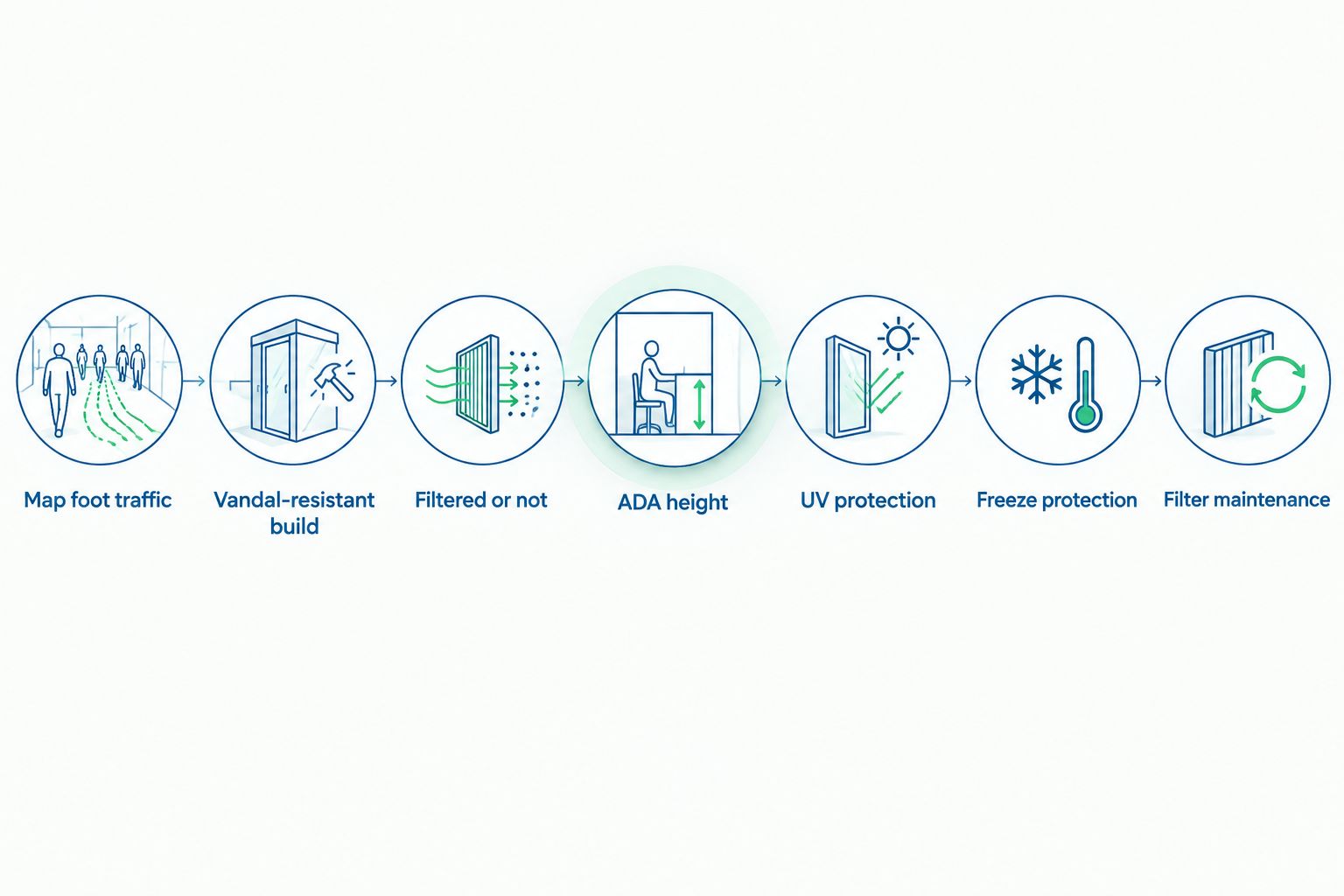
Map your foot traffic and fill locations
Walk the store during your busiest fuel-pump shift and mark where a fill point actually gets used, not where it looks convenient on a floor plan.
- Count daily transactions during peak hours to gauge how many fills the unit needs to support
- Mark the ADA-accessible route from the entrance to the counter and keep the fill point on it
- Check for a floor drain within a few feet of the proposed location
- Note whether the spot sits in conditioned space or an unheated vestibule
- Confirm the cold-water supply line size at the wall before ordering anything
Choose vandal-resistant construction for 24-hour traffic
A store with no closing time needs hardware that doesn't rely on staff supervision to survive the night shift. The vandal-resistant mechanical bottle filling station from Elkay is built around this exact problem: stainless construction and a mechanical fill instead of exposed electronics.
- Stainless steel basin and bezel instead of painted steel
- A mechanical push-bar or sealed control instead of an exposed touch sensor
- Bolt-through mounting hardware that isn't reachable from outside the housing
- A drain that resists coin-jamming or ice-pick damage
- A brushed finish that hides fingerprints on a high-touch spout
Decide between filtered and non-filtered fill
A c-store's tap water quality varies by municipality, and a filtered unit isn't automatic just because the store sells bottled water on the same shelf.
- Test tap water hardness and taste before you specify a filter
- Budget the filter change interval on fill volume, not a calendar date
- Confirm the filter reduces lead and microplastics if the store runs on municipal water
- Skip filtration only if the unit draws from an already-filtered fountain drink line
Match ADA height and clear-floor-space rules
ADA compliance isn't optional for a public-facing retail fixture, and a convenience store's tight aisle layout makes this harder to hit than in a wide-open lobby. The ADA bottle filler with pro filtration from Elkay is built to a single ADA-height fill point, which fits a store that only has room for one unit.
- Spout height no more than 36 inches to the lower rim
- 30 x 48 inches of clear floor space that isn't blocked by a trash can or ice cooler
- Knee and toe clearance under a wall-mounted unit where floor space is tight
- Operable parts reachable with one hand and under 5 pounds of force
Add UV or filtration upgrades for high-touch spouts
Customers coming off a fuel island have dirtier hands than an office worker, and a fill point near the register line gets more contact per day than almost any other fixture in the store. Elkay's LVRCTL8WSPRO UV Pro Filtration Vandal Resistant Bottle Filling Station covers this with a bi-level cooler and UV disinfection built into the fill cycle.
- UV-C or antimicrobial nozzle guard for units near fuel pumps
- Automatic shutoff timer so the unit doesn't run dry mid-shift
- Laminar-flow spout to cut splashback near the checkout floor
- A bottle-full sensor instead of a fixed-timer fill
Plan for freeze protection at vestibule or exterior entries
A c-store in a cold-winter market often puts a unit near the fuel island or an exterior wall, and that spot needs different protection than an interior counter unit.
- Heat-traced supply line for anything outside the building envelope
- Freeze-resistant valve body rated for the store's winter low
- Insulated enclosure or heat tape on any exposed drain line
- A shutoff valve reachable without opening the unit's locked panel
Budget for filter changes and routine maintenance
A high-traffic store burns through filter capacity faster than the manufacturer's default schedule assumes.
- Track gallons filled per week against the filter's rated capacity
- Stock a spare aerator and O-ring kit on site instead of ordering after a failure
- Schedule a monthly wipe-down with a non-abrasive stainless cleaner
- Log fill counts where the unit reports usage, to catch a slow leak early
Quick spec comparison
| Option | Best for | Key limitation |
|---|---|---|
| Elkay EZH2O Vandal-Resistant Mechanical Bottle Filling Station | 24-hour entries where a mechanical push-bar beats an electronic sensor | Non-filtered, non-refrigerated fill only |
| Elkay LZ8WSBPRO Pro Filtration Single ADA Bottle Filler | A single ADA-height fill point with lead and microplastic filtration | Refrigerated single station, no bi-level fountain |
| UV-C in-wall bottle filler | Stores wanting a touch-free, disinfected nozzle near the register line | Recessed installs cost more behind an existing wall cavity |
| Wall-mounted retrofit filler with chiller | Tight floor space beside an existing beverage cooler wall | Wall-mount only, no bi-level ADA fountain |
The vandal-resistant mechanical unit wins for pure entry-door durability; the ADA pro-filtration unit wins where a single fixture has to satisfy both compliance and taste.
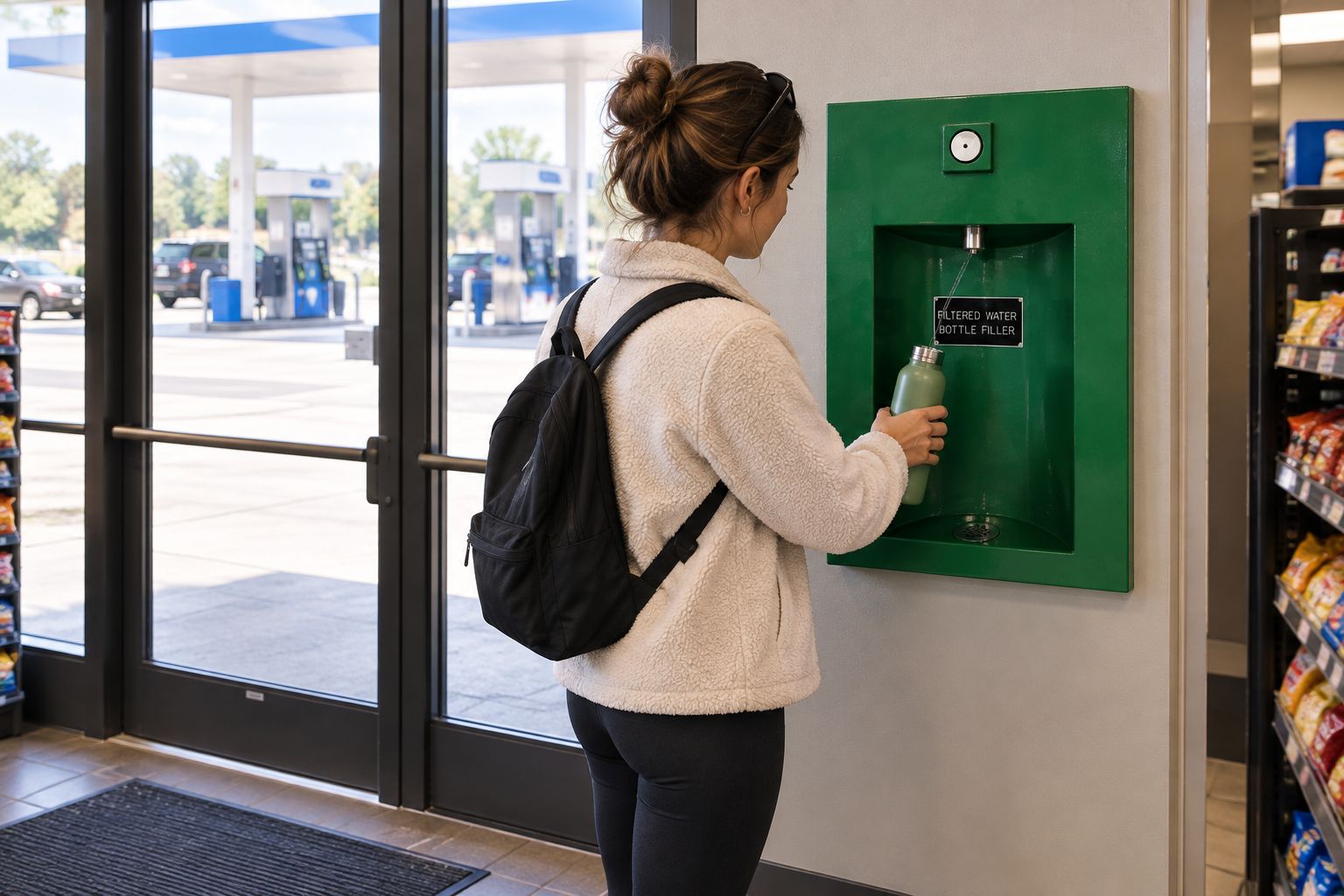
A store that already runs bottled beverage sales near a fuel island benefits from seeing how a unit sits in that exact traffic pattern before ordering.


Common mistakes convenience stores make
- Mounting the fill spout at drinking-fountain height and forgetting the 30 x 48 inch clear-floor-space rule at a busy aisle end-cap
- Skipping filtration to save budget, then fielding taste complaints once the unit runs on heavily-chlorinated municipal water
- Installing an exterior unit near the fuel island without freeze protection in a market that gets even one week of hard frost
- Choosing a decorative finish that shows fingerprints under fluorescent lighting instead of a brushed stainless bezel
- Skipping a spare filter cartridge on site, so the unit runs unfiltered for weeks after the change indicator trips
FAQ
What's the best bottle filling station for a convenience store?
A vandal-resistant, ADA-height unit like the Elkay EZH2O works best for entry vestibules; a store needing filtration on a single fixture should look at the Elkay LZ8WSBPRO. The right pick depends on whether floor space or water quality is the bigger constraint.
Do convenience store bottle fillers need to be ADA compliant?
Yes, any publicly accessible fixture in a retail space needs ADA-compliant spout height and clear floor space. That means a spout no higher than 36 inches and 30 x 48 inches of unobstructed floor in front of the unit.
Should a convenience store bottle filler be filtered?
Filtration is worth the cost if the store's tap water has noticeable taste or hardness issues, or if the store draws on municipal water with known lead concerns. A store already selling filtered fountain drinks can skip it and rely on that supply line.
How much floor space does a bottle filling station need in a convenience store?
ADA rules require 30 x 48 inches of clear floor space directly in front of the unit. A wall-mounted unit with knee and toe clearance underneath fits tighter layouts better than a pedestal-base unit.
Can a bottle filling station go outside near the fuel pumps?
Yes, but it needs a freeze-resistant valve body and, in cold-winter markets, a heat-traced supply line and insulated drain. A unit without freeze protection risks a cracked line the first hard frost of the season.
How often does the filter need to change in a high-traffic store?
Filter life depends on gallons filled, not a fixed calendar schedule, so a 24-hour store burns through capacity faster than the manufacturer's default estimate assumes. Track weekly fill volume against the filter's rated capacity to catch this before taste or flow drops.
Is a bi-level bottle filler better than a single-height unit for a convenience store?
A bi-level unit covers both ADA and standard-height users in one fixture, which matters when floor space only allows for one unit. A single-height unit is simpler and cheaper to install where ADA compliance can be met with a separate fountain nearby.
How vandal-resistant does a c-store bottle filler need to be?
Any unit in a 24-hour, unsupervised entry point should have stainless construction, bolt-through mounting hardware, and a mechanical or sealed control instead of exposed electronics. Painted steel and exposed touch sensors don't hold up to unsupervised overnight traffic.
One last thing
The single detail that trips up most convenience store installs isn't the fixture, it's the drain. A fill point without a floor drain within reach forces a costly re-route of plumbing after the unit is already ordered, so check for that drain before you pick a model, not after.