A crowded office gym tells you very quickly whether your hydration setup is doing its job. If employees are lining up after a lunchtime class, wiping sweat off push bars, or walking back to their desks with disposable bottles because the fixture is too slow, too warm, or awkward to use, the wrong unit is costing more than it seems. The best drinking fountains for office gyms are the ones that match traffic, layout, hygiene expectations, and maintenance capacity from day one.
This is not the same buying decision as choosing a fountain for a school hallway or a public park. Office gyms usually have lighter total traffic, but they see sharp usage spikes before work, at lunch, and after business hours. Users expect clean water, bottle filling convenience, and a more polished appearance. Facilities teams also want fewer service calls and straightforward installation.
What office gyms actually need from a drinking fountain
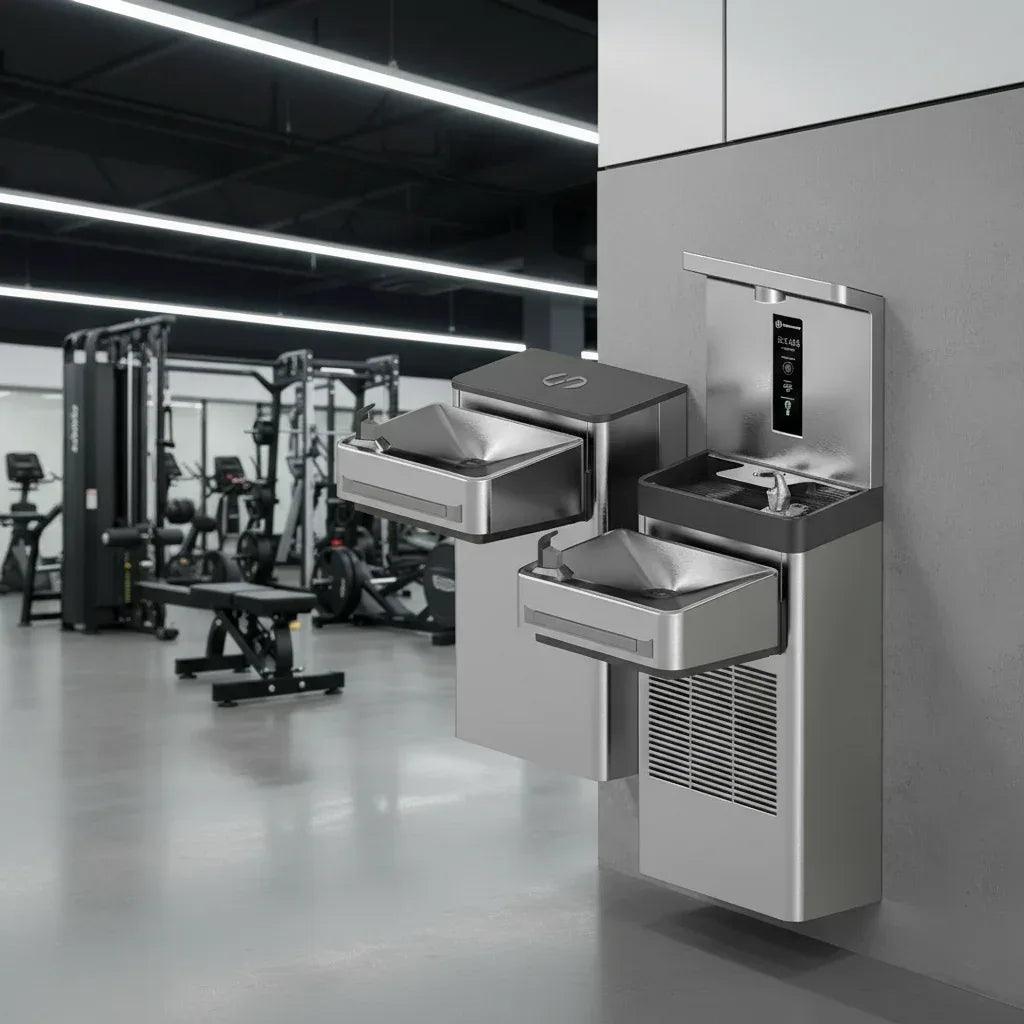
In most office fitness rooms, hydration equipment has to serve two behaviors at once. Some users want a quick drink between sets. Others arrive with insulated bottles and expect a fast refill before they head back to work. That is why many of the best drinking fountains for office gyms are not traditional fountains alone - they are combination units with an integrated bottle filler.
Hands-free operation also matters more than it did a few years ago. In a gym setting, touchpoints get noticed. Sensor-activated bottle fillers and fountains reduce contact, support a cleaner user experience, and align with what many employees now expect in shared wellness spaces.
The other non-negotiable is accessibility. If the gym is part of a workplace, ADA-compliant and barrier-free configurations should be part of the conversation early, not treated as an add-on later. A unit that looks sleek but creates access issues is not a good procurement decision.
The main fountain types for office gym installations
Wall-mounted fountains with bottle fillers
For most office gyms, this is the strongest fit. A wall-mounted unit keeps the footprint tight, supports a cleaner traffic path, and gives users two hydration options in one station. If your gym has limited square footage or sits off a hallway near locker rooms, cardio equipment, or a break area, a wall-mounted combo unit is usually the most efficient choice.
This category works especially well when you want a commercial look without overbuilding for extreme abuse. Models from established manufacturers such as Elkay and Halsey Taylor are common choices because replacement parts, filters, and service knowledge are widely available.
Bi-level ADA fountains
A bi-level fountain can make sense if bottle filling is not the top priority and your facility wants a familiar, code-conscious configuration. These are practical in office campuses with older buildings where the fountain is part of a broader restroom or corridor renovation.
The trade-off is user behavior. In many office gyms, people increasingly arrive with reusable bottles. If you choose a bi-level drinking fountain without a filler, expect some users to find workarounds or use another station elsewhere in the building.
Filtered and refrigerated bottle filling stations
If your company promotes employee wellness, this is often where the value is clearest. A filtered, chilled bottle filling station gives users what they actually want after exercise - cold water and a fast refill. It also helps reduce single-use plastic waste, which supports workplace sustainability goals without asking employees to change their habits.
The trade-off is maintenance. Filters must be replaced on schedule, and refrigeration adds another system to maintain. For many offices, that is still a smart exchange because user satisfaction is higher and complaints about water quality tend to drop.
How to choose the best drinking fountains for office gyms
Start with traffic, not just budget. A small employee fitness room in a single-tenant office may only need one wall-mounted bottle filler with a fountain. A larger amenity gym in a multi-tenant building may need multiple stations, especially if classes or peak-hour use create short bursts of demand.
Placement matters almost as much as the fixture itself. If the station is hidden inside a workout zone, people may crowd around equipment to access it. If it is too close to a restroom door or in a narrow corridor, it can interrupt circulation. The best installations place hydration where users naturally pause - near the entrance, near towel service, or between cardio and locker areas.
You should also think carefully about finish and construction. Stainless steel remains a strong fit for office gyms because it looks professional, cleans up well, and holds up under regular use. You may not need the highest level of vandal resistance found in schools, transit settings, or parks, but you still want commercial-grade construction that can tolerate repeated daily use.
Then there is filtration. It depends on your local water quality, employee expectations, and maintenance plan. In some buildings, a non-filtered unit tied into already treated water may be enough. In others, especially where taste complaints are common, filtration is worth the added service schedule.
Features that are worth paying for
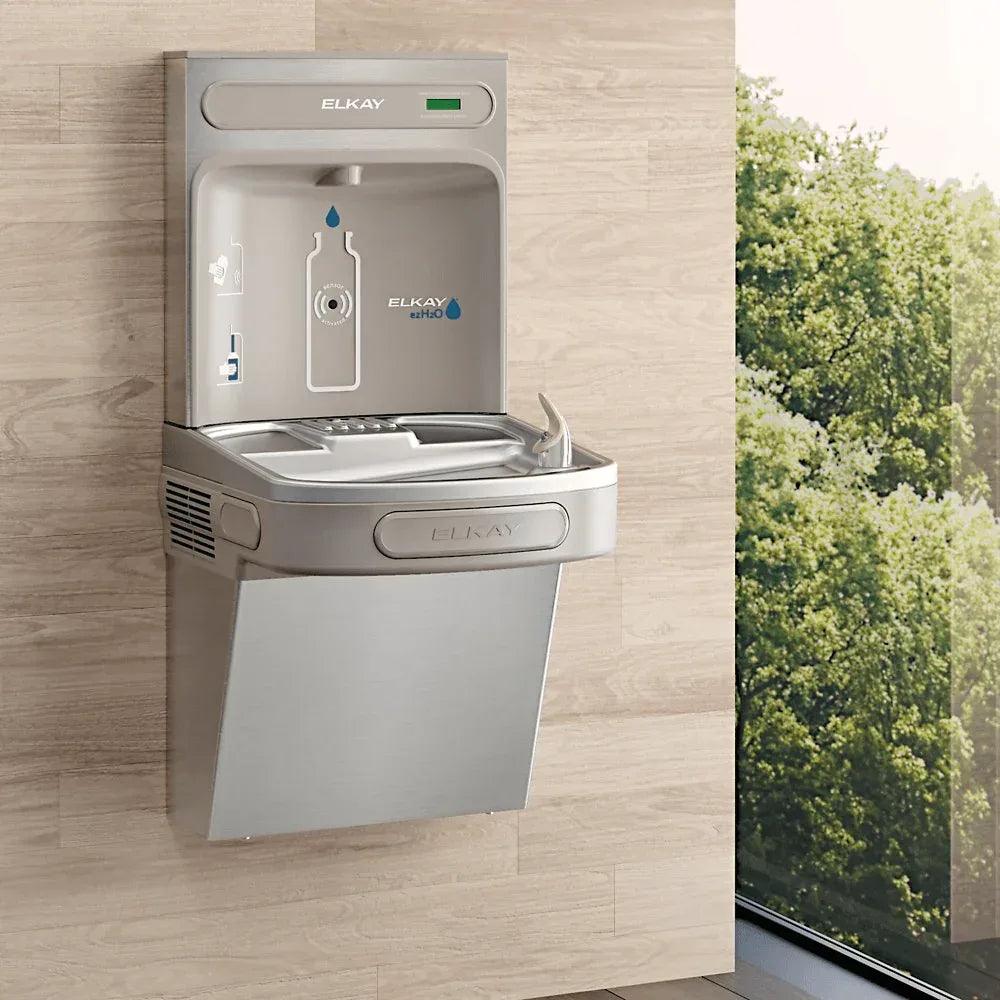
A few upgrades tend to justify themselves in gyms. Sensor activation is one. It supports hygiene and gives the station a more current feel. High-efficiency bottle filling is another, especially if employees regularly bring large bottles or tumblers.
Chilling is often worth it if the gym is heavily used or located in a warm climate. After a workout, room-temperature water is functional, but cold water is what users remember. If your goal is a hydration station that actually gets used, chilled water can make a meaningful difference.
A bottle counter can also be useful, not because it changes performance, but because it gives facilities and workplace teams a visible sustainability metric. For some offices, that matters in employee communications or ESG reporting.
Features you may not need
Not every gym needs the most advanced unit in the catalog. Heavy-duty anti-vandal design, for example, is essential in some public environments and less critical in a secured workplace fitness room. It is still smart to buy commercial-grade equipment, but there is no benefit in overpaying for prison-level durability if the setting does not call for it.
Likewise, a large freestanding station may be unnecessary unless the gym serves a very high user count or acts as a shared amenity for multiple tenants. In many cases, a compact wall-mounted combo unit is the better long-term fit.
Brand and procurement considerations
Most facility buyers are not trying to experiment. They want proven manufacturers, warranty-backed equipment, and parts availability. That is why office gym projects often stay with established commercial brands such as Elkay, Halsey Taylor, Haws, and Stern-Williams.
Lead times and installation readiness deserve just as much attention as the spec sheet. If you are outfitting a tenant improvement, amenity renovation, or new office fitness center, confirm rough-in requirements, electrical needs for refrigerated units, filter replacement access, and ADA mounting details before ordering. A less expensive unit is not the lower-cost choice if it creates install changes late in the project.
This is also where working with a specialist supplier helps. A procurement-focused partner such as The Fountain Direct can help narrow the field by use case, compliance requirements, and installation type instead of forcing buyers to sort through generic consumer listings. For contractors and facilities teams on tight timelines, that matters.
Common mistakes when buying for office gyms
The first mistake is underestimating bottle use. Many decision-makers still picture a traditional drinking fountain, but office gym users increasingly expect bottle filling as the primary function.
The second is choosing based on appearance alone. A slim, attractive unit may look right in renderings, but if refill speed is weak or maintenance access is poor, complaints show up fast.
The third is ignoring maintenance reality. Filtered and chilled systems are excellent when someone owns the upkeep. If no one is assigned to filter changes, sanitation checks, and service coordination, a simpler setup may perform better over time.

A practical recommendation for most office gyms
If you need a reliable default choice, start with a wall-mounted, ADA-compliant, hands-free bottle filler with an integrated drinking fountain in stainless steel. Add filtration if local water quality or employee expectations justify it. Add chilling if the gym has regular daily use or your workplace is positioning the space as a premium amenity.
If the gym is small and traffic is light, one well-placed unit may be enough. If the space supports classes, multiple floors, or a large employee count, consider adding a second station rather than forcing peak demand through a single fixture.
The right hydration station should quietly do its job for years. When the water is clean, cold, easy to access, and simple to maintain, people use it without thinking twice - and that is usually the sign you bought well.


