

Best Commercial Water Cooler for Warehouse Use
Find the best commercial water cooler for warehouse use. Compare chilled, bottle filling, and heavy-duty options with fast, budget-smart buying tips.

A warehouse break room with a light-duty office dispenser usually fails fast. High traffic, dusty conditions, shift changes, and constant refill demand call for a true commercial water cooler for warehouse use - not a residential unit dressed up for work. If you're buying for a distribution center, manufacturing floor, shipping hub, or service warehouse, the right choice comes down to traffic, mounting style, filtration needs, and how much abuse the unit will take.
What buyers actually need from a commercial water cooler for warehouse spaces
Most warehouse buyers are not looking for bells and whistles. They need dependable cold water, fast bottle filling, and equipment that keeps up during peak use. That usually points you toward institutional-grade wall-mounted coolers, bottle filling stations, or heavy-duty combination units from brands with a real track record in commercial settings.
The first decision is placement. If the cooler is going in a conditioned break area with moderate use, a standard indoor refrigerated drinking fountain or bottle filler may be enough. If it's closer to the floor, near loading zones, or serving a large employee base across multiple shifts, you want a higher-capacity unit with a durable finish, vandal-resistant components, and a refrigeration system designed for frequent use.
This is where buyers often lose time comparing products that are not really in the same class. A warehouse application needs commercial-grade construction from brands like Elkay, Halsey Taylor, Haws, or Willoughby, not a consumer appliance with a short lifespan and limited warranty support.
Indoor warehouse water cooler options that make sense
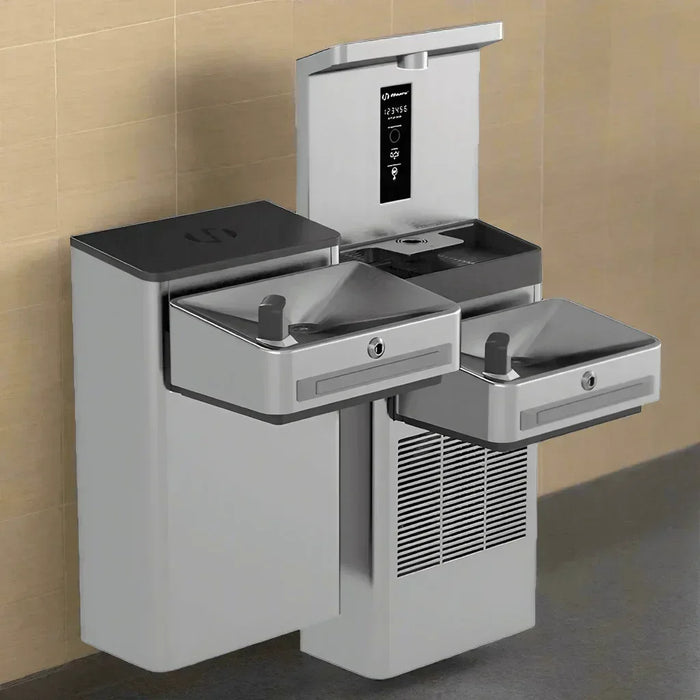
For most indoor facilities, the strongest choice is a refrigerated bottle filling station with an integrated drinking fountain. That gives workers two ways to get water quickly, which matters during shift breaks. It also reduces crowding compared with a single-point cooler.
Elkay and Halsey Taylor are usually the first brands buyers compare here, and for good reason. Both offer dependable chilled units, touchless bottle fillers on many models, and configurations that work well in employee corridors, break rooms, and common access walls. If your warehouse has a mix of staff and visitors, a bi-level ADA-compliant setup can also make procurement easier because accessibility is already addressed in the product design.
If the building serves rougher use conditions, Haws and Willoughby deserve a close look. These brands are known for heavier-duty construction, and they make sense when durability matters more than appearance. In some warehouse environments, that trade-off is worth it. A polished stainless unit may look great in a corporate facility, but a more industrial design can hold up better in harder-use locations.
When bottle filling matters more than a drinking fountain
Some facilities no longer want workers leaning over a bubbler at all. If your operation has largely shifted to refillable bottles, a dedicated or combo bottle filling station is often the smarter buy. It speeds throughput, feels cleaner to users, and better fits modern workplace expectations.
That said, it depends on your workforce and your code requirements. In some settings, a combination cooler and bottle filler is still the safer choice because it covers all user preferences and avoids complaints later. If you are outfitting a new build or major renovation, it usually makes sense to choose the combo unit unless wall space is extremely tight.
Capacity also matters here. A small office-adjacent bottle filler can struggle in a warehouse with multiple shifts. If you expect back-to-back use at break times, look for a commercial model with a proven chiller system and a fill rate suited to institutional traffic.
Wall-mounted vs free-standing warehouse units
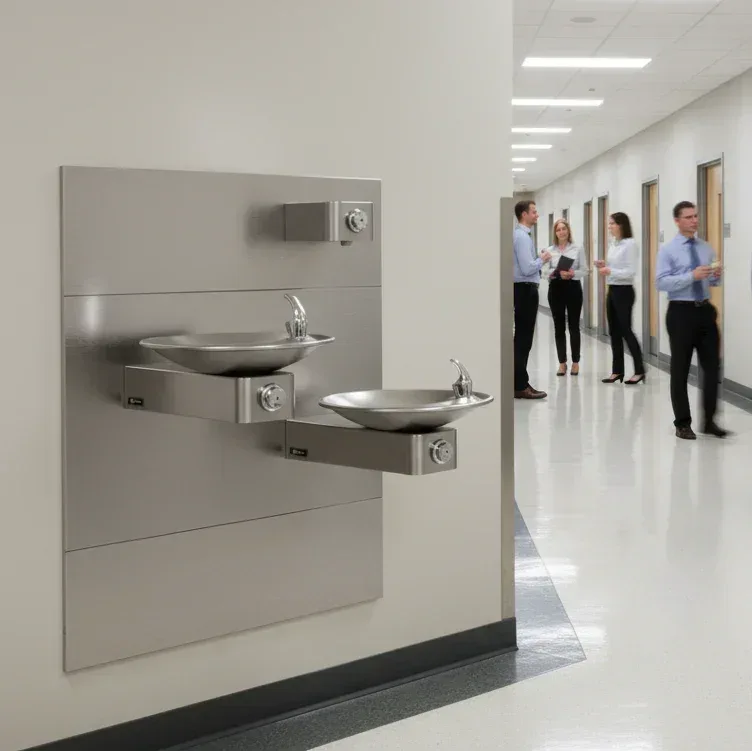
Wall-mounted units are the standard for warehouses because they save floor space, stay out of the way of carts and foot traffic, and feel more permanent. They also fit better in corridors, break rooms, and near locker areas. For buyers managing large facilities, wall-mounted models are usually the cleanest specification.
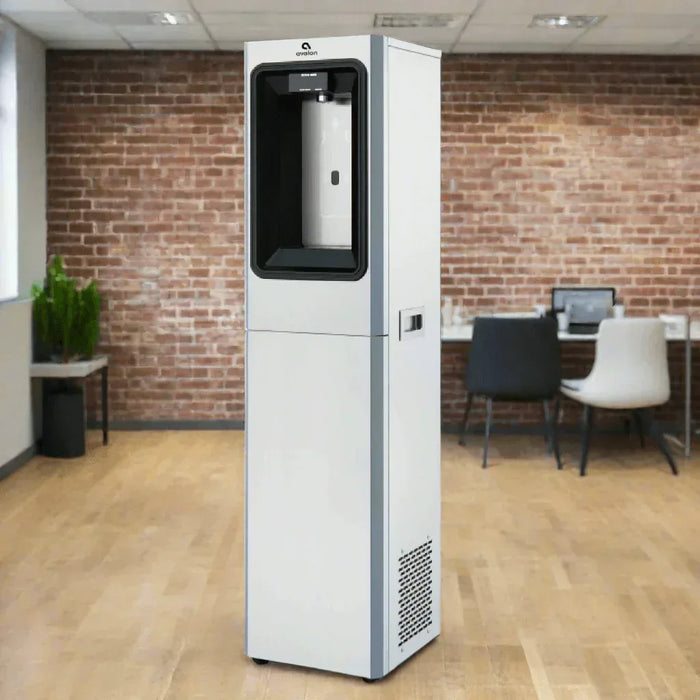
Free-standing units can still make sense in temporary spaces, modular offices, or warehouse areas where wall conditions are not ideal. But in most cases, they are not the best long-term answer for a busy operation. They are easier to bump, easier to relocate when they should not be, and often less durable under commercial use.
If this is a permanent facility investment, wall-mounted commercial equipment is usually the better value over time.
Features worth paying for - and features you can skip
A good warehouse cooler should be selected around use case, not feature overload. Refrigeration is worth paying for in almost every indoor warehouse environment. Cold water drives actual use, especially in warmer regions and physically demanding workplaces.
Filtered water is often worth it as well, particularly if you want better taste consistency across shifts or if your municipal supply leads to employee complaints. NSF-certified filtration options from major brands are easy to justify when the goal is user satisfaction and fewer service issues tied to water quality perception.
Vandal-resistant hardware is smart when the unit is in a semi-public or high-contact area. Push bars, bubblers, and fasteners all take abuse in industrial settings. A sturdier unit may cost more up front, but replacement headaches usually cost more.
On the other hand, premium finishes and design-driven styling are usually lower priorities in a warehouse. Unless the unit is being installed in a front-facing employee wellness area or office crossover zone, appearance should not outrank cooling performance and durability.
Choosing the right brand for a warehouse application
Elkay is a strong fit for buyers who want broad model availability, familiar specifications, and dependable bottle filling options. Halsey Taylor is similarly well suited for commercial interiors and often comes up on projects where facilities teams want proven performance with straightforward replacement access.
Haws is worth consideration when you need stronger institutional durability or have a more demanding setting. Willoughby also fits buyers who prioritize heavy-duty construction over cosmetic considerations. Stern Williams may be relevant for more specialized commercial applications, especially where robust metal construction is preferred.
The right brand depends on what matters most on your project. If speed of occupancy, common replacement parts, and broad model choice are priorities, Elkay and Halsey Taylor are often the easiest path. If abuse resistance and long-term toughness are driving the spec, Haws or Willoughby may be the better call.
Buying on price alone is where many projects go wrong
Warehouse buyers are under pressure to stay on budget, but the cheapest unit is rarely the least expensive option over the life of the project. Lower-grade coolers can create downtime, replacement costs, user complaints, and repeat purchasing much sooner than expected.
What you want is the best value at the commercial grade you actually need. That means comparing warranty coverage, freight costs, return flexibility, and brand reliability alongside unit price. A lower sticker price does not help much if shipping gets added later, sales tax changes the total, or the product is not built for the environment.
For procurement teams and contractors, this is where buying from a specialist matters. Product selection is tighter, specs are easier to compare, and you are not sorting through consumer-grade units that should never have been on the quote list in the first place.
How to narrow your warehouse cooler shortlist fast
If you're trying to move from browsing to buying, start with four filters. First, define whether you need a drinking fountain, bottle filler, or combo unit. Second, decide if the location calls for standard commercial construction or heavier-duty institutional construction. Third, confirm whether chilled and filtered water are required. Fourth, make sure the mounting style and ADA needs are addressed before you request pricing.
That process usually narrows the field quickly. Most warehouse buyers do not need fifty choices. They need the three or four models that actually fit the site, traffic level, and budget.
At that point, availability and total landed cost become the deciding factors. Lead times matter, especially for tenant improvements, plant upgrades, and contractor-driven schedules. So do freight terms, return policies, and manufacturer warranty support.
Where to buy the right commercial water cooler for warehouse projects
If you're sourcing a commercial water cooler for warehouse use, buy from a specialist that understands commercial and institutional equipment, not a broadline seller mixing residential dispensers with true warehouse-grade products. The Fountain Direct is built for buyers who need real product guidance, competitive pricing, and less friction in the purchasing process.
You get access to top U.S. brands, free freight shipping, no sales tax, a 30-day return policy, manufacturer warranty coverage, and a price match guarantee. That matters when you're buying against a project timeline and need confidence that the unit you order is the right one the first time.
Trusted by 800+ customers, we help facility teams, contractors, and institutional buyers choose the best-fit cooler without wasting time on models that do not belong in a warehouse. When you're ready to buy, the best next step is choosing a unit that matches your traffic level, mounting needs, and durability requirements - then getting it from a source that treats commercial buying like the specialty purchase it is.